Tiger's Eye
Golden quartz with a silky shine that moves as the stone moves. For over a century everyone explained how it forms, until in 2003 someone looked under a microscope and challenged the explanation.
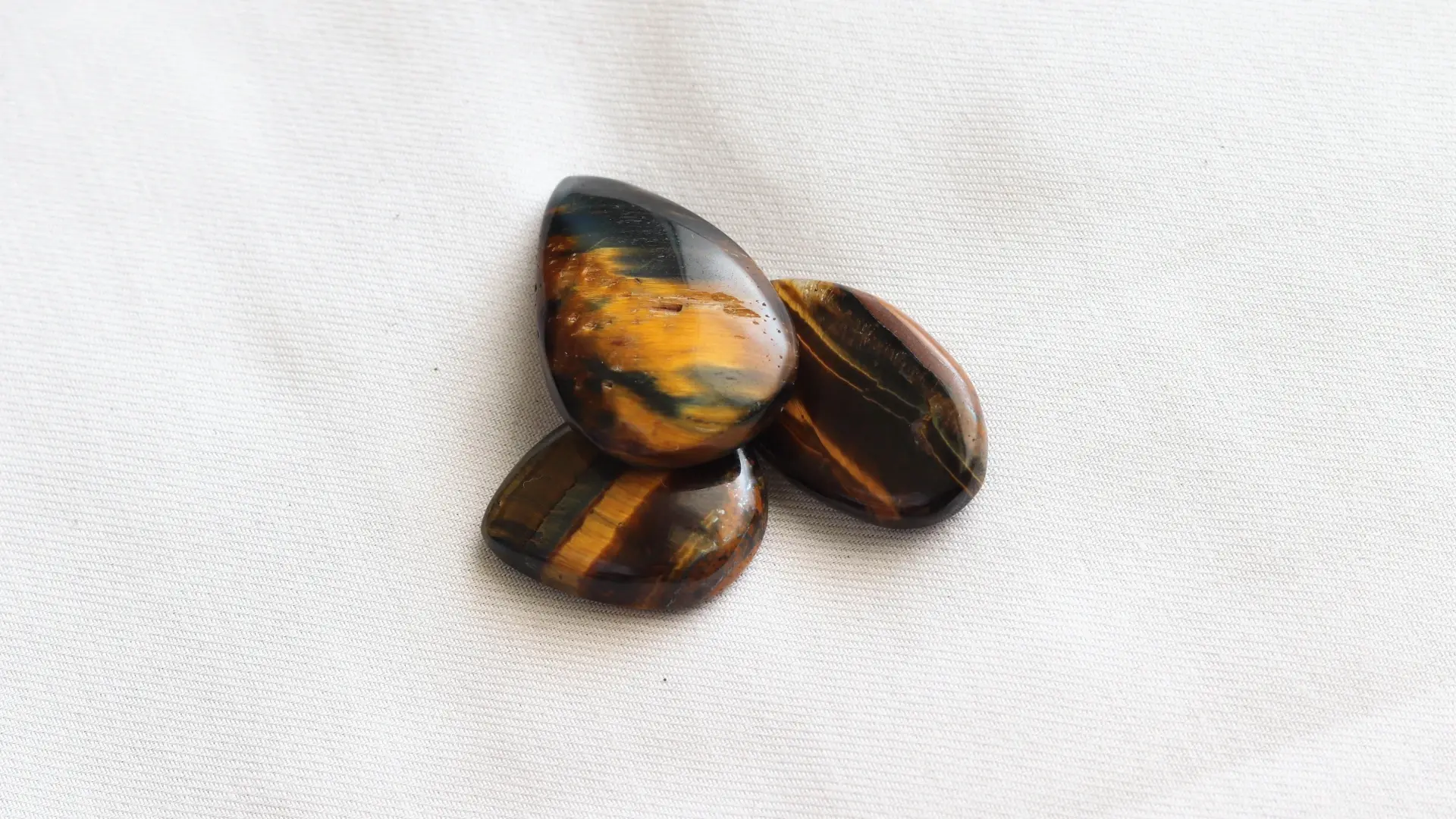
The photo shows three polished teardrop-shaped stones, with golden, brown and dark bands. Turn them, and the golden bands light up and go dark, as if the light were moving inside the stone. This effect is called chatoyancy, and according to Scientific American, the word comes from the French for "cat's eye". Tiger's eye itself, according to Minerals.net, is quartz, just like clear quartz, except that it is built of fine parallel fibers, which makes it opaque with a silky luster.
The stones in the photo also have bluish grey patches. According to Minerals.net and Hebrew Wikipedia, when the process that forms tiger's eye is incomplete, a bluish grey color remains, and the stone is called "hawk's eye". So each of these teardrops holds both a tiger and a hawk, which is quite common.
Now for the process itself. According to Scientific American, for more than a century textbooks explained that tiger's eye is a "pseudomorph": quartz that moved into crocidolite, a blue asbestos, and replaced its fibers one by one, a bit like bone turning into a fossil. The explanation seemed so obvious that nobody checked it closely. In 2003, Peter Heaney and Donald Fisher published a study in the journal Geology using an electron microscope, and proposed a different explanation: the quartz did not form fibers but tiny columns, and the shine comes from fine crocidolite fibers trapped inside them. In their view, a crack in the rock opened and sealed again and again, adding a layer each time. In 2004 the journal published a comment and a reply on the paper, so the debate is not entirely closed.
According to Scientific American, in the 1870s tiger's eye was worth about half an ounce of gold per carat. Then huge amounts of it were found in South Africa, and according to Minerals.net, most tiger's eye still comes from there, from the Northern Cape Province. The price dropped, and it has been one of the cheapest gemstones ever since. An investment that did not age well, but a stone anyone can hold.
According to Wikipedia, red tiger's eye is usually made by gentle heating, and dark stones are sometimes lightened with nitric acid. And according to Minerals.net, most tiger's eye on the market is natural, but some of the red stones are dyed. The common imitation, according to Wikipedia, is fiber optic glass, and it comes in a huge range of colors. If your tiger's eye is purple, it is worth asking some questions.
Crystal traditions
In crystal tradition
According to Wikipedia, in some parts of the world tiger's eye is believed to ward off the evil eye, and Roman soldiers wore engraved tiger's eye to protect them in battle. According to Crystal Vaults, the ancient Egyptians set it in the eyes of their deity statues.
According to Fire Mountain Gems, tiger's eye is considered a stone of protection, courage and self-confidence, and it is primarily associated with the solar plexus chakra. The site adds that each color has its own meaning: blue calms, gold helps focus, and red brings motivation. According to Crystal Vaults, tiger's eye stimulates the first three chakras, and it is a zodiac stone of Gemini.
Sources: Tiger's eye, Wikipedia; Tiger's Eye Meaning and Uses, Crystal Vaults; Tigereye Meaning and Properties, Fire Mountain Gems and Beads
Scientific information
Properties
Chemistry: silicon dioxide, SiO₂. Quartz, colored by iron oxides.
Mohs hardness: 7.
Specific gravity: 2.63 to 2.71.
Refractive index: 1.54 to 1.55.
Luster: silky. Opaque.
Optics: chatoyancy (the "cat's eye" effect), so it is usually cut as a cabochon.
Varieties: hawk's eye (bluish grey), tiger iron (tiger's eye with red jasper and black hematite).
Formation: the traditional explanation is replacement of crocidolite by quartz. A 2003 study proposed repeated crack-seal vein filling instead. The question has been debated in the scientific literature.
Main sources: South Africa, also Namibia, Australia, India and Thailand.
Sources: Tiger's Eye: The Quartz gemstone Tigers Eye information and pictures, Minerals.net; Tiger's eye, Wikipedia; עין הנמר, ויקיפדיה; Peter J. Heaney, Donald M. Fisher, New interpretation of the origin of tiger's-eye, Geology, vol. 31, no. 4, Geological Society of America, 2003, 323; Tiger's Eye: A Deceptive Delight, Scientific American
Associations
Different traditions associate this stone with different things, and they sometimes conflict. Each association is shown with its tradition and sources.
Zodiac sign
GeminiCrystal tradition
Chakra
Solar PlexusCrystal tradition
Sources: Tigereye Meaning and Properties, Fire Mountain Gems and Beads; Tiger's Eye Meaning and Uses, Crystal Vaults
Chakra
RootCrystal tradition
Chakra
SacralCrystal tradition
Sources
- Tiger's Eye: The Quartz gemstone Tigers Eye information and pictures, Minerals.netAccessed September 24, 2026
- Tiger's eye, WikipediaAccessed September 24, 2026
- עין הנמר, ויקיפדיהAccessed September 24, 2026
- Peter J. Heaney, Donald M. Fisher, New interpretation of the origin of tiger's-eye, Geology, vol. 31, no. 4, Geological Society of America, 2003, 323
- Tiger's Eye: A Deceptive Delight, Scientific AmericanAccessed September 24, 2026
- Tigereye Meaning and Properties, Fire Mountain Gems and BeadsAccessed September 24, 2026
- Tiger's Eye Meaning and Uses, Crystal VaultsAccessed September 24, 2026
More crystals
Amazonite
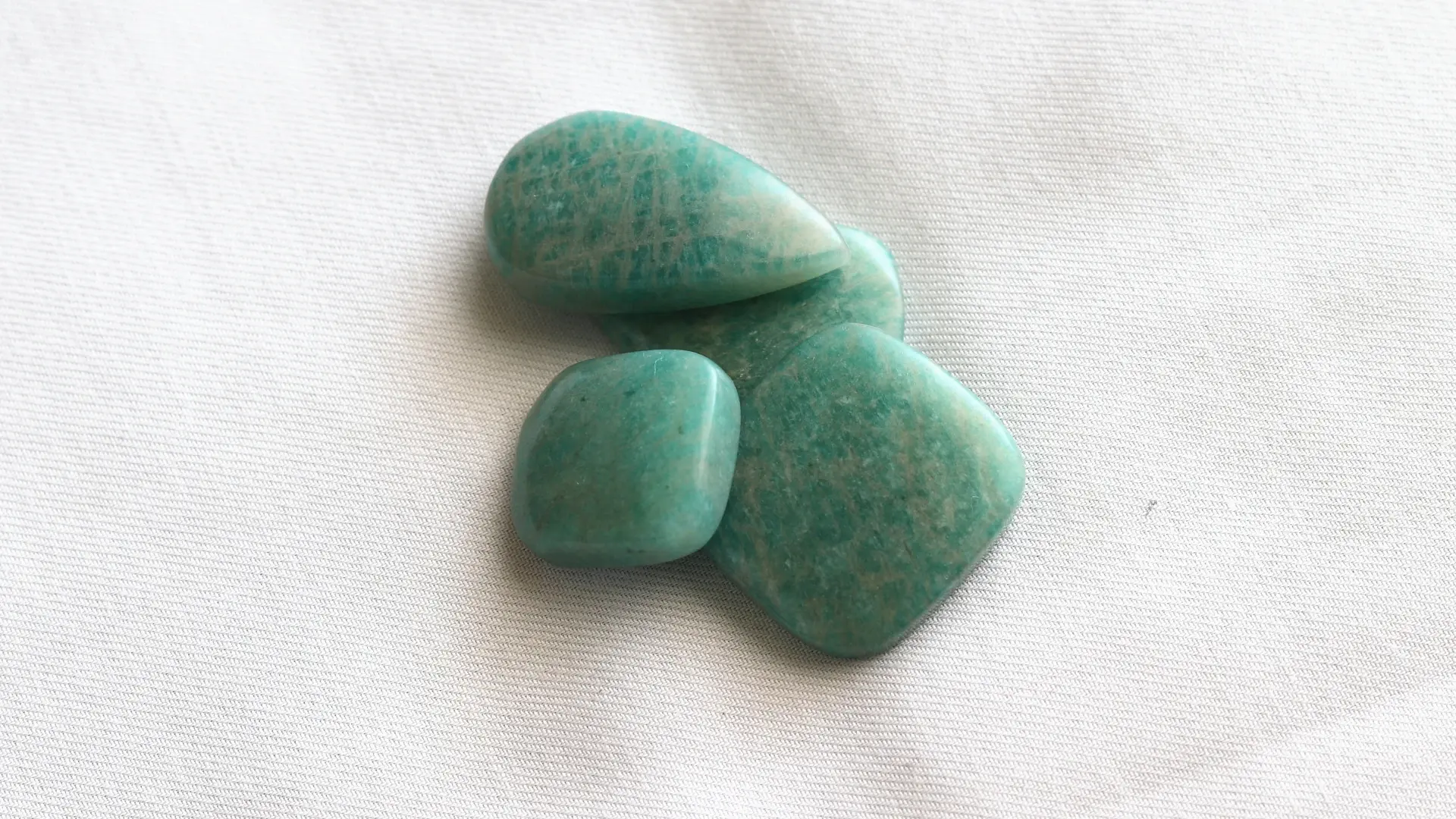
A turquoise-green variety of the feldspar microcline. Despite the name, it does not come from the Amazon.
Amethyst
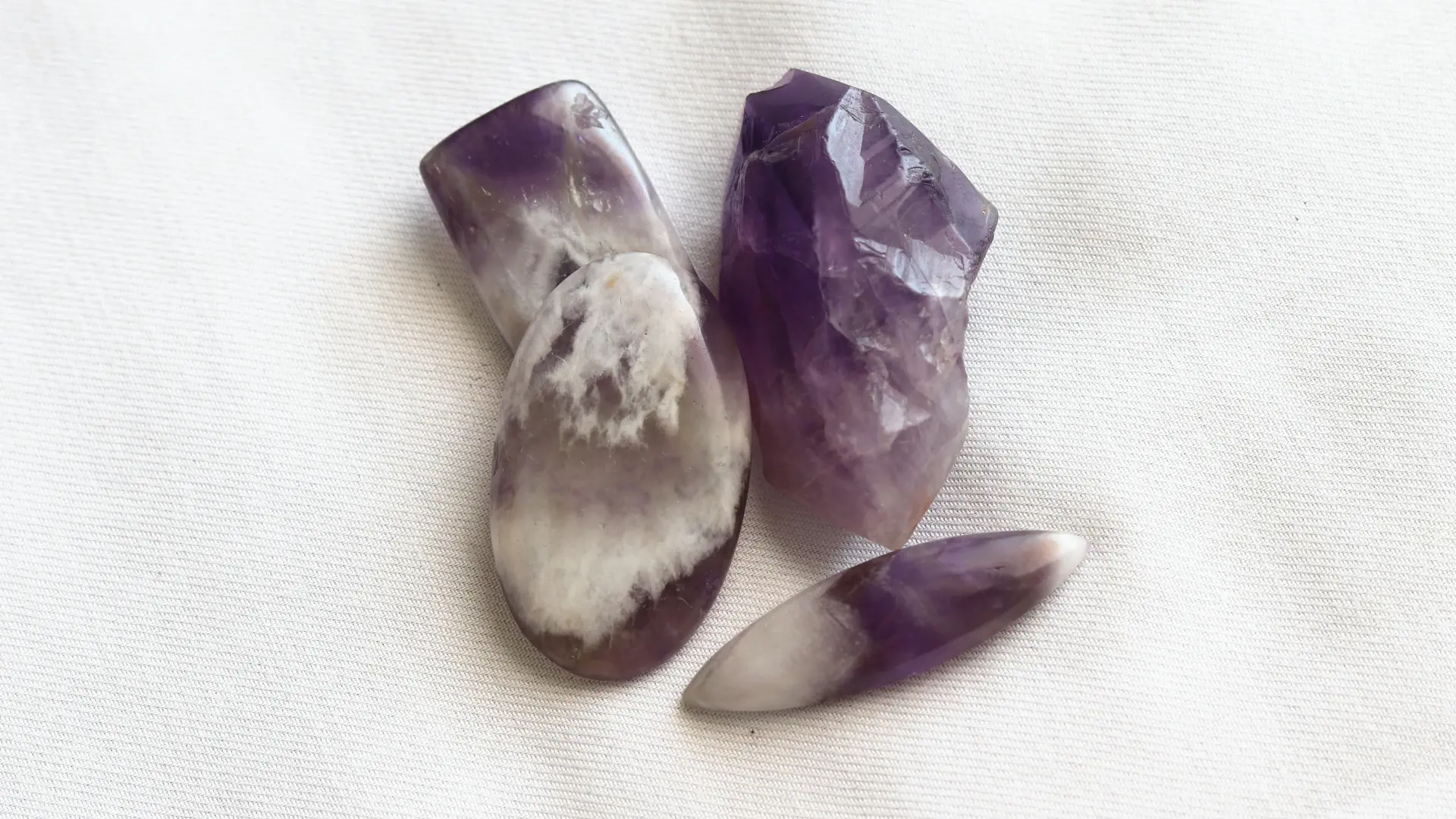
Purple quartz whose Greek name means "not drunk". By the common identification, one of the breastplate stones, and one of the best-loved stones in the world.
Aquamarine
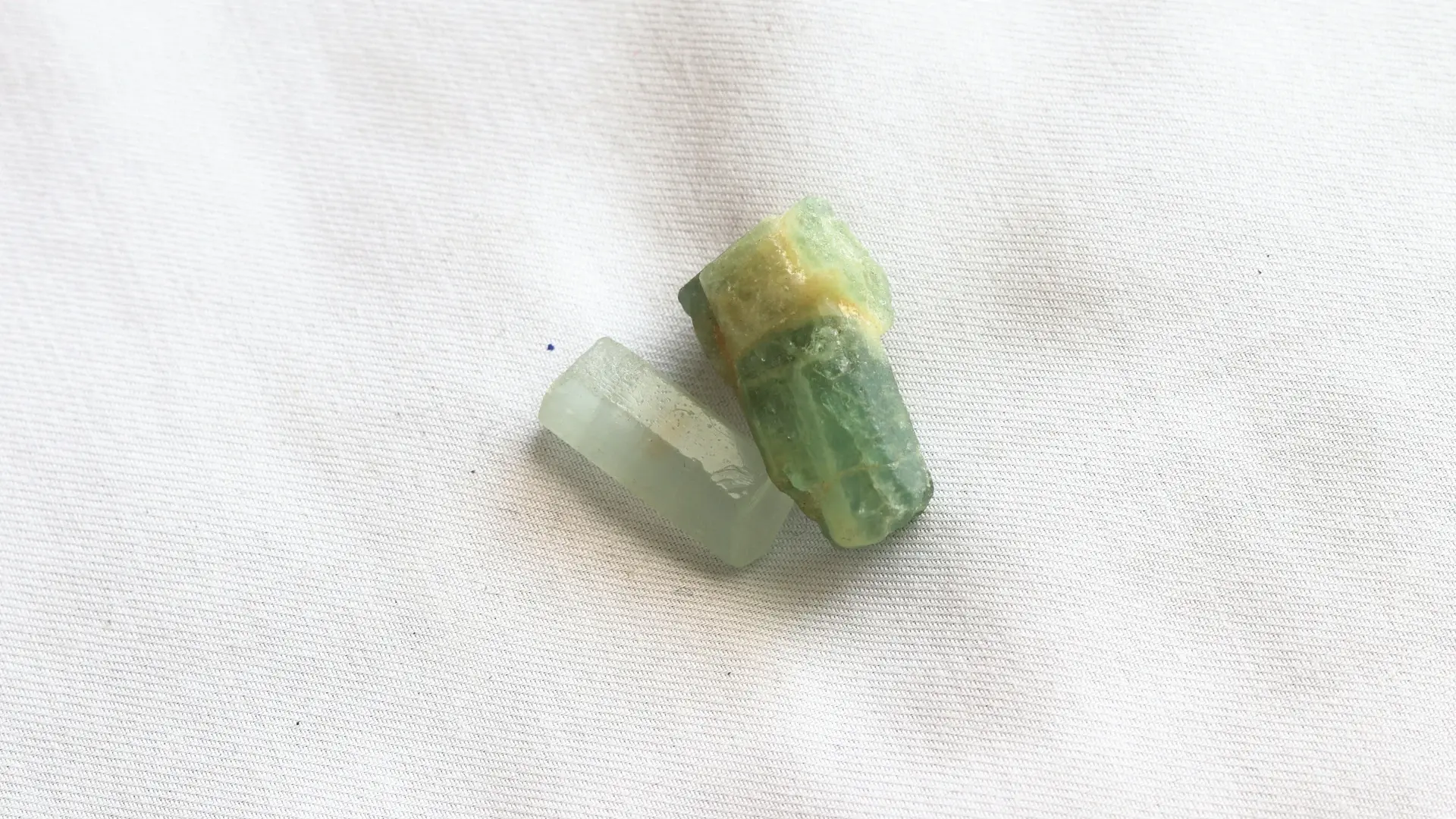
The blue-green variety of beryl, a close relative of emerald. Its name means "seawater".
Atlantisite
A natural mix of green serpentine and purple stichtite, from a single hill in Tasmania.