Strawberry Quartz
Pink to red quartz colored by inclusions that look like strawberry seeds. Also one of the stones most often imitated in glass.
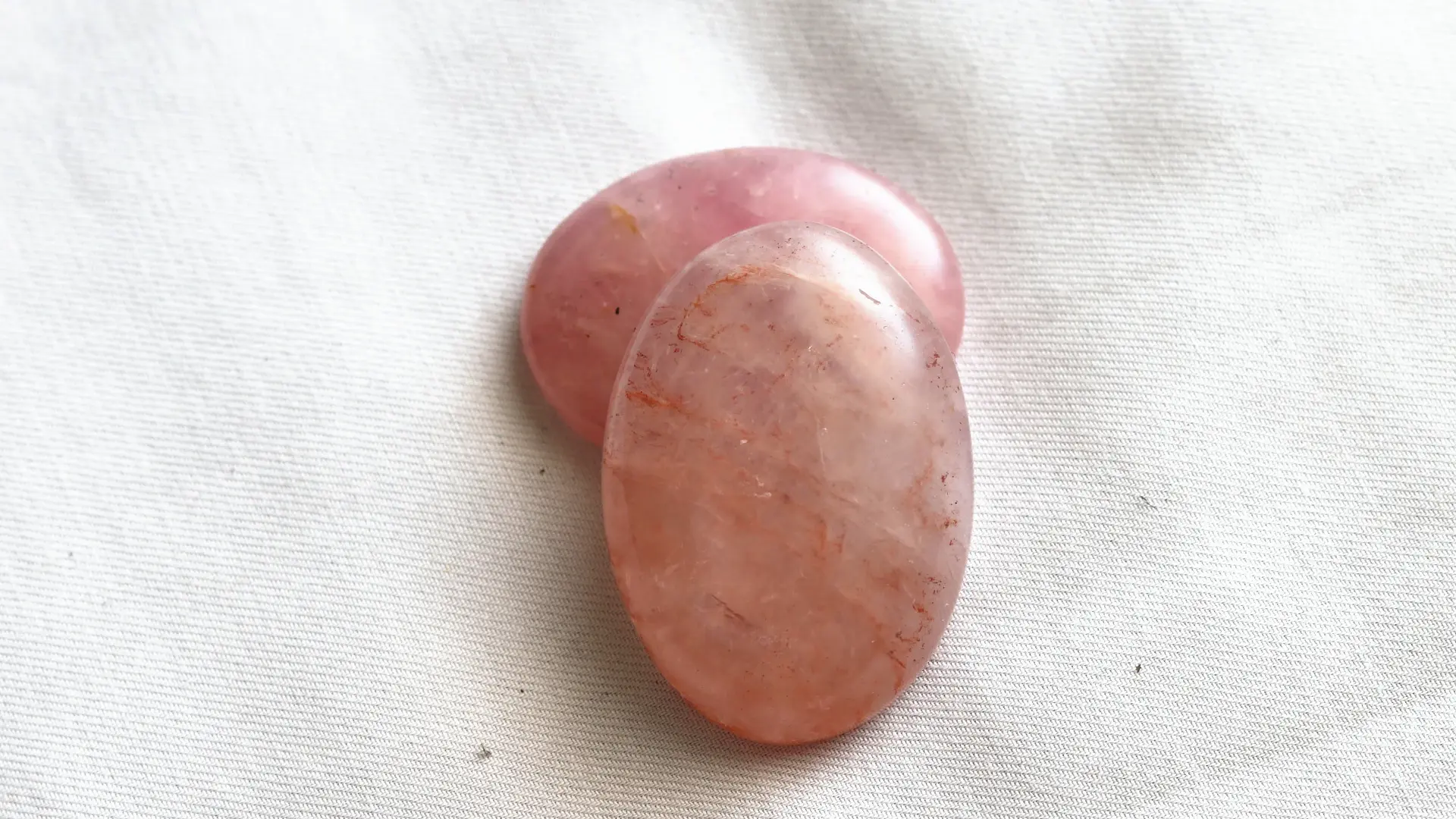
The photo shows two polished oval stones in pink, with thin reddish orange lines and specks inside. According to Geology.com, "strawberry quartz" is really a marketing name, not a mineral name: it is used for pink to red quartz that gets its color from eye-visible inclusions of other minerals. The inclusions can be platelets of hematite, flakes of lepidolite, a reddish orange mica called alurgite, and more. And why strawberry? According to the site, because those specks look like the seeds on a strawberry.
Strawberry quartz is not rose quartz, even though they look like relatives. According to Geology.com, the color of rose quartz probably comes from trace amounts of titanium, iron or manganese, or from very fine fibers of a pink mineral called dumortierite. In strawberry quartz, by contrast, the color comes from light reflecting off visible particles. So in rose quartz the color is built in, and in strawberry quartz it is scattered through the stone like seeds.
Now for the warning. According to Geology.com, nature does not provide enough fine strawberry quartz to meet demand, so the most common imitation is melted glass mixed with particles of hematite or another red material. A good imitation can be very convincing, but sometimes you can see tiny gas bubbles trapped in the glass. According to Crystal Almanac, the market is "flooded with imitations": dyed quartz, red glass, and even "cherry quartz" that is really glass.
Geology.com adds a nice distinction: an imitation is not necessarily a fake. Glass sold as "imitation strawberry quartz" is a perfectly legal product. It only becomes a fake when the seller does not tell you. We have not tested the stones in the photo in a lab. Their color is uneven, and the inclusions look like natural lines and specks, but without testing there is no way to be sure.
And to finish, a little humor from Geology.com: strawberry quartz is a relatively inexpensive stone, so it is set in sterling silver or 10 karat gold. The site writes that it is "waiting" for the jeweler Le Vian to set it in its trademarked "strawberry gold". Until then, the strawberries go without cream.
Crystal traditions
In crystal tradition
According to Crystal Almanac, strawberry quartz is called "the Stone of Universal Love". The site links it to the heart and crown chakras, to Libra, and to the water and fire elements. The site itself notes that these associations are cultural traditions, not medical advice or scientific fact.
Sources: Strawberry Quartz - The Stone of Universal Love, Crystal Almanac
Scientific information
Properties
Chemistry: silicon dioxide, SiO₂. A single quartz crystal, or quartzite (a rock of quartz grains).
Cause of color: eye-visible inclusions, such as hematite platelets, lepidolite flakes, alurgite (a reddish orange mica) or piemontite.
Mohs hardness: 7.
Specific gravity: 2.6 to 2.7.
Luster: vitreous. Transparent to translucent.
Common imitations: glass with red particles, sometimes showing gas bubbles.
Sources: Strawberry Quartz, Geology.com; Quartz Mineral | Photos, Uses, Properties, Pictures, Geology.com
Associations
Different traditions associate this stone with different things, and they sometimes conflict. Each association is shown with its tradition and sources.
Zodiac sign
LibraCrystal tradition
Sources: Strawberry Quartz - The Stone of Universal Love, Crystal Almanac
Element
WaterCrystal tradition
Sources: Strawberry Quartz - The Stone of Universal Love, Crystal Almanac
Element
FireCrystal tradition
Sources: Strawberry Quartz - The Stone of Universal Love, Crystal Almanac
Chakra
HeartCrystal tradition
Sources: Strawberry Quartz - The Stone of Universal Love, Crystal Almanac
Chakra
CrownCrystal tradition
Sources: Strawberry Quartz - The Stone of Universal Love, Crystal Almanac
Sources
- Strawberry Quartz, Geology.comAccessed September 24, 2026
- Quartz Mineral | Photos, Uses, Properties, Pictures, Geology.comAccessed September 24, 2026
- Strawberry Quartz - The Stone of Universal Love, Crystal AlmanacAccessed September 24, 2026
More crystals
Amazonite
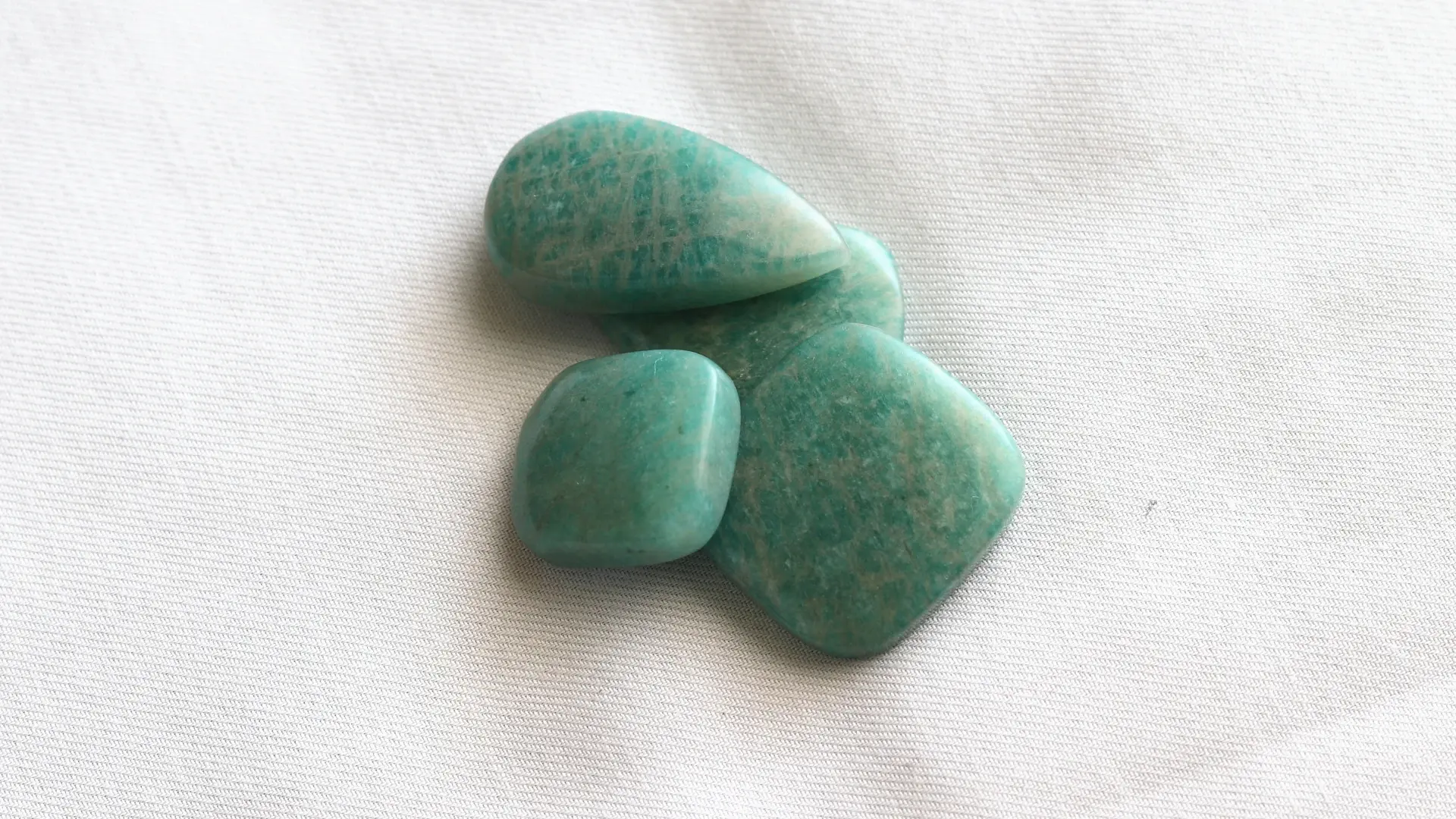
A turquoise-green variety of the feldspar microcline. Despite the name, it does not come from the Amazon.
Amethyst
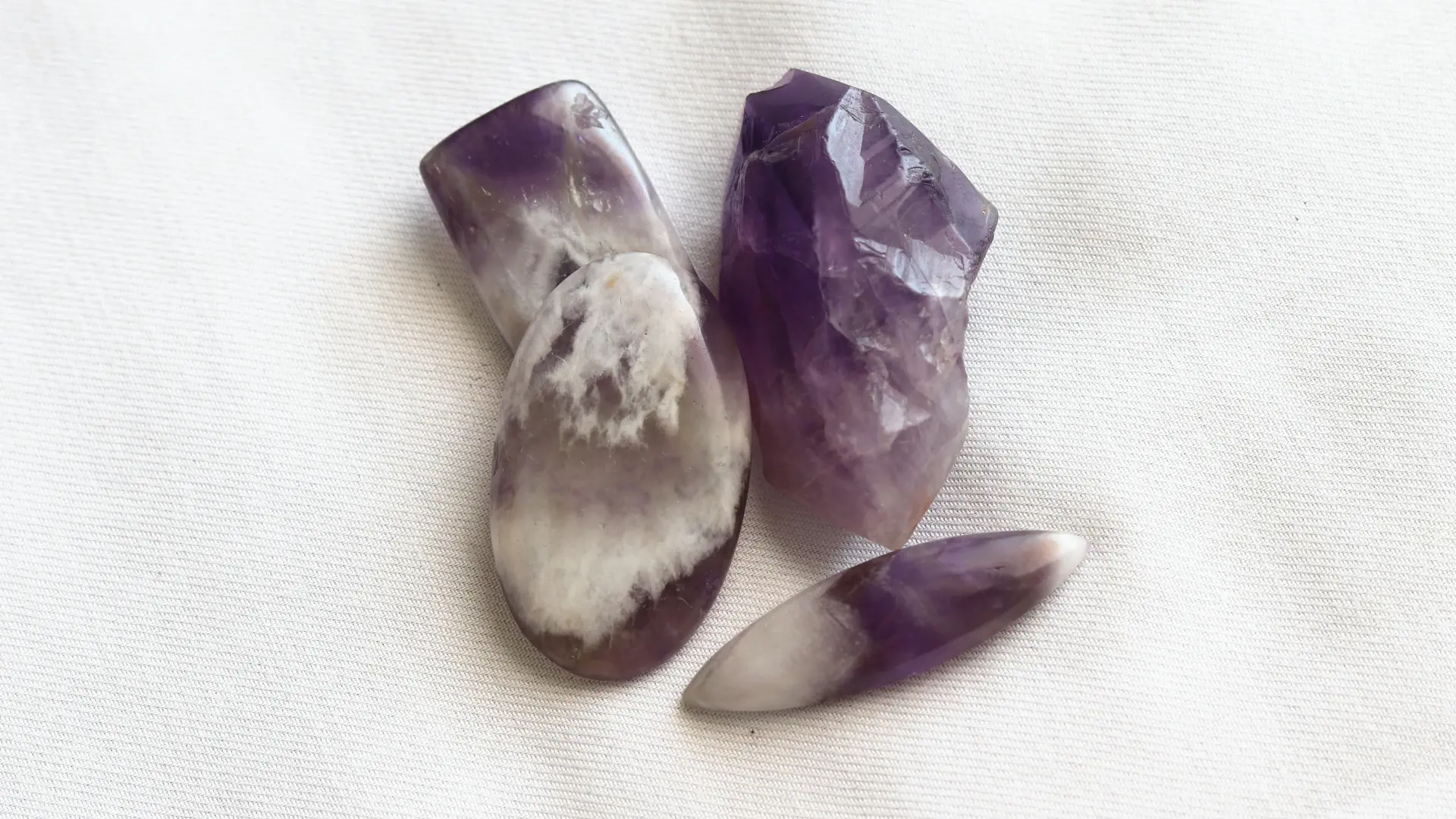
Purple quartz whose Greek name means "not drunk". By the common identification, one of the breastplate stones, and one of the best-loved stones in the world.
Aquamarine
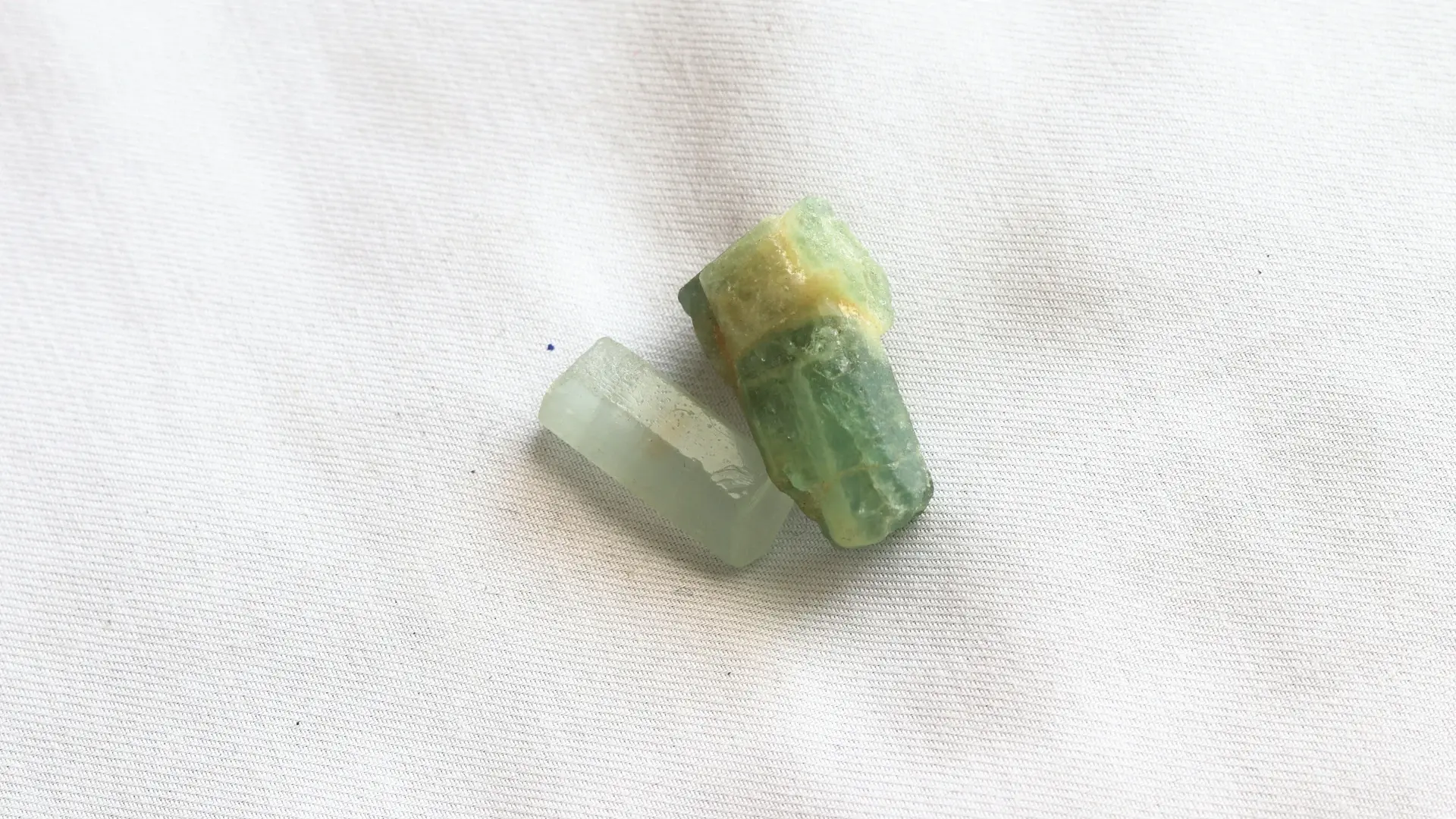
The blue-green variety of beryl, a close relative of emerald. Its name means "seawater".
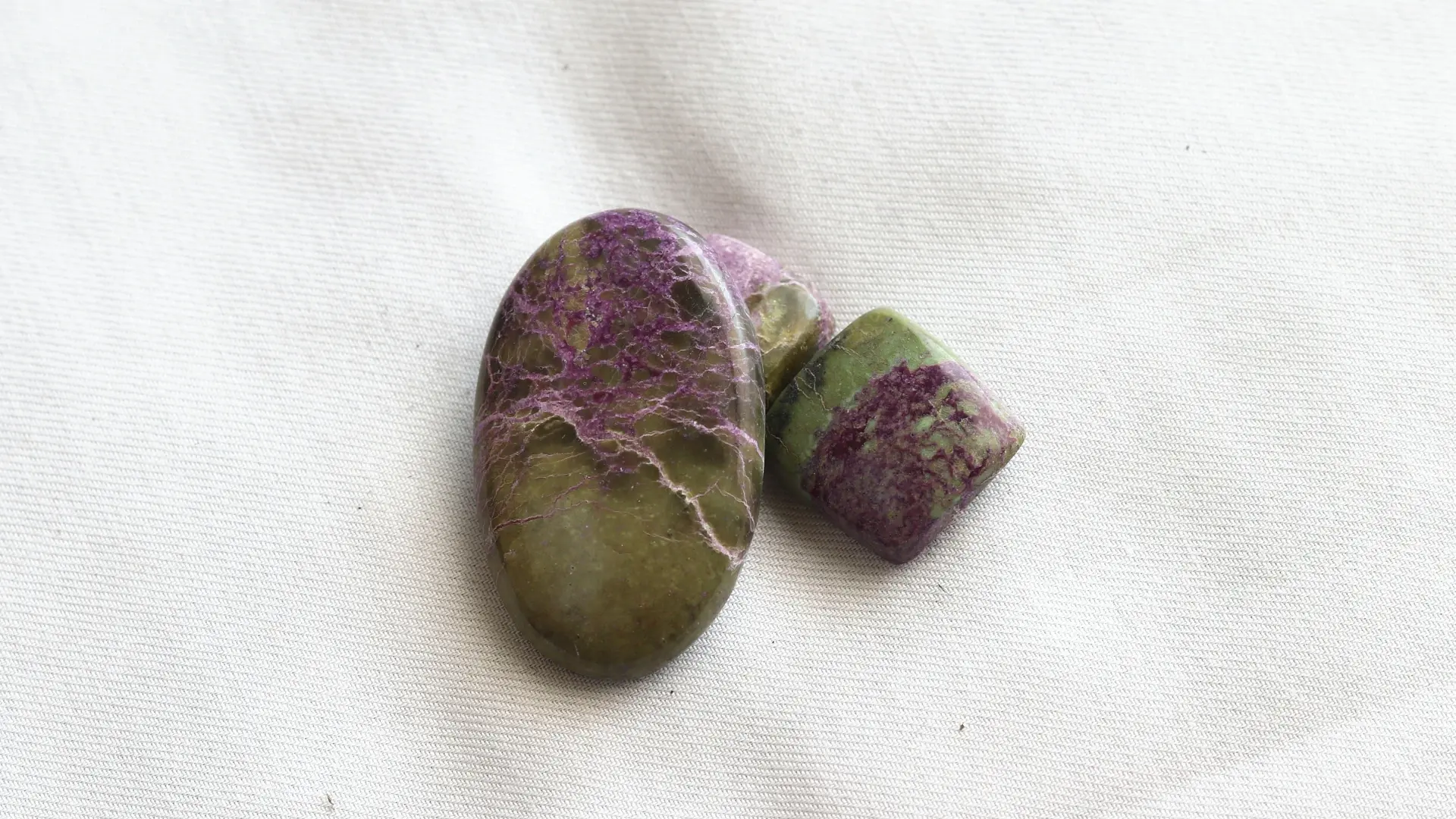
Atlantisite
A natural mix of green serpentine and purple stichtite, from a single hill in Tasmania.