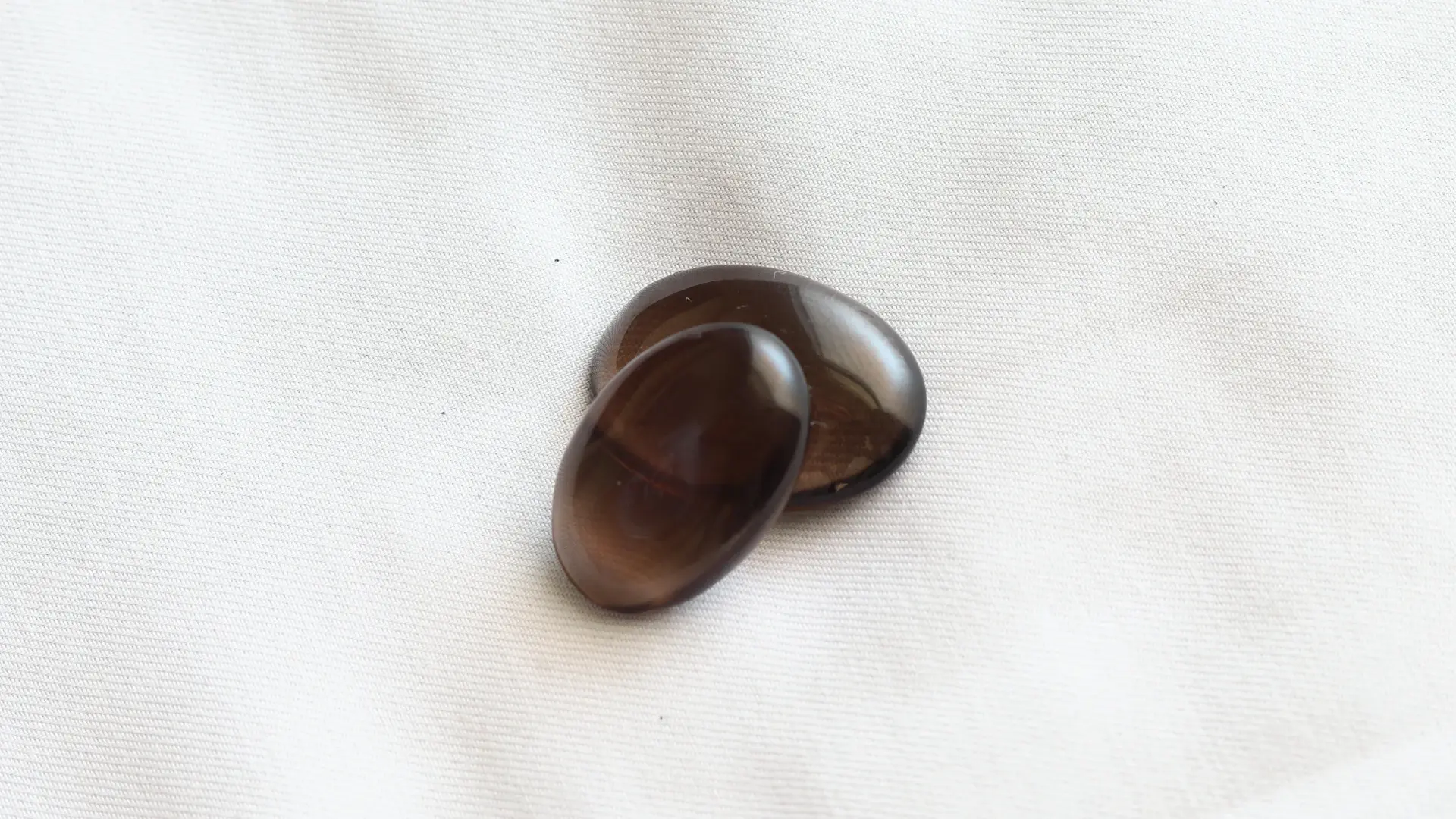
Smoky Quartz
Brown, transparent quartz colored by natural radiation. In 12th-century China it was made into sunglasses for judges.
Smoky quartz is brown to black quartz, and it can be almost completely transparent or so dark it is nearly opaque. The photo shows two polished oval stones in dark brown, translucent, with lighter bands inside. According to Wikipedia, in some crystals the color is zoned, and sometimes it is darker near the edges.
Where does the smoke come from? According to Wikipedia and Geology.com, natural gamma radiation from the surrounding rock acts on tiny aluminium impurities inside the quartz and creates "color centers". Amethyst forms in a similar way, with iron instead of aluminium. And it can be undone: according to Wikipedia, if smoky quartz is heated above 200 to 300 °C or exposed to UV light, the color fades, and sometimes it turns a pale yellow that looks like citrine. Some heat-treated smoky quartz is sold as citrine.
Its best story comes from China. According to Wikipedia, as early as the 12th century, flat panes of smoky quartz were used there as sunglasses. And according to Geology.com, some were worn by judges in court, to hide their facial expressions. A 12th-century poker face.
In Scotland, smoky quartz is the national gem. According to Geology.com, it is called "cairngorm" there, after the Cairngorm Mountains, and according to Wikipedia, it decorates kilt pins and the handles of the small knife called the sgian-dubh. The very dark, almost black variety is called morion, and according to Wikipedia, that name comes from a misreading of the word mormorion in Pliny the Elder. According to Geology.com, in the Victorian era dark brown stones from the Mourne Mountains of Ireland were also used in mourning jewelry.
According to Geology.com, most of the smoky quartz used in jewelry today comes from Brazil, and also from Madagascar. It is common and relatively cheap, which makes it a favorite practice material for people learning to facet gems. If you get it wrong, it will not cost much.
Crystal traditions
In crystal tradition
According to Crystal Vaults, smoky quartz is "a talisman of the Root Chakra", grounding a person and anchoring them in the physical world. The site writes that it was known as "a Stone of Power", and that it was sacred to the ancient Druids. According to the site, it is used mainly for protection and for absorbing negative energy.
According to the site, smoky quartz has an affinity with all the signs, but it is particularly helpful in reducing Capricorn's self-criticism, and in giving Libras the courage to look within.
Scientific information
Properties
Chemistry: silicon dioxide, SiO₂. A color variety of quartz.
Crystal system: trigonal.
Mohs hardness: 7.
Specific gravity: 2.6 to 2.7.
Luster: vitreous. Transparent to translucent.
Fracture: conchoidal, no cleavage.
Cause of color: natural gamma radiation creating color centers around aluminium impurities.
Sensitivity: the color fades when heated above 200 to 300 °C or exposed to UV light.
Varieties: morion (very dark, almost black), cairngorm (yellowish brown, from Scotland).
Sources: Smoky Quartz: A transparent brown gem & gem material, Geology.com; Smoky quartz, Wikipedia
Associations
Different traditions associate this stone with different things, and they sometimes conflict. Each association is shown with its tradition and sources.
Sources
- Smoky Quartz: A transparent brown gem & gem material, Geology.comAccessed September 24, 2026
- Smoky quartz, WikipediaAccessed September 24, 2026
- Smoky Quartz Meaning and Uses, Crystal VaultsAccessed September 24, 2026
More crystals
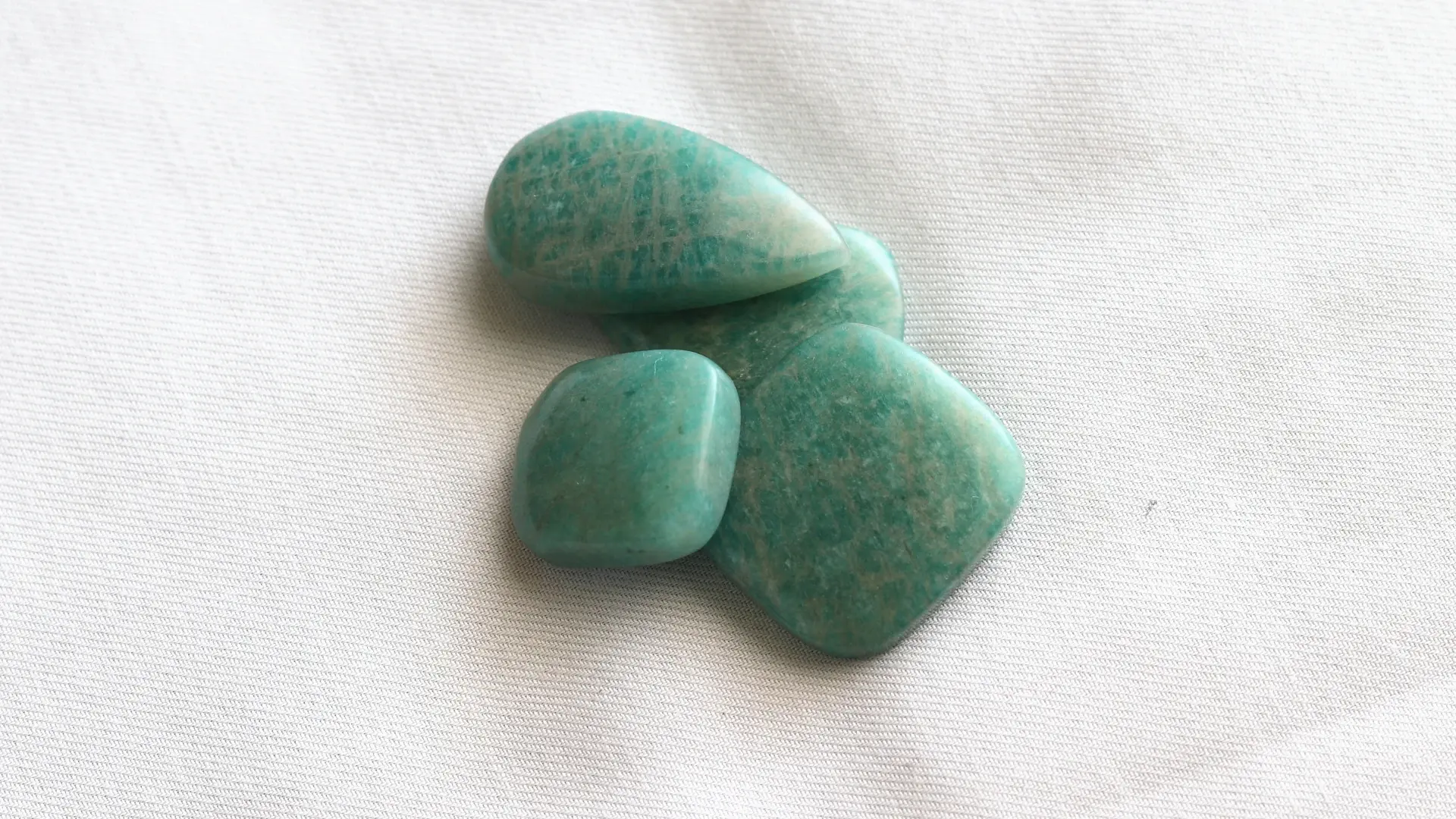
Amazonite
A turquoise-green variety of the feldspar microcline. Despite the name, it does not come from the Amazon.
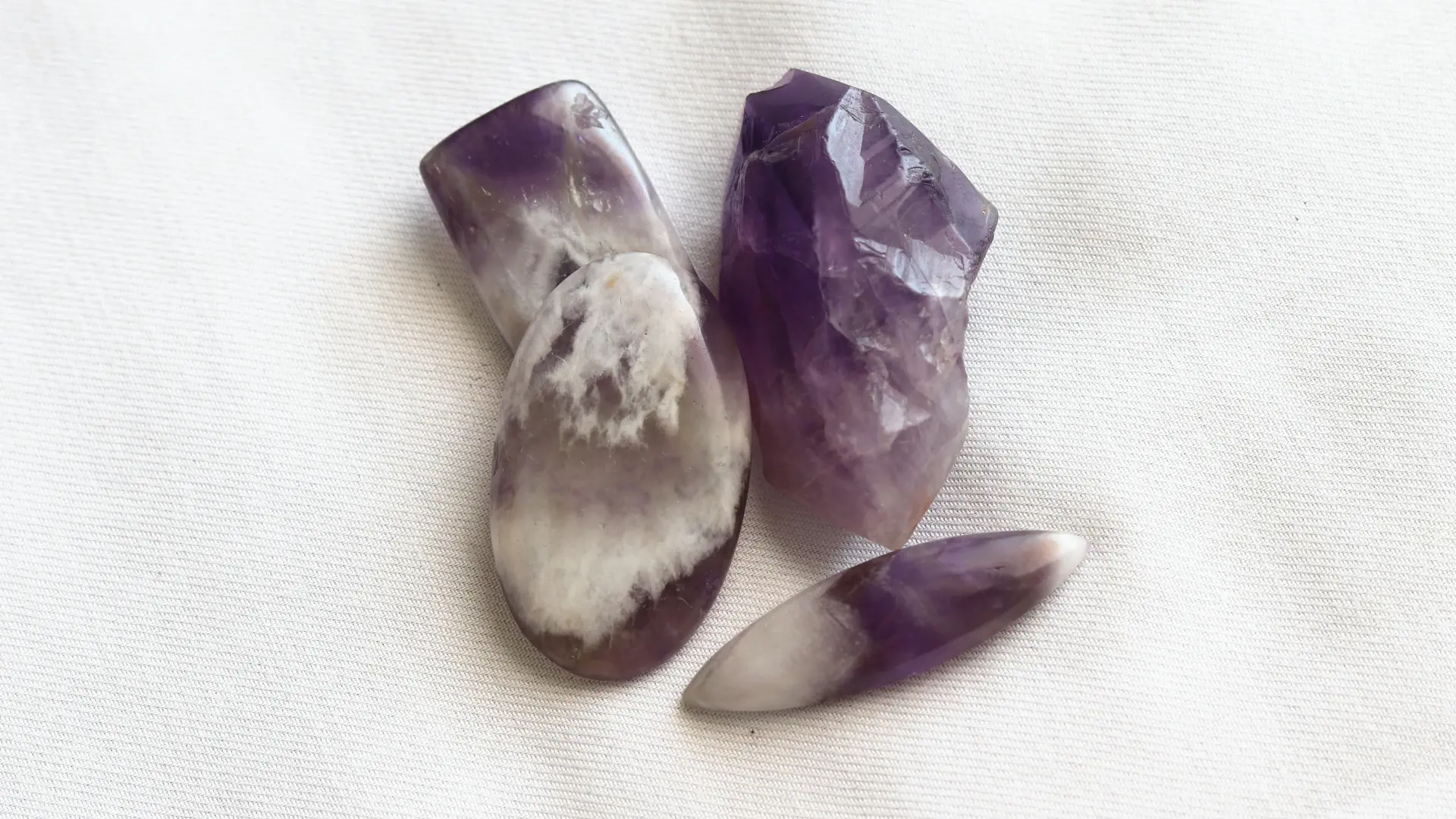
Amethyst
Purple quartz whose Greek name means "not drunk". By the common identification, one of the breastplate stones, and one of the best-loved stones in the world.
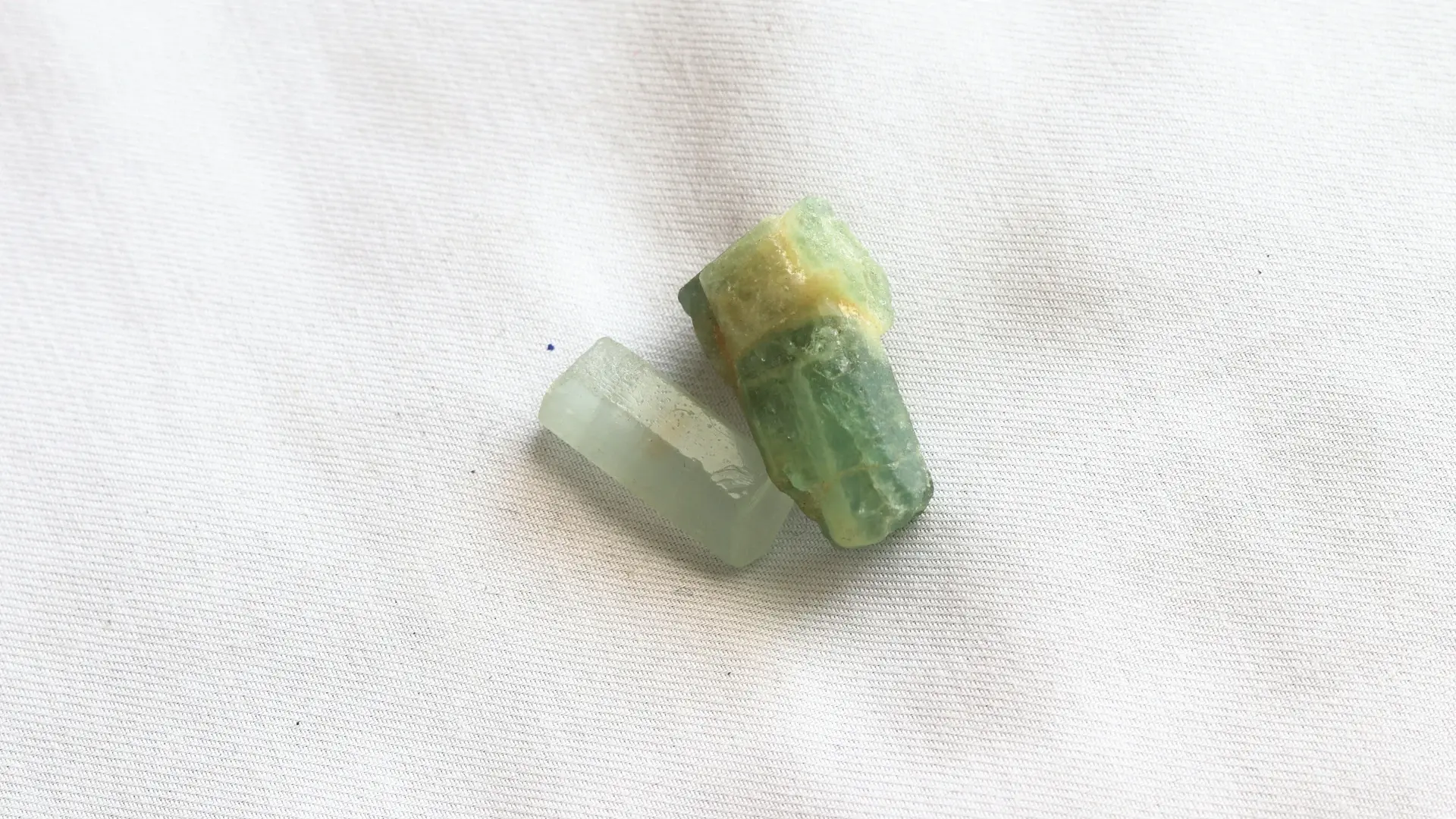
Aquamarine
The blue-green variety of beryl, a close relative of emerald. Its name means "seawater".
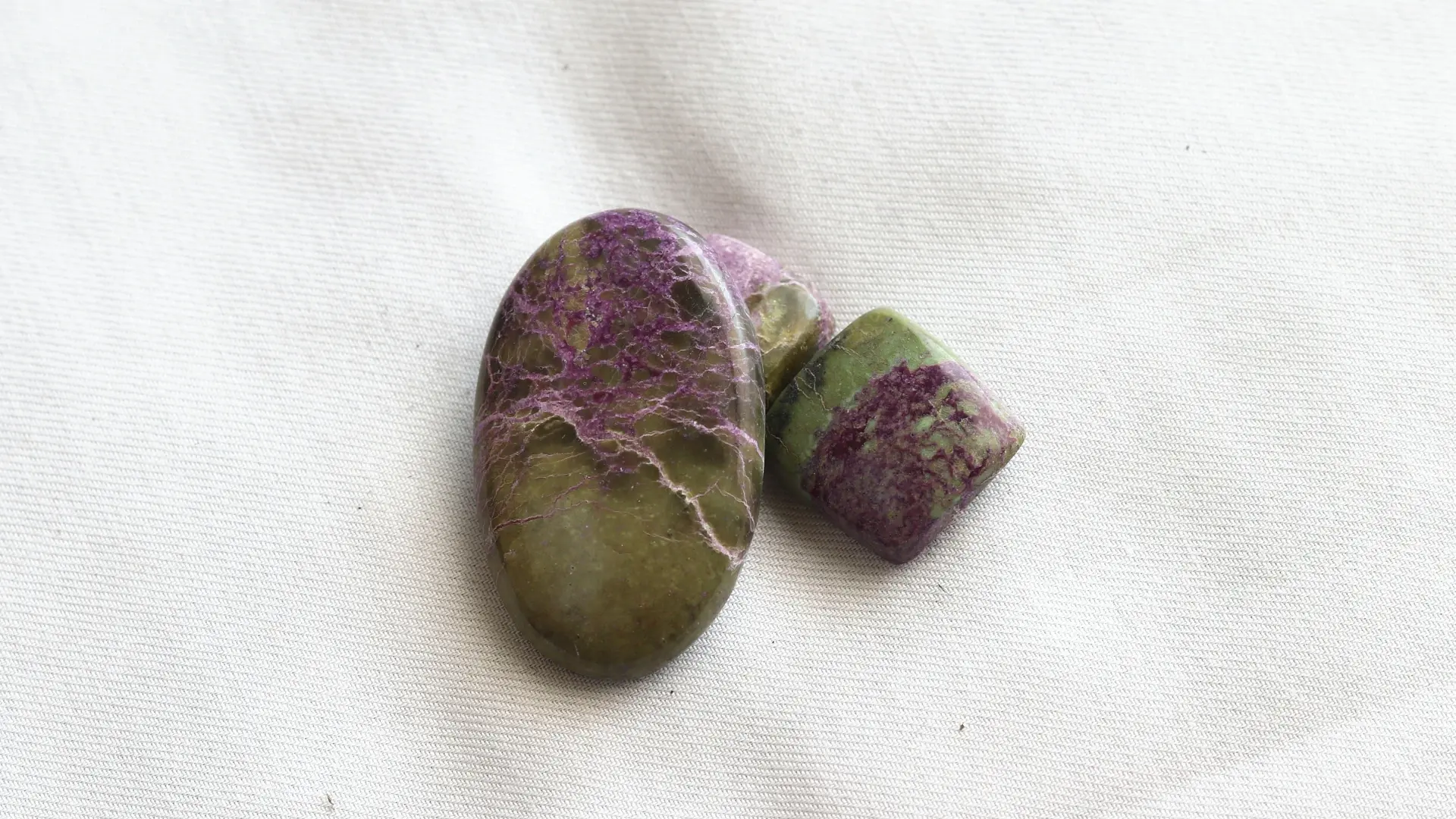
Atlantisite
A natural mix of green serpentine and purple stichtite, from a single hill in Tasmania.