Silver Sheen Obsidian
Natural glass from a volcano, with a silver sheen that comes and goes as you turn it. Sharp enough for surgeons to use.
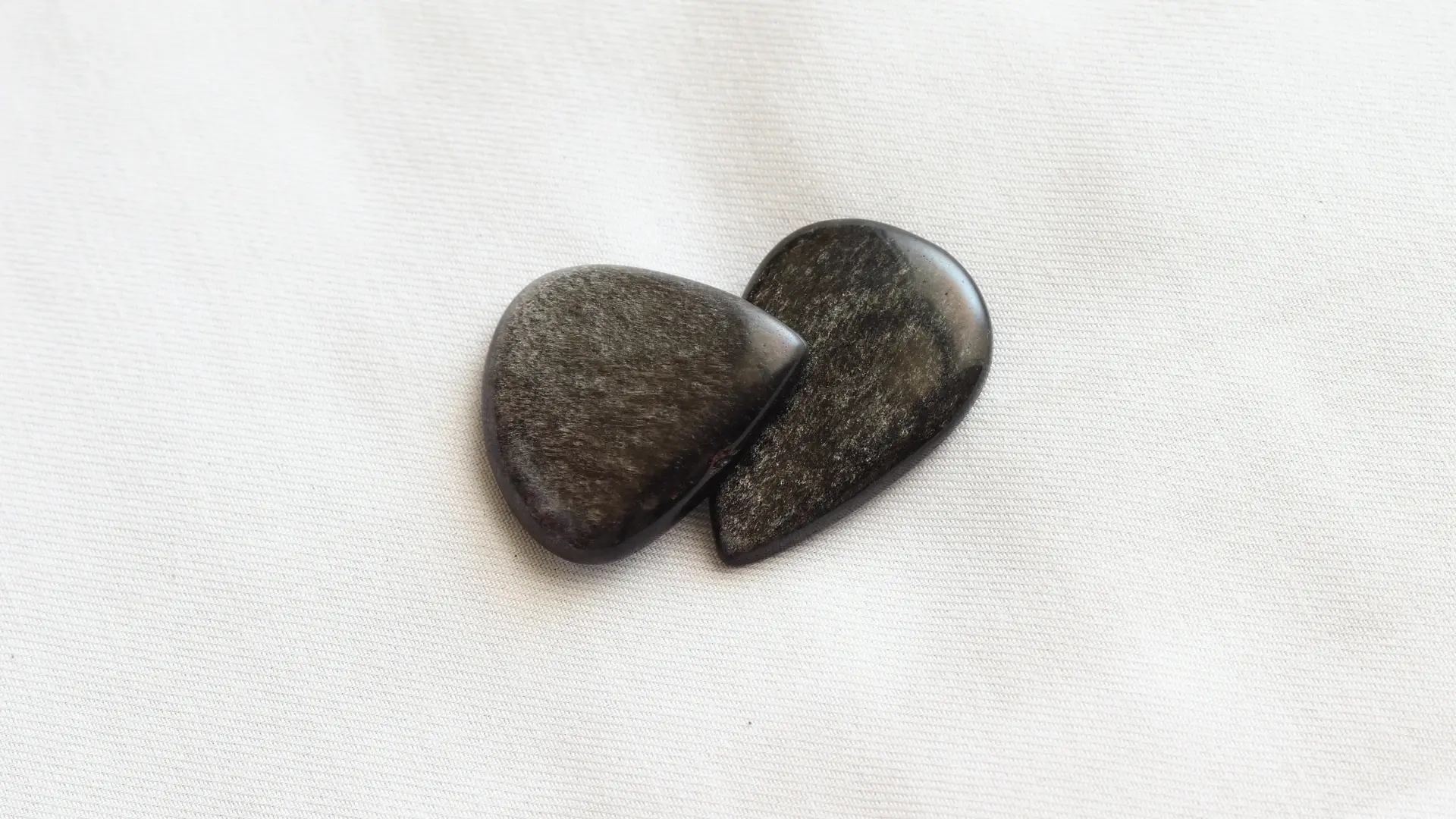
Obsidian is glass. Not window glass, but glass that a volcano made all by itself. According to Wikipedia, it forms when silica-rich lava cools so fast that the atoms do not have time to arrange themselves into crystals. That is why it is not considered a true mineral, but a "mineraloid". The photo shows two teardrop-shaped stones, greyish black, with a silver sheen running across both, like brushed metal.
That sheen is the whole story. According to Geology.com, obsidian sometimes has a metallic sheen caused by light reflecting from tiny inclusions of mineral crystals, rock debris or gas, and according to Wikipedia, gas bubbles aligned in layers as the lava flowed can produce such a sheen. So the silver you see is really a trace of flowing lava. And according to Wikipedia, its look depends on the direction of the cut: from one direction the stone is jet black, and from another it is glistening grey.
Glass breaks with a conchoidal fracture and very sharp edges, and people found that out early. According to Wikipedia, the first archaeological evidence of obsidian use, from Kenya, dates to about 700,000 years ago. It turns up in Israel too: at Gilat, in the western Negev, eight obsidian artifacts from the Chalcolithic period were found, and lab analysis traced them to sources in Anatolia. So even back then, someone bothered to haul glass from Turkey to the Negev.
And that sharpness is still useful. According to Wikipedia, an obsidian blade can be many times sharper than a steel surgical scalpel: its edge is about three nanometers thick, and it stays smooth even under an electron microscope. Some surgeons use it, although the US FDA has not approved it for use on humans. According to Wikipedia, some Aztec priests also used obsidian mirrors to conjure visions, and these mirrors were connected with the god Tezcatlipoca, whose name translates as "Smoking Mirror".
Just do not confuse sharp with tough. According to Geology.com, obsidian has a hardness of about 5.5, scratches easily, and breaks or chips on impact. So it suits earrings and pendants better than rings and bracelets.
Crystal traditions
In crystal tradition
According to Crystal Vaults, obsidian is "a talisman of those who dare to see" the past, the future, or their own inner demons. The site describes it as a "mirror stone" that reveals one's shadow self, and as a grounding, protective stone connecting the base of the spine to the heart of the earth, that is, the root chakra. According to the site, obsidian is a zodiac stone of Capricorn.
Its name, according to the site, comes with a story too: the Latin obsidianus is an erroneous transcription of obsianus, "the stone of Obsius", the Roman who discovered it. According to Wikipedia, Pliny the Elder wrote that it was discovered in Ethiopia.
Sources: Obsidian Healing Properties, Meanings, and Uses, Crystal Vaults; Obsidian, Wikipedia
Scientific information
Properties
Type: natural volcanic glass, an igneous rock. Amorphous, with no crystal structure. A mineraloid, not a mineral.
Composition: mainly silicon dioxide (SiO₂), usually 70% by weight or more, plus oxides of aluminium, iron, potassium, sodium and calcium.
Mohs hardness: about 5 to 5.5.
Fracture: conchoidal, with very sharp edges. Not tough, and chips on impact.
Silver sheen: light reflected from tiny inclusions or from gas bubbles aligned in layers as the lava flowed.
Color: usually black, due to magnetite nanoinclusions. Sometimes brown, grey or greenish.
Age: the glass slowly crystallizes over time, so very old obsidian is rare.
Sources: Obsidian, Wikipedia; Obsidian: Igneous Rock - Pictures, Uses, Properties, Geology.com; Obsidian Healing Properties, Meanings, and Uses, Crystal Vaults
Associations
Different traditions associate this stone with different things, and they sometimes conflict. Each association is shown with its tradition and sources.
Zodiac sign
CapricornCrystal tradition
The source refers to obsidian in general.
Sources: Obsidian Healing Properties, Meanings, and Uses, Crystal Vaults
Chakra
RootCrystal tradition
The source refers to obsidian in general.
Sources: Obsidian Healing Properties, Meanings, and Uses, Crystal Vaults
Sources
- Obsidian, WikipediaAccessed September 24, 2026
- Obsidian: Igneous Rock - Pictures, Uses, Properties, Geology.comAccessed September 24, 2026
- Obsidian Healing Properties, Meanings, and Uses, Crystal VaultsAccessed September 24, 2026
More crystals
Amazonite
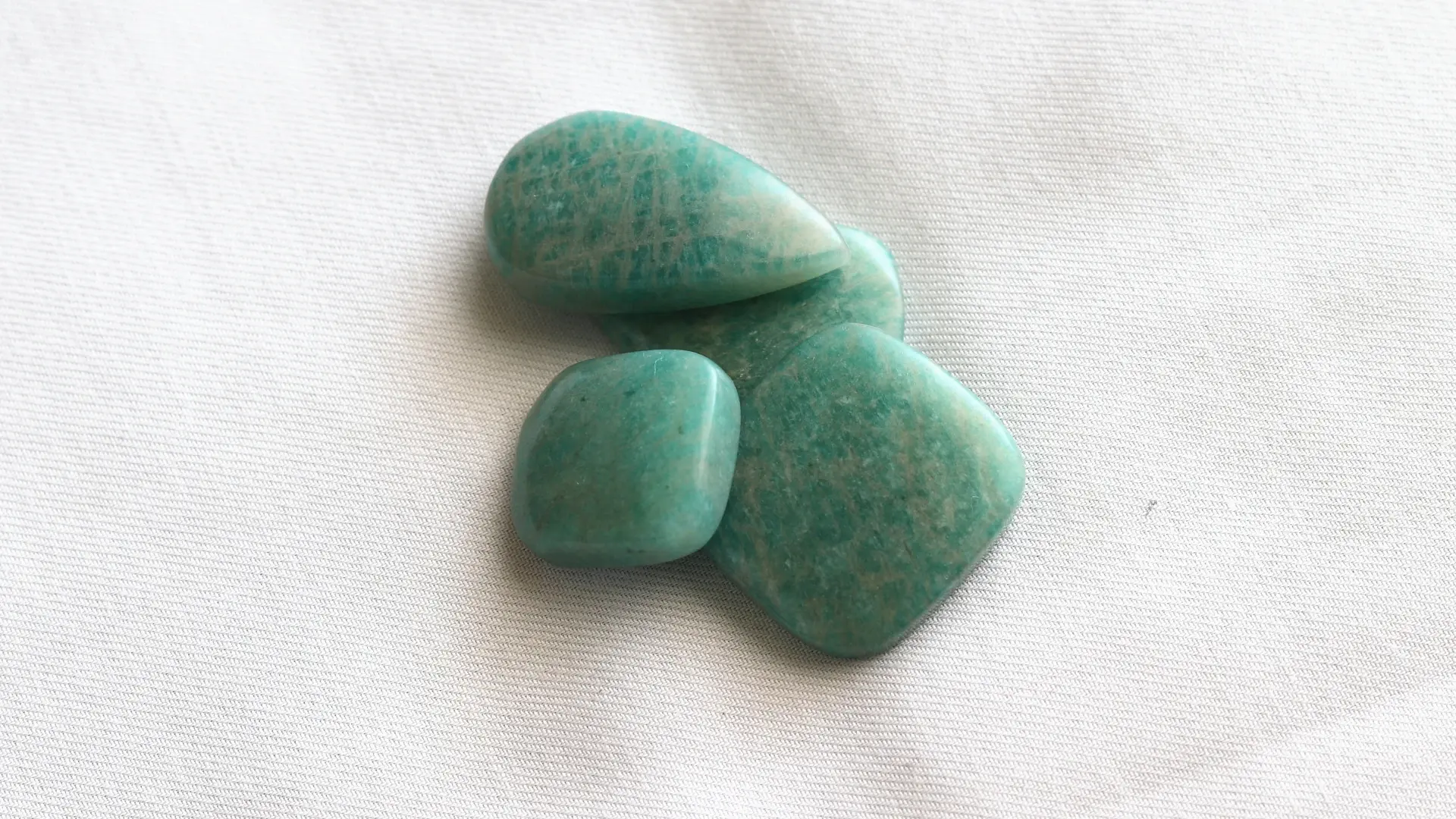
A turquoise-green variety of the feldspar microcline. Despite the name, it does not come from the Amazon.
Amethyst
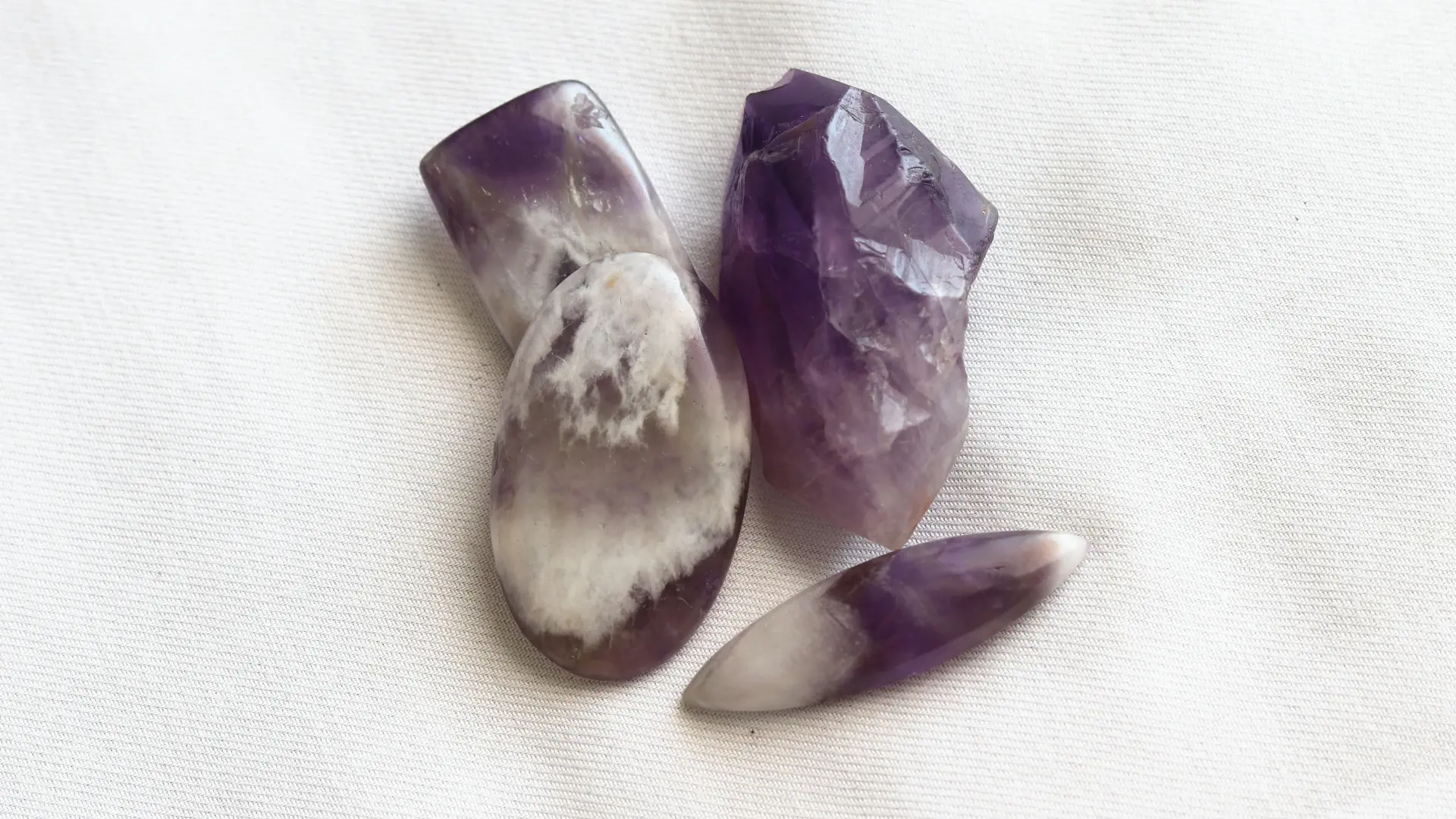
Purple quartz whose Greek name means "not drunk". By the common identification, one of the breastplate stones, and one of the best-loved stones in the world.
Aquamarine
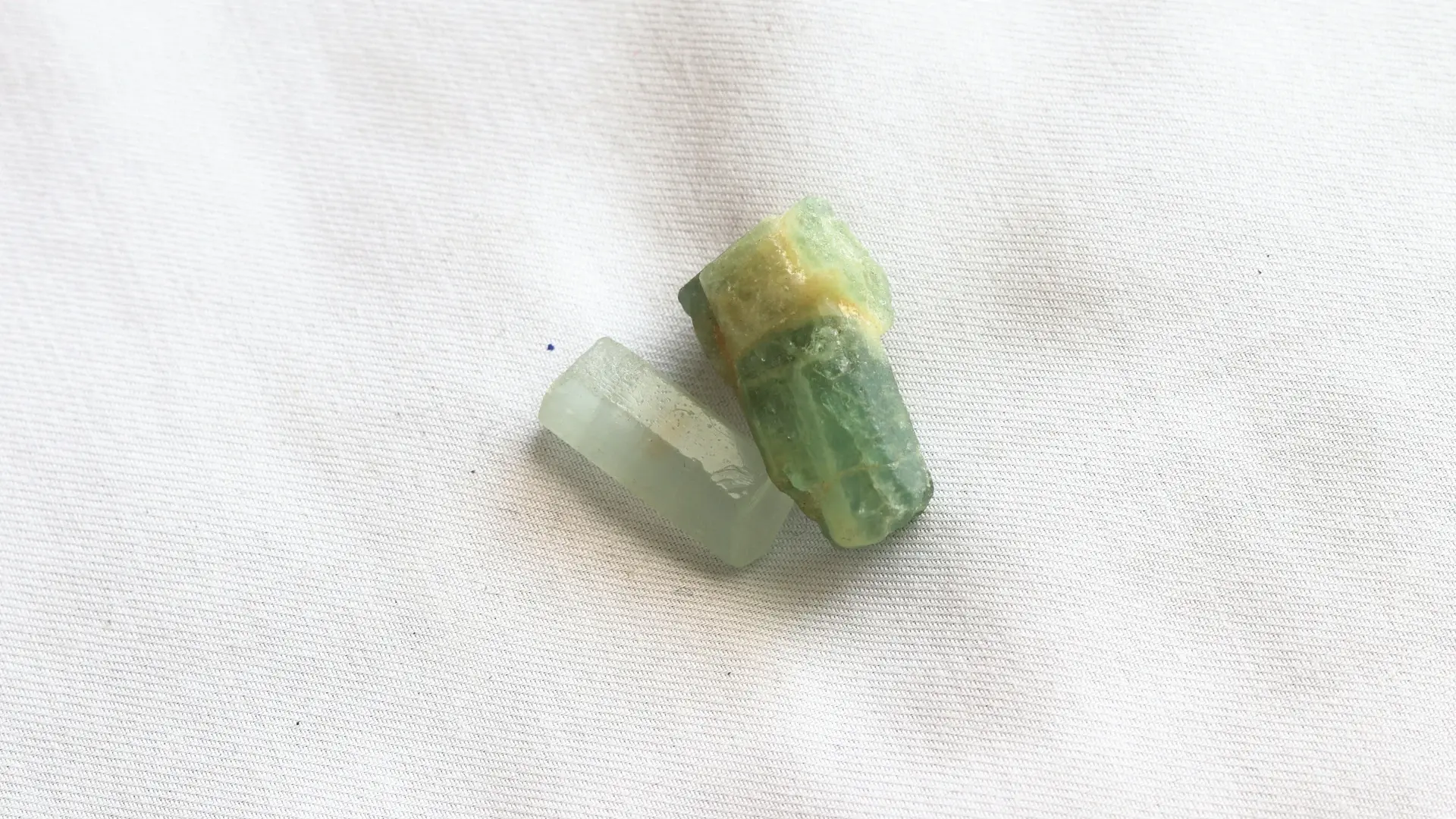
The blue-green variety of beryl, a close relative of emerald. Its name means "seawater".
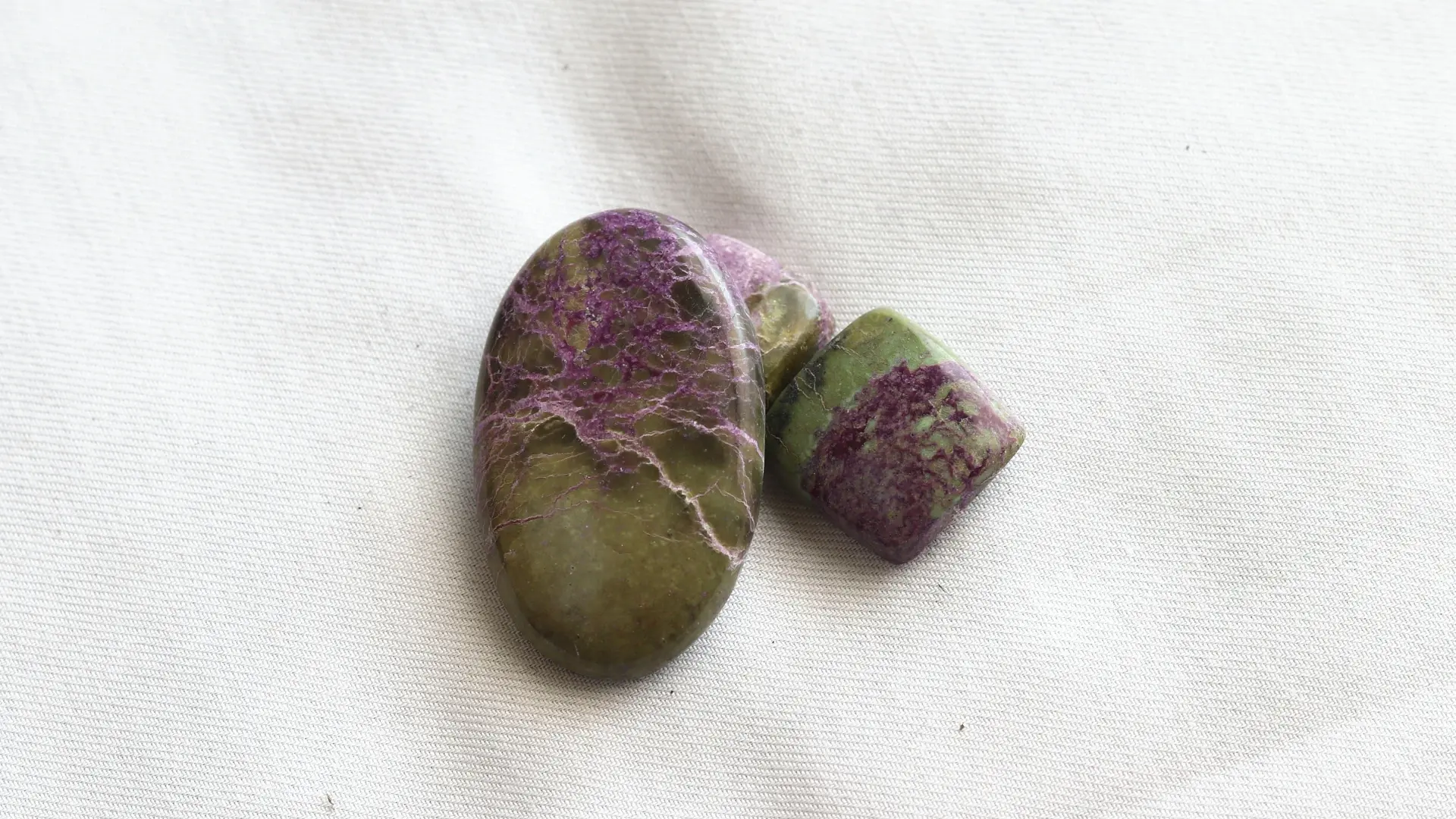
Atlantisite
A natural mix of green serpentine and purple stichtite, from a single hill in Tasmania.