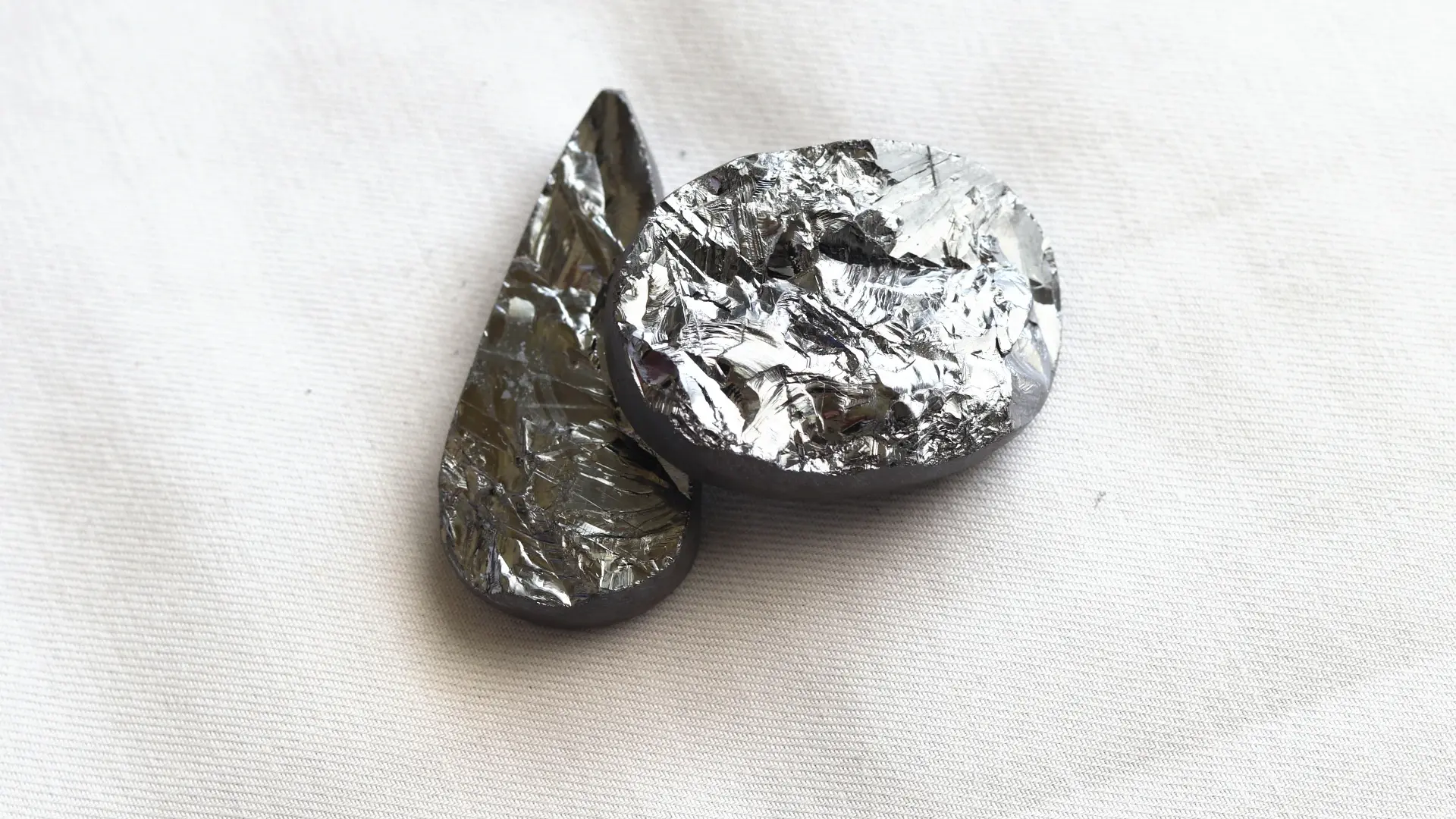
Silicon Crystal
The element hiding in almost every stone, but almost never found alone in nature. These pieces were made by people.
The photo shows two silvery pieces with a crinkled, shiny surface, as if someone wrapped a stone in aluminium foil and forgot to unwrap it. This is silicon. And it is worth saying right at the start: it is not a mineral mined from the ground. According to Wikipedia, silicon very rarely occurs in its pure form in nature. These pieces were made by people.
Which is funny, because silicon is everywhere. According to Wikipedia, it is the second most abundant element in the Earth's crust, about 28% by mass, after oxygen. More than 90% of the crust is made of silicate minerals. The quartz, amethyst, jasper, moonstone and tourmaline on this site all contain silicon. It is just that in nature it is always bound to oxygen. Getting it on its own takes hard work.
How is it done? According to Wikipedia, quartz or sand is heated with coke in an electric arc furnace, which gives silicon of 96 to 99% purity. For electronics and chips that is still not enough, so it is purified further. The common method, the "Siemens process", produces rods of polysilicon that are broken into chunks. According to Wikipedia, polysilicon is made of many small crystals, which gives it a "metal flake effect". The crinkled surface in the photo looks exactly like that, but we have not checked which process our stones came from.
The name has a story too. According to Wikipedia, in 1808 the English chemist Humphry Davy proposed the name silicium, from the Latin silex, flint. In 1817 the Scottish chemist Thomas Thomson changed it to silicon, because he believed it was not a metal. The Hebrew name, tzoran, comes from exactly the same place: tzor, flint. By the way, silicon is not the silicone of baking molds and sealants. That is a family of materials made from silicon.
And what do you do with silicon besides putting it on a shelf? According to Wikipedia, it is why our era is called "the Silicon Age": it is the basis of transistors, chips and solar cells. It gave its name to Silicon Valley in California, and to Silicon Wadi in Israel. So the device you are reading this on may well be made of the same stuff as the stone in the photo.
Crystal traditions
In crystal tradition
Silicon has a place in crystal tradition too. According to the site CrystalsAndJewelry, silicon brings "enhanced communication, grace under pressure, and agility of thought", helps with focus and with telling truth from lies, and balances yin and yang. According to the site, it resonates with the heart, upper heart and crown chakras.
Sources: Silicon: Meanings, Properties and Powers - The Complete Guide, CrystalsAndJewelry.com
Scientific information
Properties
Composition: the chemical element silicon, Si, atomic number 14. A semiconductor, sometimes considered a metalloid.
Origin: man-made. In nature silicon very rarely occurs pure. It is bound to oxygen, in quartz and silicate minerals.
Crystal structure: cubic, in the diamond structure. Polysilicon is made of many small crystals, which gives it a "metal flake effect".
Appearance: blue-grey with a metallic luster. Hard and brittle.
Melting point: 1414 °C. Like ice, silicon contracts when it melts.
Production: quartz or sand heated with coke in an electric arc furnace (96 to 99% purity), then purified further for electronics, for example by the "Siemens process".
Sources: Silicon, Wikipedia; Polycrystalline silicon, Wikipedia; צורן, ויקיפדיה
Associations
Different traditions associate this stone with different things, and they sometimes conflict. Each association is shown with its tradition and sources.
Chakra
HeartCrystal tradition
The source also lists the "upper heart", which is not in our list of chakras.
Sources: Silicon: Meanings, Properties and Powers - The Complete Guide, CrystalsAndJewelry.com
Chakra
CrownCrystal tradition
Sources: Silicon: Meanings, Properties and Powers - The Complete Guide, CrystalsAndJewelry.com
Sources
- Silicon, WikipediaAccessed September 24, 2026
- Polycrystalline silicon, WikipediaAccessed September 24, 2026
- צורן, ויקיפדיהAccessed September 24, 2026
- Silicon: Meanings, Properties and Powers - The Complete Guide, CrystalsAndJewelry.comAccessed September 24, 2026
More crystals
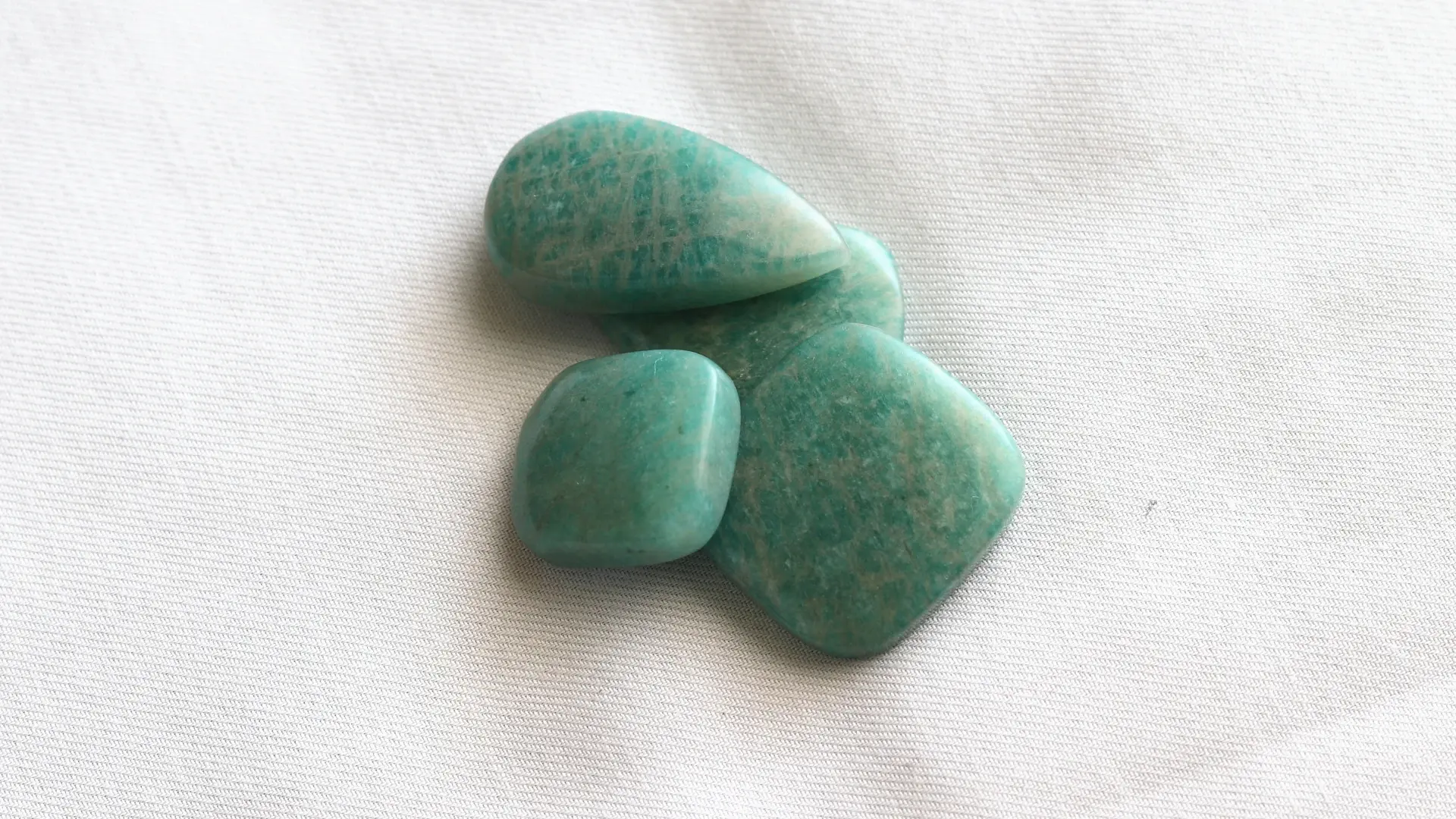
Amazonite
A turquoise-green variety of the feldspar microcline. Despite the name, it does not come from the Amazon.
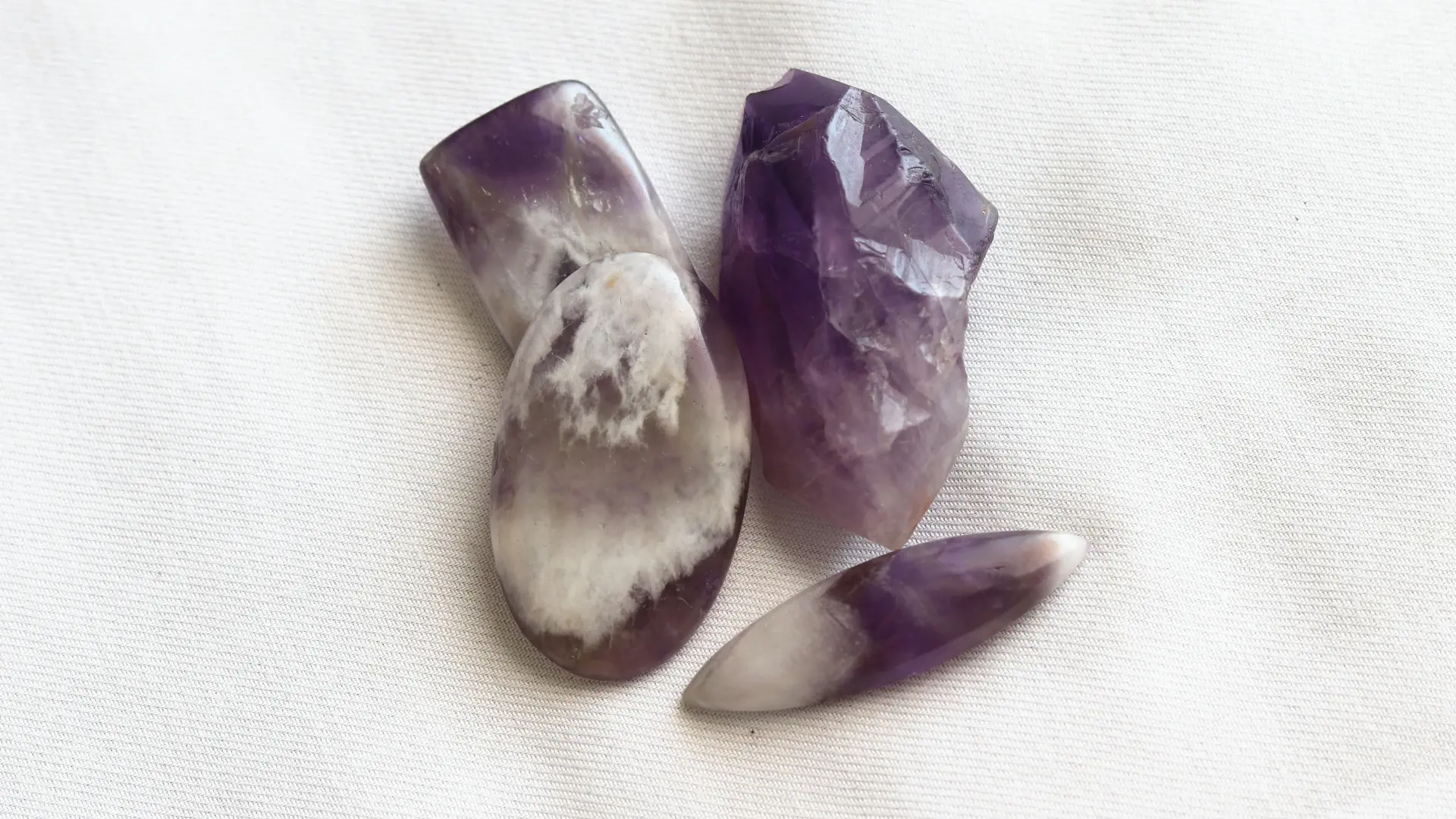
Amethyst
Purple quartz whose Greek name means "not drunk". By the common identification, one of the breastplate stones, and one of the best-loved stones in the world.
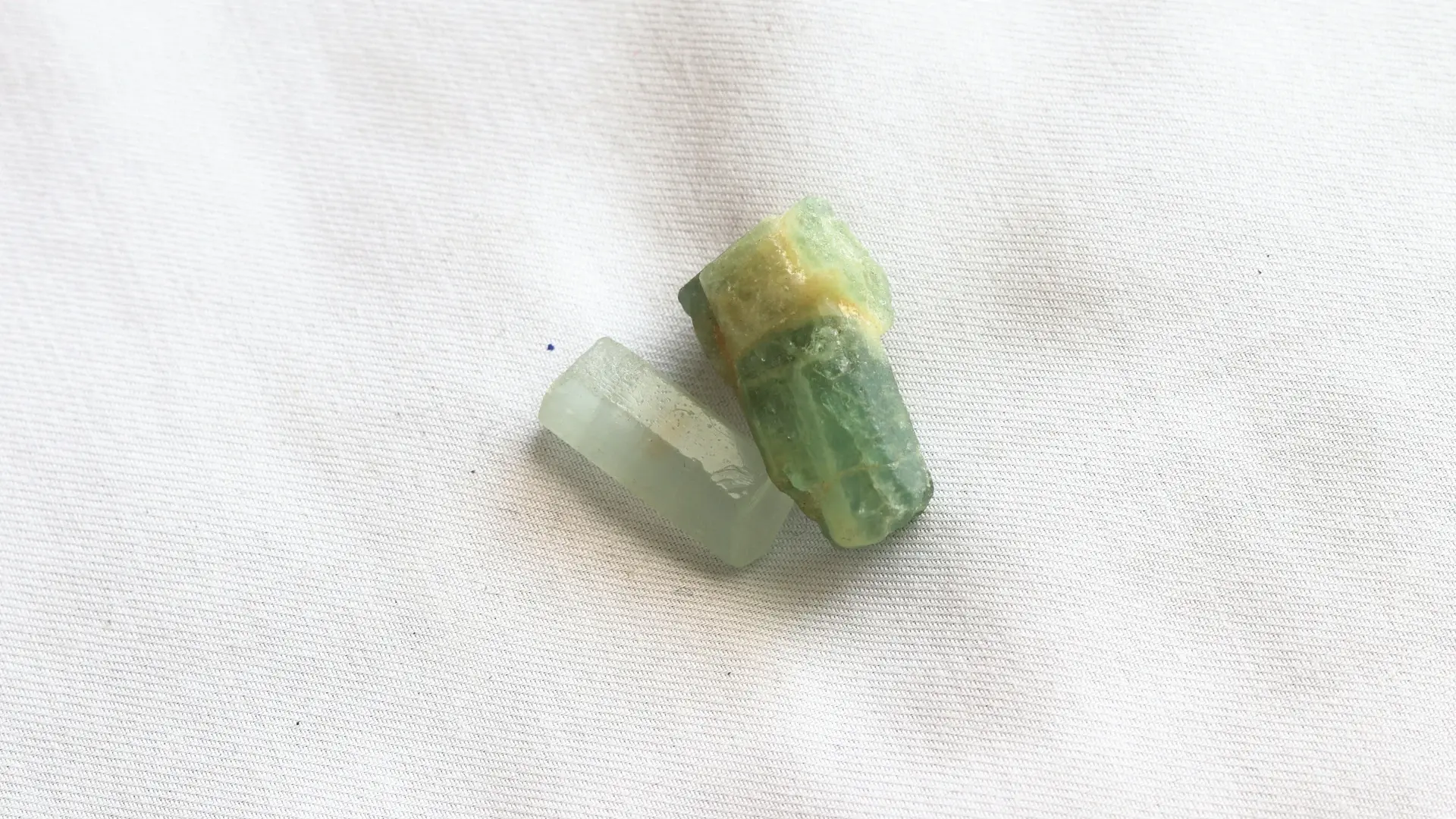
Aquamarine
The blue-green variety of beryl, a close relative of emerald. Its name means "seawater".
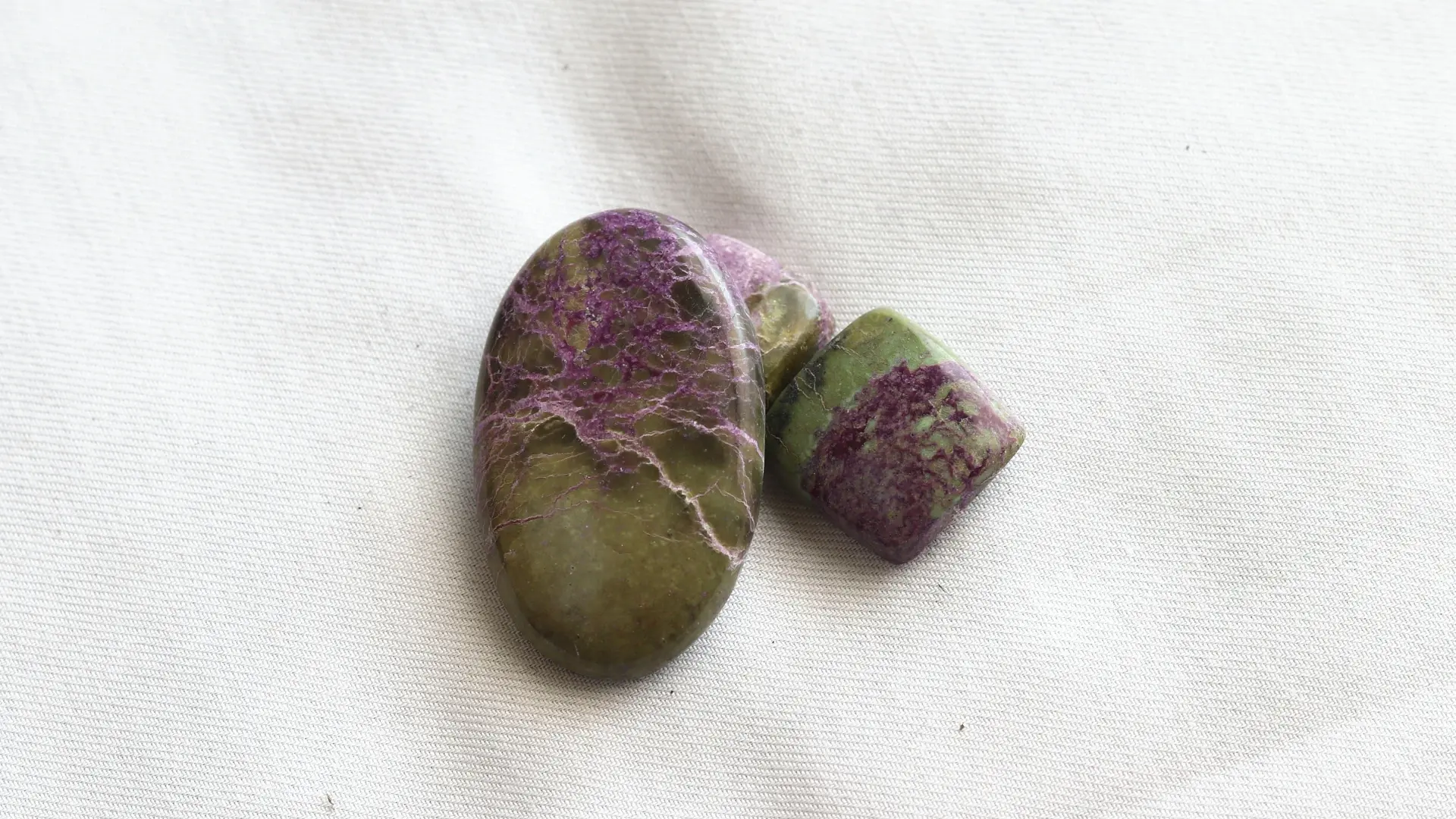
Atlantisite
A natural mix of green serpentine and purple stichtite, from a single hill in Tasmania.