Moss Agate
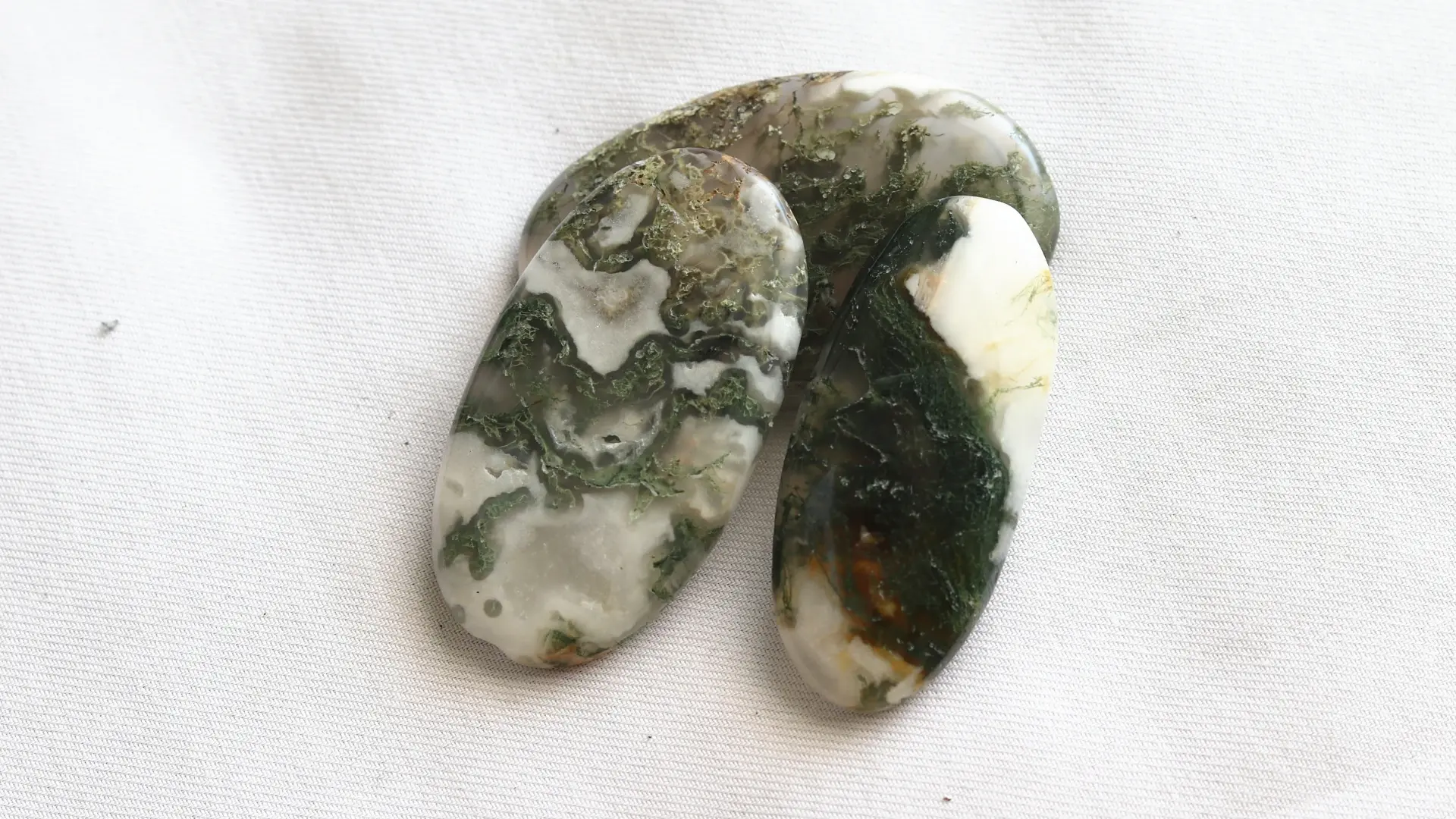
Milky white chalcedony with green "moss" inside. It is not moss, and technically it is not quite agate either.
Moss agate has a name that promises two things, and neither is quite true. The moss is not moss: there is no organic matter in it. And the agate is not exactly agate: according to Wikipedia, true agate has concentric bands, and moss agate does not. What it does have is chalcedony, quartz made of very tiny crystals, clear or milky white, with green patterns inside that look just like moss or lichen.
These patterns are called dendrites, from the Greek dendron, tree. According to Wikipedia, they form from minerals, mainly manganese or iron oxides, that branch through the stone like twigs. They are so convincing that, according to Wikipedia, paleontologists have often mistaken them for fossils. A plant that was never alive, and still managed to fool the experts.
The stones in the photo show how different moss agate can be from one stone to the next: one is greyish white with green patches, and another is almost entirely dark green, with a brownish orange patch at one end. According to Wikipedia, the colors come from traces of metals, and the shade also depends on their oxidation state. In Montana moss agate, for example, the red comes from iron oxide and the black from manganese oxide.
According to Geology.com, agate forms when silica-rich groundwater deposits it in cavities inside volcanic rocks. According to Wikipedia, moss agate usually forms from weathered volcanic rocks, and it is found in India, Brazil, Uruguay, central Europe and the United States. In Montana it is collected from the gravels of the Yellowstone River and its tributaries.
It used to be called "Mocha stone" too, after the city of Mocha in Yemen, once one of its sources. Yes, the same Mocha that gave its name to the coffee. So if any stone belongs both in the garden and in a café, this is probably the one.
Crystal traditions
In crystal tradition
According to Crystal Vaults, throughout history and across many cultures moss agate has been known as "the crystal of gardeners" and of agriculture. According to the site, tribal priests once considered it a miraculous healing stone, and warriors wore it as a talisman for strength and victory.
The site links moss agate to the heart chakra, and names agate one of the zodiac stones of Gemini. According to the site, moss agate is not a traditional birthstone.
Sources: Moss Agate Healing Properties, Meanings, and Uses, Crystal Vaults
Scientific information
Properties
Chemistry: silica, SiO₂. A variety of chalcedony, microcrystalline quartz.
The green patterns: mineral dendrites, mainly manganese or iron oxides. They contain no organic matter.
Mohs hardness: 7, like all agate.
Specific gravity: about 2.6.
Why it is "not quite agate": it lacks the concentric banding that defines agate.
Sources: India, Brazil, Uruguay, central Europe and the United States (especially Montana).
Sources: Moss agate, Wikipedia; Dendrite (crystal), Wikipedia; אגט, ויקיפדיה; Agate Gemstones, Geology.com
Associations
Different traditions associate this stone with different things, and they sometimes conflict. Each association is shown with its tradition and sources.
Zodiac sign
GeminiCrystal tradition
The source refers to agate in general.
Sources: Moss Agate Healing Properties, Meanings, and Uses, Crystal Vaults
Chakra
HeartCrystal tradition
Sources: Moss Agate Healing Properties, Meanings, and Uses, Crystal Vaults
Sources
- Moss agate, WikipediaAccessed September 24, 2026
- Dendrite (crystal), WikipediaAccessed September 24, 2026
- אגט, ויקיפדיהAccessed September 24, 2026
- Agate Gemstones, Geology.comAccessed September 24, 2026
- Moss Agate Healing Properties, Meanings, and Uses, Crystal VaultsAccessed September 24, 2026
More crystals
Amazonite
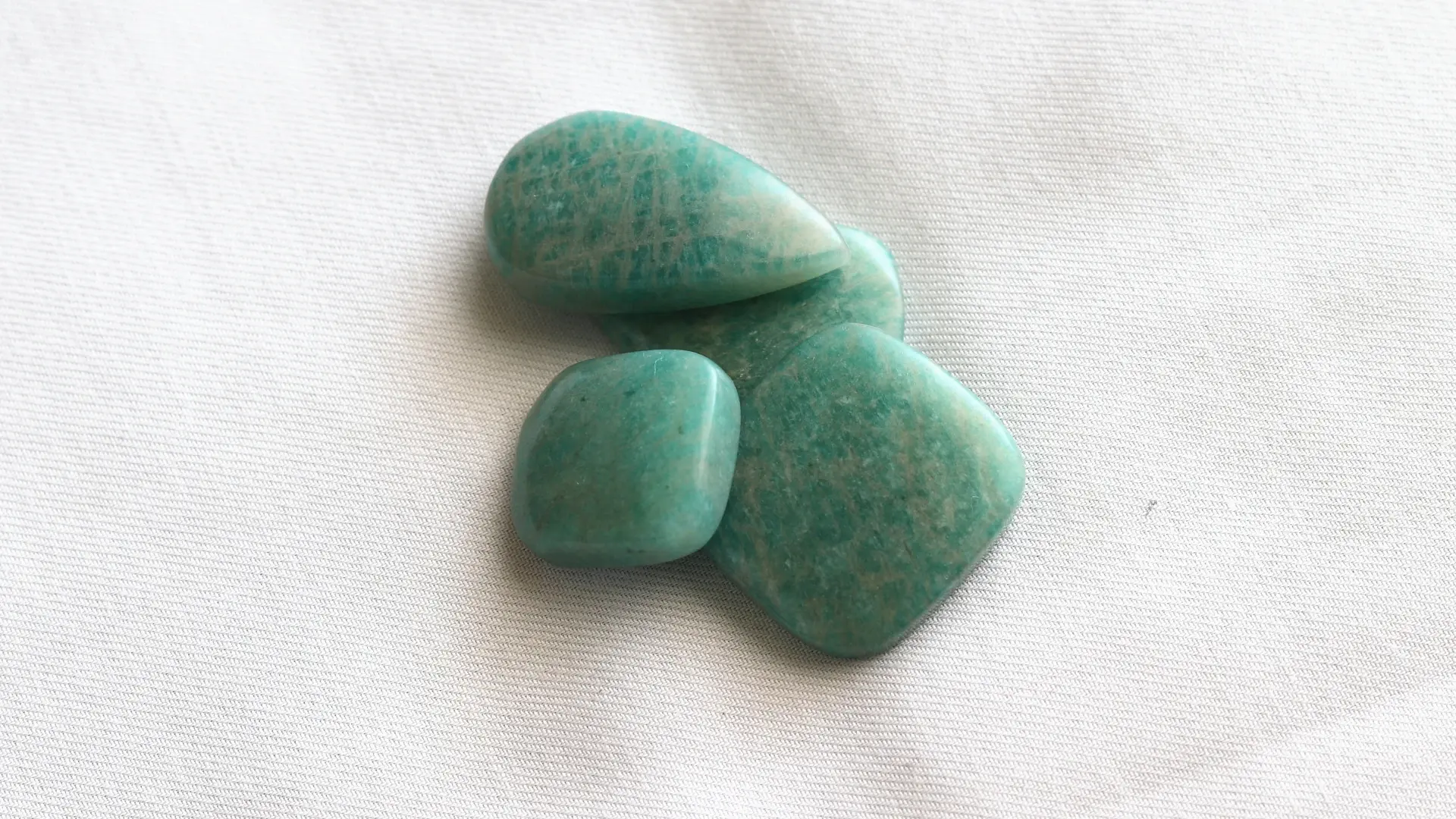
A turquoise-green variety of the feldspar microcline. Despite the name, it does not come from the Amazon.
Amethyst
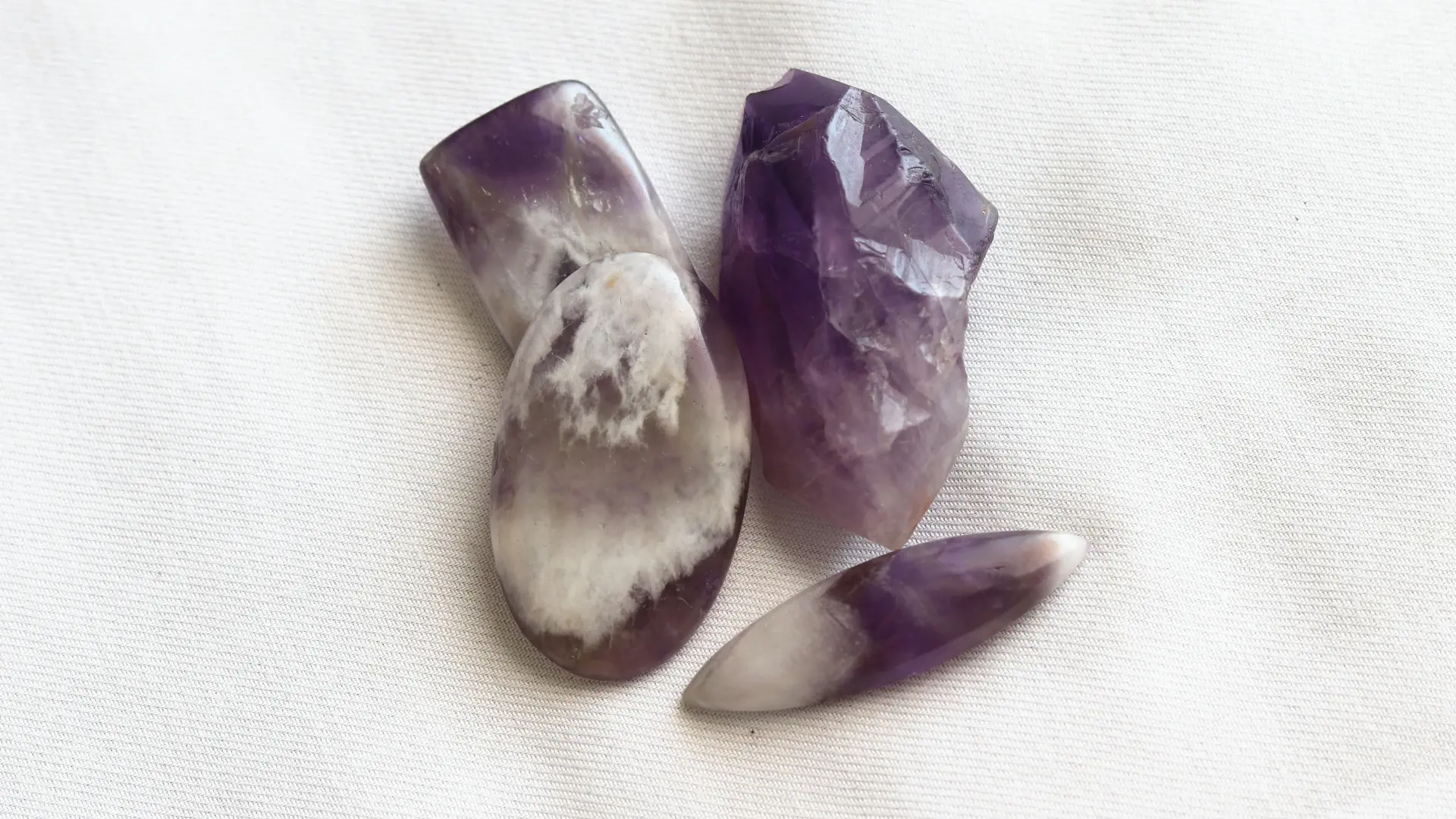
Purple quartz whose Greek name means "not drunk". By the common identification, one of the breastplate stones, and one of the best-loved stones in the world.
Aquamarine
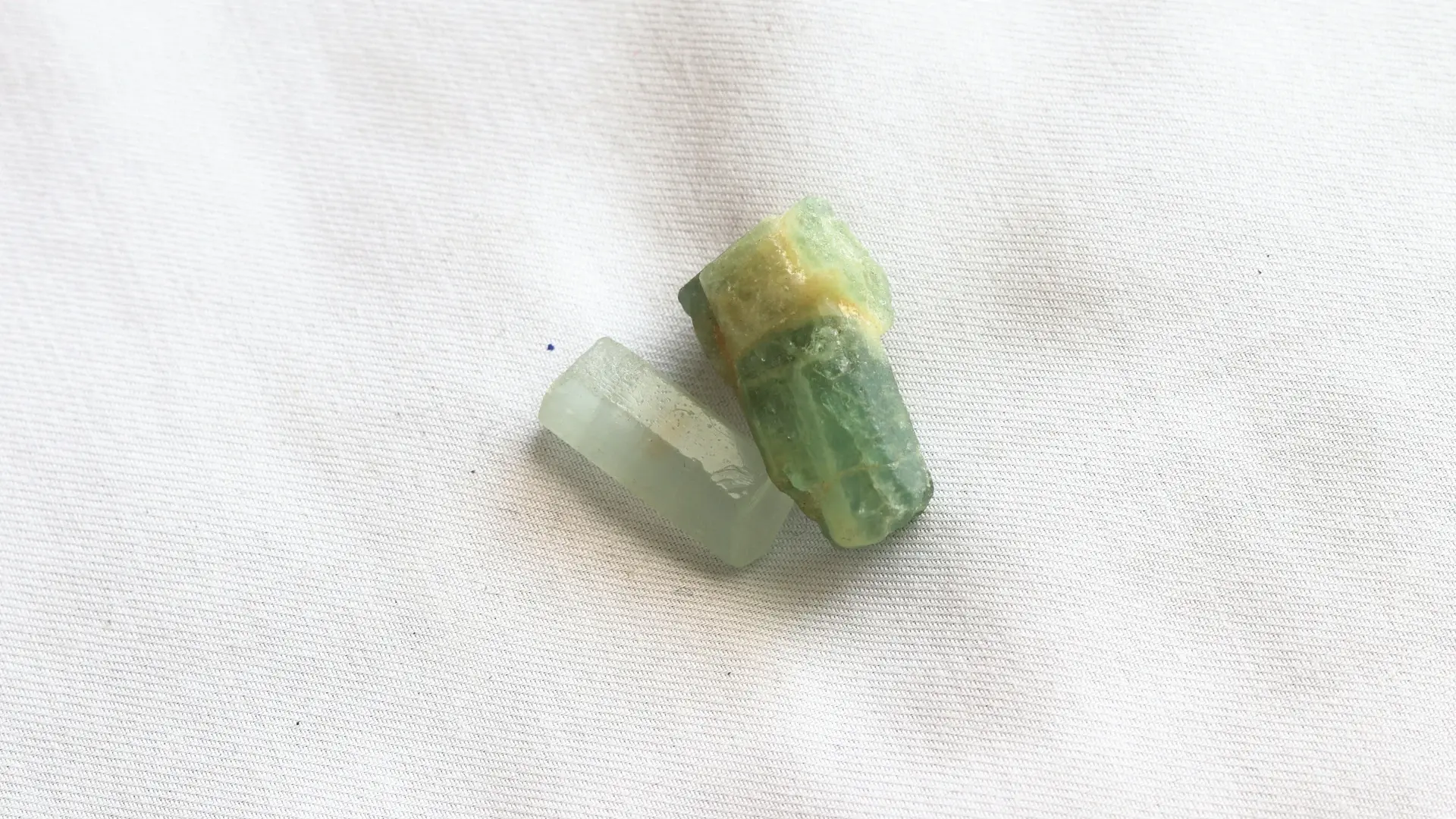
The blue-green variety of beryl, a close relative of emerald. Its name means "seawater".
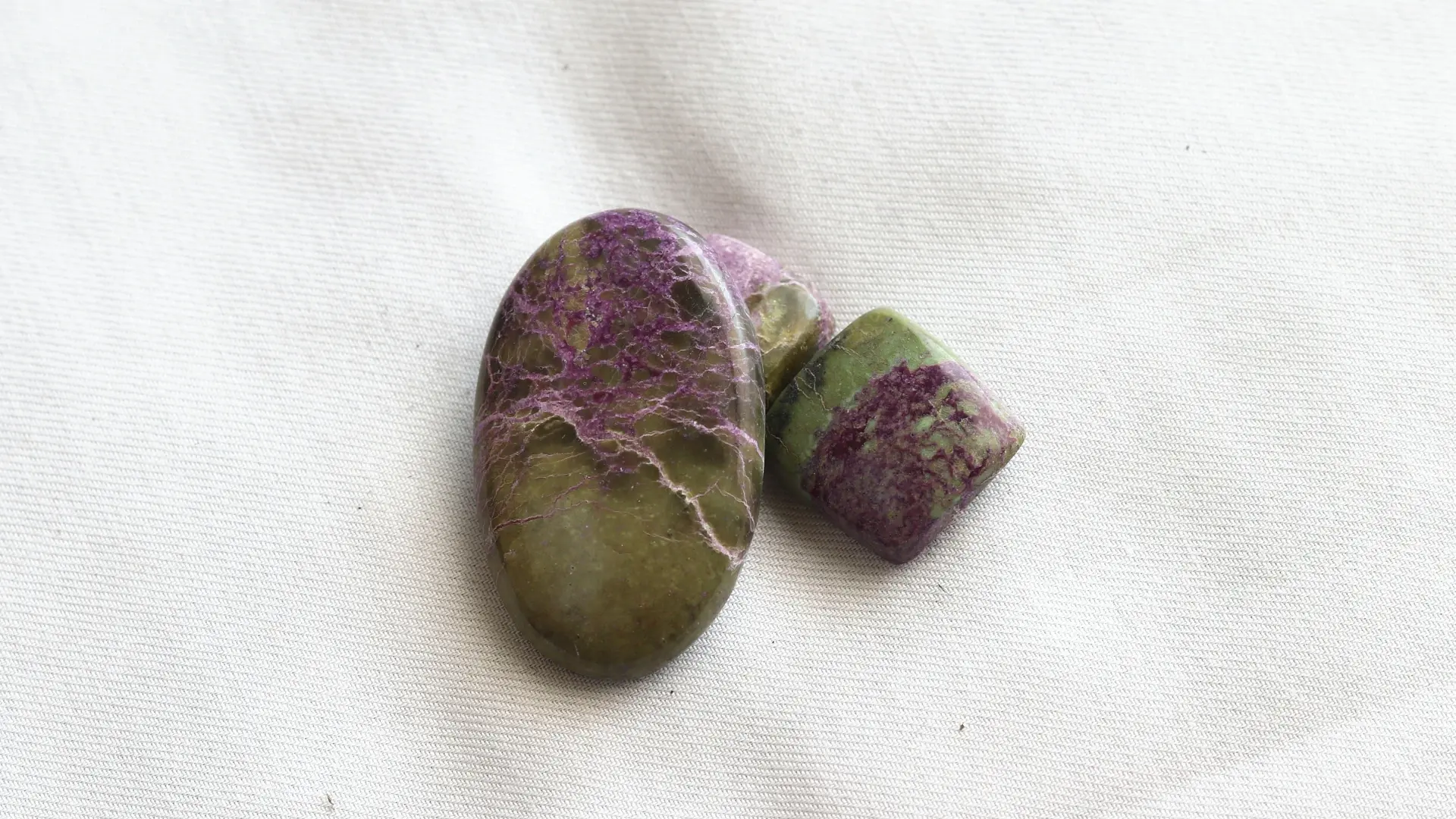
Atlantisite
A natural mix of green serpentine and purple stichtite, from a single hill in Tasmania.