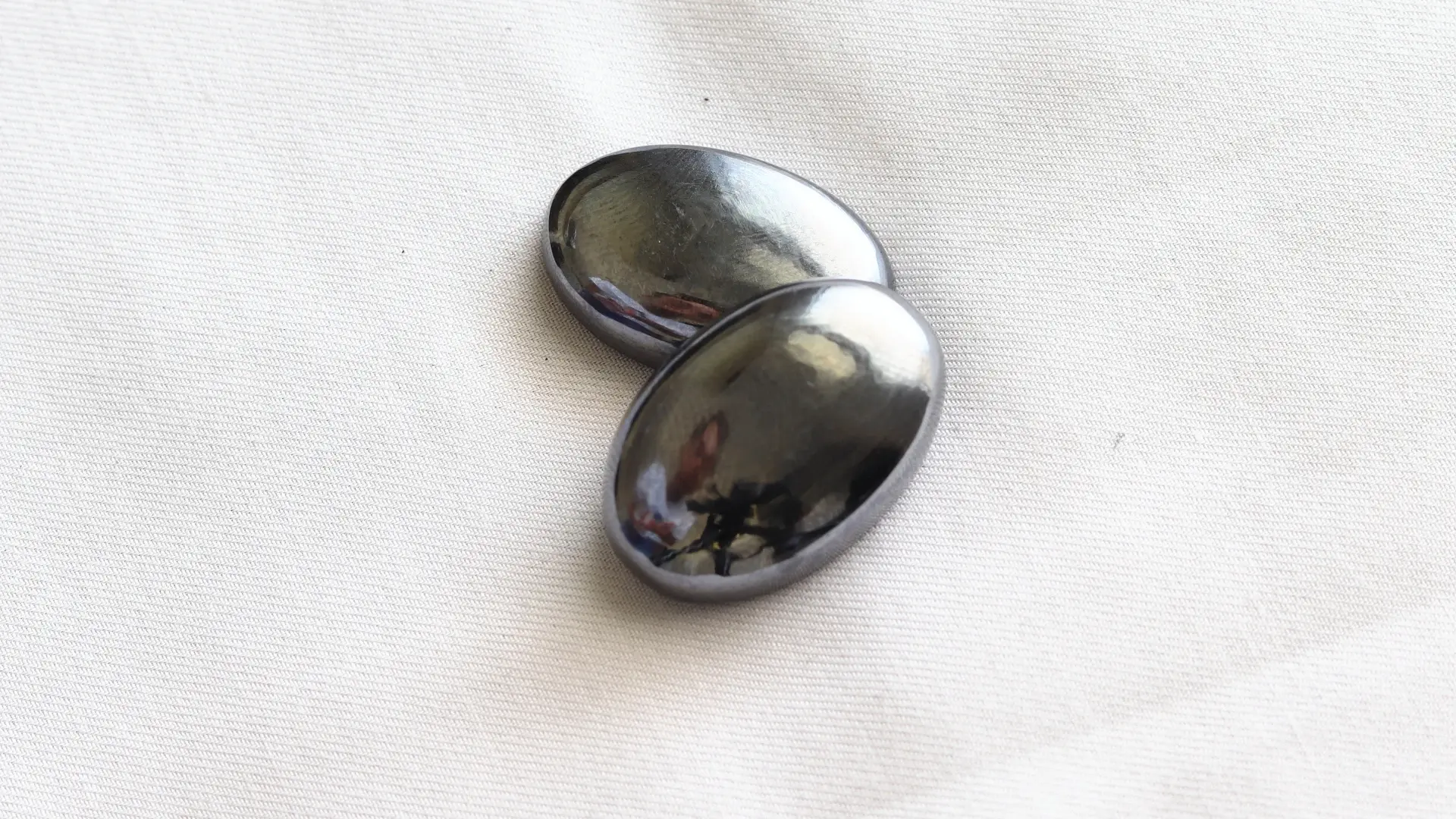
Hematite
An iron mineral that looks like a silver-black mirror, yet its name means "blood". Scratch it on porcelain and it will explain why.
Hematite is an iron oxide and one of the most common minerals on the Earth's surface. Polished, it looks like a silver-black metal, shiny enough to check your hair in. Yet its name comes from the Greek haima, meaning blood.
The reason shows up when you rub it on a piece of unglazed porcelain: it leaves a red streak. According to Geology.com, this is the most reliable way to identify hematite, because its appearance varies a lot, but the streak is always reddish. Under the metallic shine hides the color of rust, and that is no coincidence: rust is an iron oxide too.
People have used hematite for a very long time. According to Wikipedia, the earliest known use of it as a red pigment dates back about 164,000 years, in the Pinnacle Point caves in South Africa. Some ancient cave paintings were made with red ochre that comes from it. Today it is above all the world's most important iron ore, so there is a good chance that some of the steel around you started out as hematite.
Hematite is found on Mars too. NASA's Opportunity rover found small spheres of it there, which the science team nicknamed "blueberries". According to Geology.com, it is one of the most common minerals in the rocks and soil of Mars, and it adds to the planet's reddish color.
A word for buyers: natural hematite is only weakly magnetic. The "magnetic hematite" sold in shops is usually a synthetic material called hematine. If your beads stick to the fridge, that is probably what you have.
Crystal traditions
In crystal tradition
On crystal websites hematite is first of all a grounding stone. Energy Muse links it to the root chakra, "the center of security and survival", and describes it as a stone of stability, protection and calm.
According to Fire Mountain Gems, Babylonian warriors carried hematite into battle as a talisman, and the Romans made it into amulets worn on armor. In the Victorian era it was a popular mourning stone, thanks to its dark luster.
Sources: Hematite Meaning & Healing Properties, Energy Muse; Hematite Meaning and Properties, Fire Mountain Gems
Scientific information
Properties
Chemistry: iron oxide, Fe₂O₃.
Mohs hardness: 5.5 to 6.5.
Specific gravity: 5.26.
Luster: metallic. Streak: bright red to dark red.
Magnetism: weak only. "Magnetic hematite" is usually a synthetic material (hematine).
Uses: the world's main iron ore, pigment and jewelry.
Sources: Hematite, Wikipedia; Hematite, Geology.com; המטיט, ויקיפדיה
Associations
Different traditions associate this stone with different things, and they sometimes conflict. Each association is shown with its tradition and sources.
Chakra
RootCrystal tradition
Sources
- Hematite, WikipediaAccessed September 24, 2026
- המטיט, ויקיפדיהAccessed September 24, 2026
- Hematite, Geology.comAccessed September 24, 2026
- Hematite Meaning & Healing Properties, Energy MuseAccessed September 24, 2026
- Hematite Meaning and Properties, Fire Mountain GemsAccessed September 24, 2026
More crystals
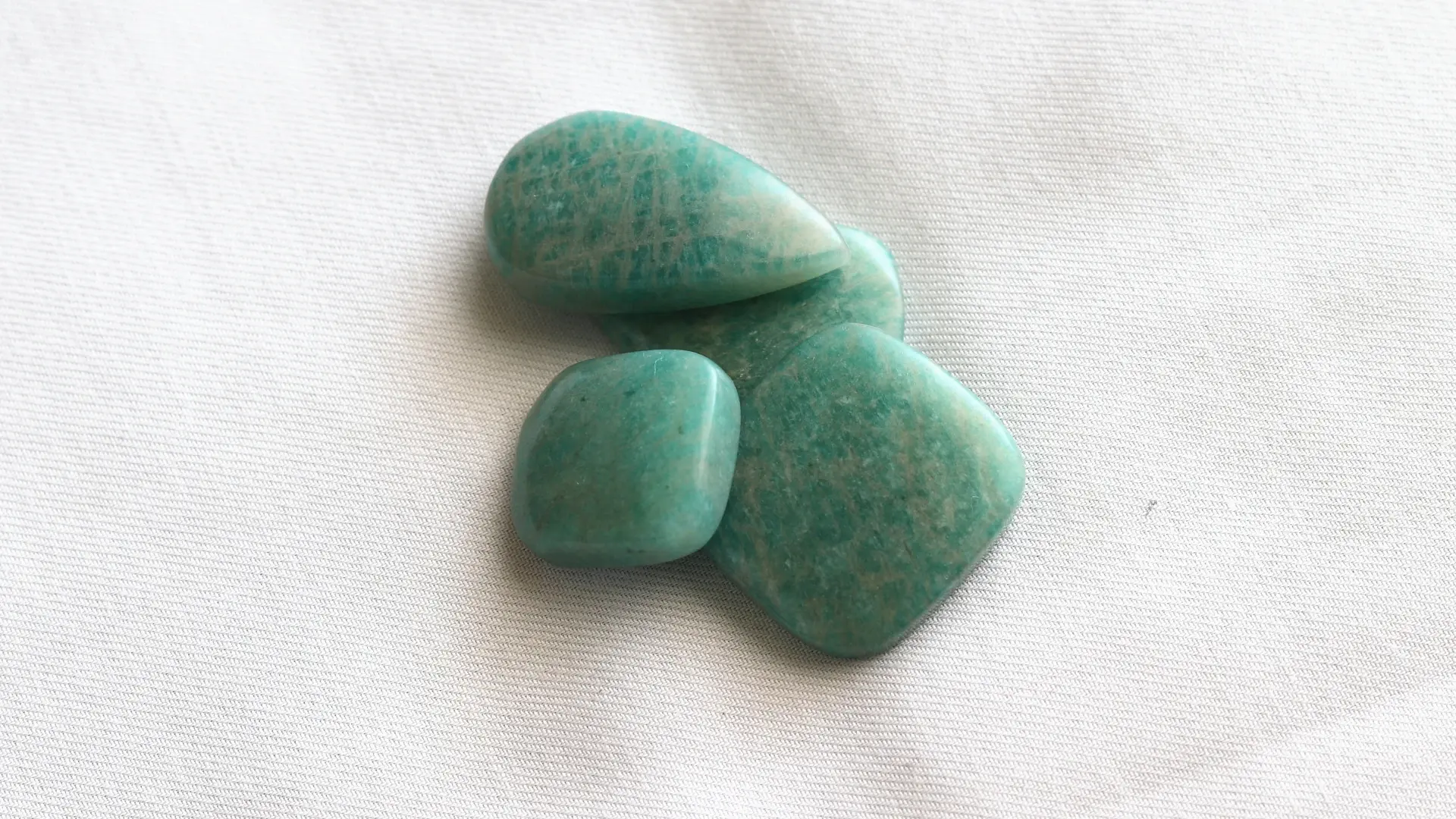
Amazonite
A turquoise-green variety of the feldspar microcline. Despite the name, it does not come from the Amazon.
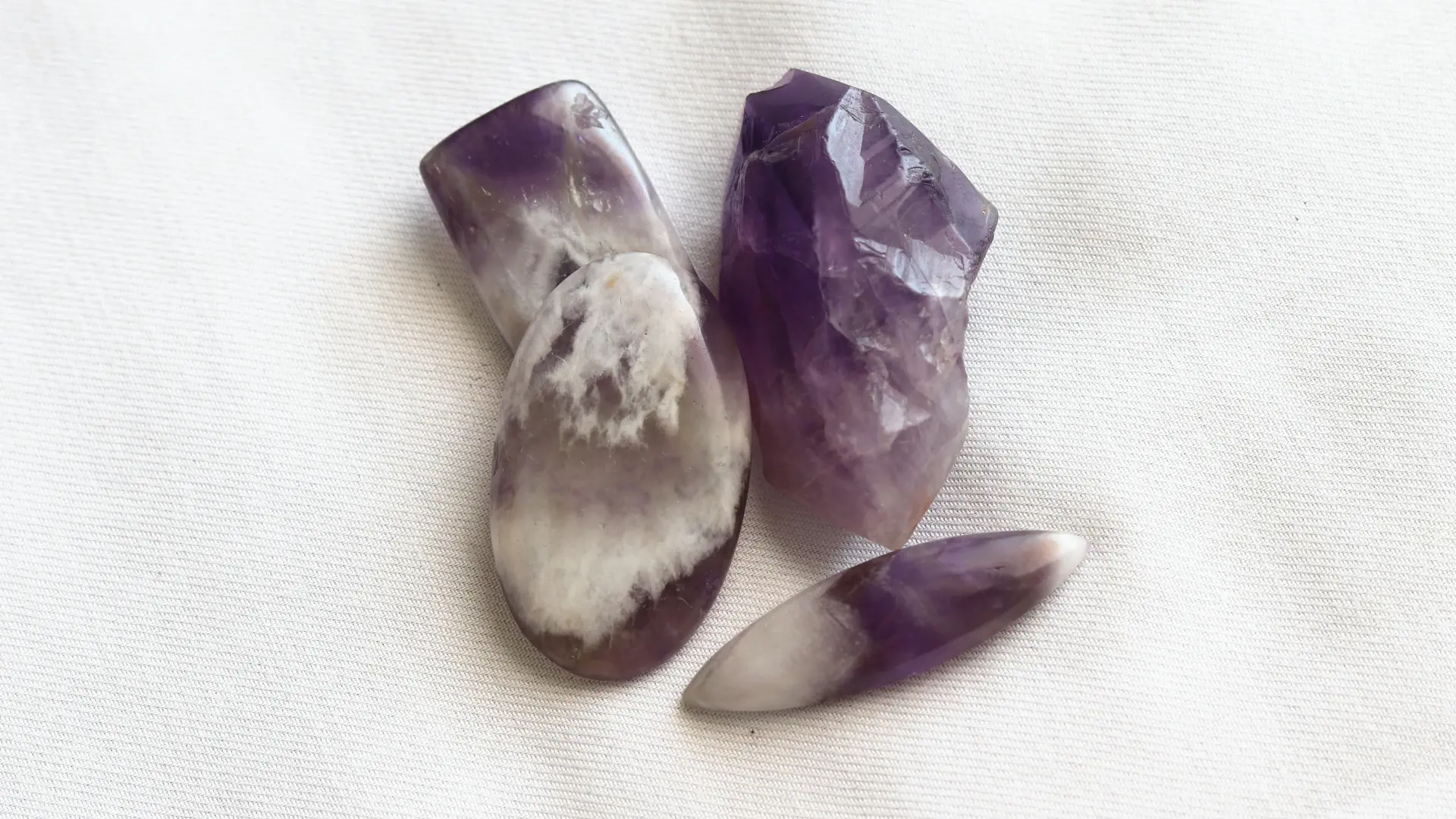
Amethyst
Purple quartz whose Greek name means "not drunk". By the common identification, one of the breastplate stones, and one of the best-loved stones in the world.
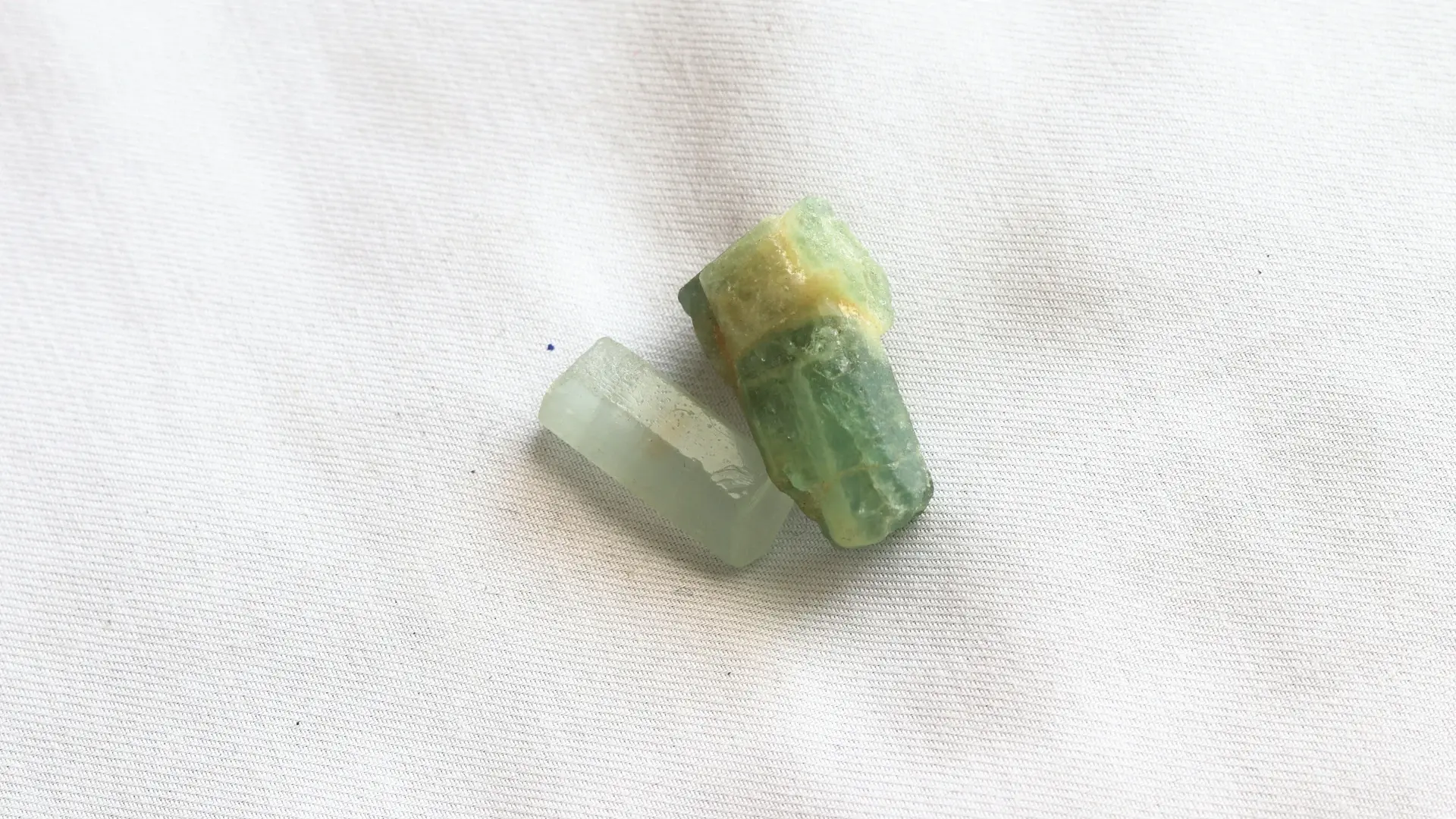
Aquamarine
The blue-green variety of beryl, a close relative of emerald. Its name means "seawater".
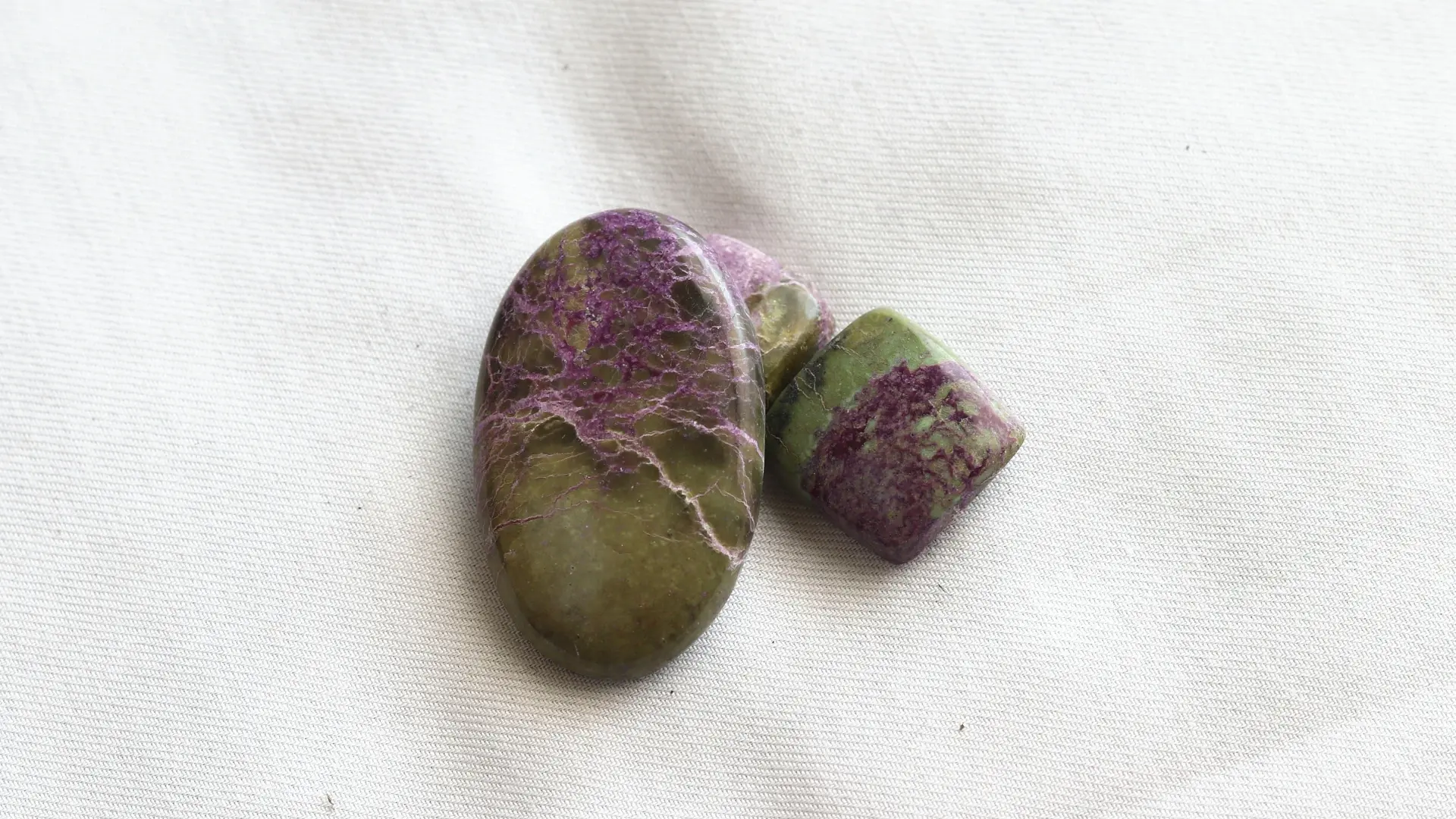
Atlantisite
A natural mix of green serpentine and purple stichtite, from a single hill in Tasmania.