Tourmalinated Quartz
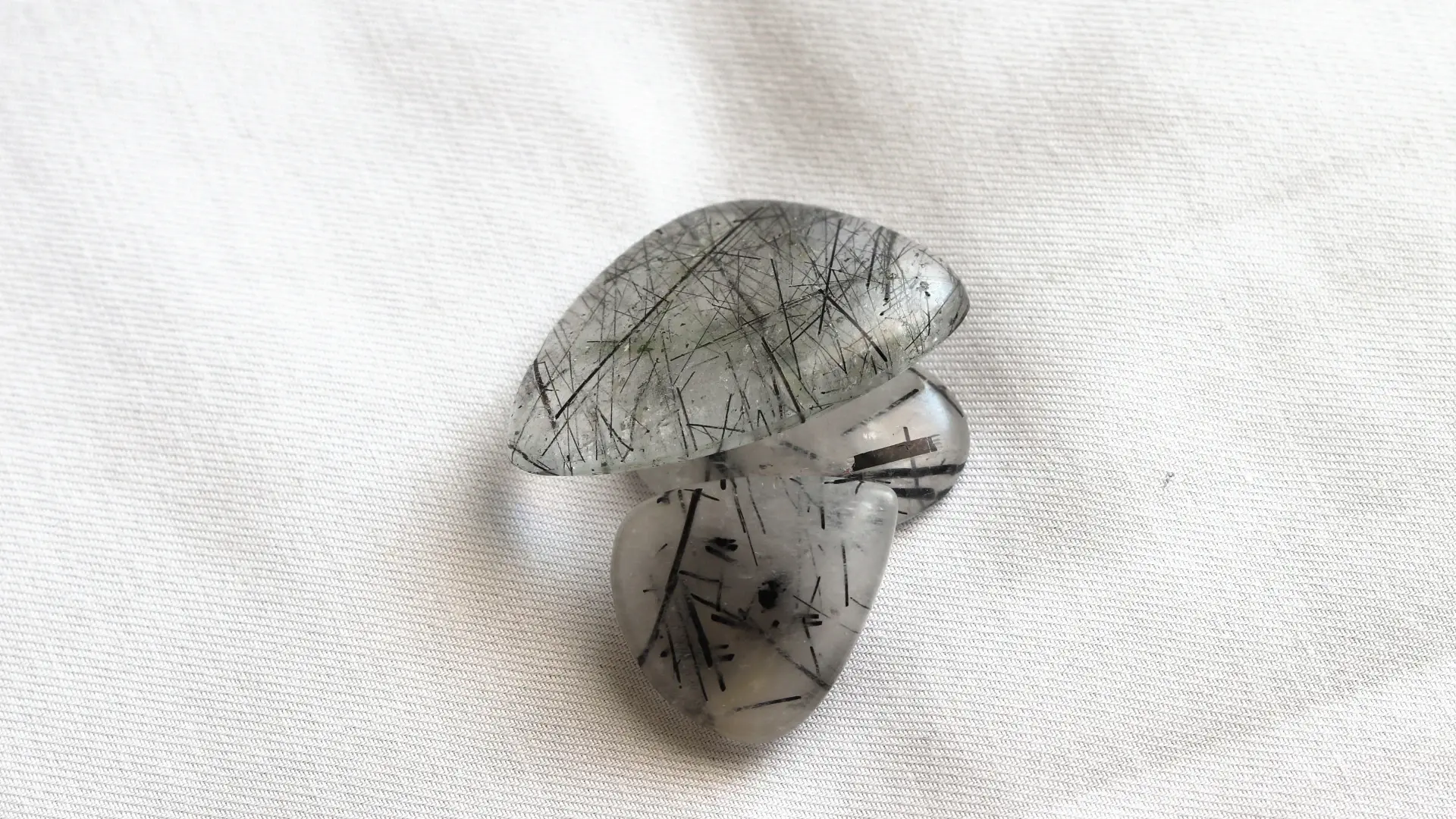
Clear quartz with needles of black tourmaline inside, like strokes of an ink pen. Two minerals that grew together and got stuck in each other.
The photo shows three polished stones, translucent and greyish, with black lines inside. The large stone is packed with thin needles crossing in every direction, and the two small ones have fewer needles, but thicker. According to Fire Mountain Gems, tourmalinated quartz is clear quartz that grew together with black tourmaline, hence the name. And according to Minerals.net, black tourmaline, called schorl, can grow as tiny dense needles inside a quartz crystal.
How do needles get inside a stone? According to Geology Science, it happens mainly in pegmatites, rocks where minerals crystallize slowly and large. The tourmaline crystallizes, the quartz grows around it, and in the end it closes over it from every side. The result is like a frozen snapshot of two minerals mid-growth. And according to the site, the direction and density of the needles vary from stone to stone, so each one has its own pattern.
It is easy to confuse with rutilated quartz, which has needles too. According to Fire Mountain Gems, the difference is the color: in rutilated quartz the needles are golden or silvery, and in tourmalinated quartz they are black. Ours are completely black, so everything checks out.
This stone also has an electric side, twice over. According to Fire Mountain Gems, quartz is piezoelectric, meaning it builds up an electric charge when squeezed, which is why it is used in watches. And according to Minerals.net, black tourmaline is piezoelectric too, and it becomes strongly charged when heated as well. Two electric minerals in one stone, and you still cannot charge a phone with it.
According to Fire Mountain Gems, most tourmalinated quartz for jewelry comes from Brazil. Its hardness, according to Geology Science, is 7, like all quartz, and according to the site, the needles hardly change it. And according to Fire Mountain Gems, it usually needs no treatment, although it is sometimes dyed.
Crystal traditions
In crystal tradition
According to Fire Mountain Gems, tourmalinated quartz is believed to protect against negative thoughts and emotions, to balance yin and yang, and to help release negative patterns. According to the site, it is associated with the third eye chakra and with the signs Libra, Capricorn and Scorpio. According to Geology Science, some combine the qualities attributed to both minerals: black tourmaline for protection and grounding, and quartz for amplifying energy and clarity.
Sources: Tourmalinated Quartz Meaning and Properties, Fire Mountain Gems and Beads; Tourmalinated Quartz: Properties, Formation, Uses, Locations, Geology Science
Scientific information
Properties
Composition: quartz (silicon dioxide, SiO₂) with inclusions of black tourmaline (schorl).
Mohs hardness: 7 (quartz). The tourmaline: 7 to 7.5.
Specific gravity: about 2.65.
Refractive index: 1.544 to 1.553.
Luster: vitreous. Transparent to translucent, depending on the amount of needles.
Formation: mainly in pegmatites and hydrothermal veins, where quartz grows around tourmaline crystals and traps them.
Main source for jewelry: Brazil.
Sources: Tourmalinated Quartz: Properties, Formation, Uses, Locations, Geology Science; Schorl tourmaline: The mineral Schorl information and pictures, Minerals.net; Tourmalinated Quartz Meaning and Properties, Fire Mountain Gems and Beads
Associations
Different traditions associate this stone with different things, and they sometimes conflict. Each association is shown with its tradition and sources.
Zodiac sign
LibraCrystal tradition
Sources: Tourmalinated Quartz Meaning and Properties, Fire Mountain Gems and Beads
Zodiac sign
CapricornCrystal tradition
Sources: Tourmalinated Quartz Meaning and Properties, Fire Mountain Gems and Beads
Zodiac sign
ScorpioCrystal tradition
Sources: Tourmalinated Quartz Meaning and Properties, Fire Mountain Gems and Beads
Chakra
Third EyeCrystal tradition
Sources: Tourmalinated Quartz Meaning and Properties, Fire Mountain Gems and Beads
Sources
- Tourmalinated Quartz Meaning and Properties, Fire Mountain Gems and BeadsAccessed September 24, 2026
- Tourmalinated Quartz: Properties, Formation, Uses, Locations, Geology ScienceAccessed September 24, 2026
- Schorl tourmaline: The mineral Schorl information and pictures, Minerals.netAccessed September 24, 2026
More crystals
Amazonite
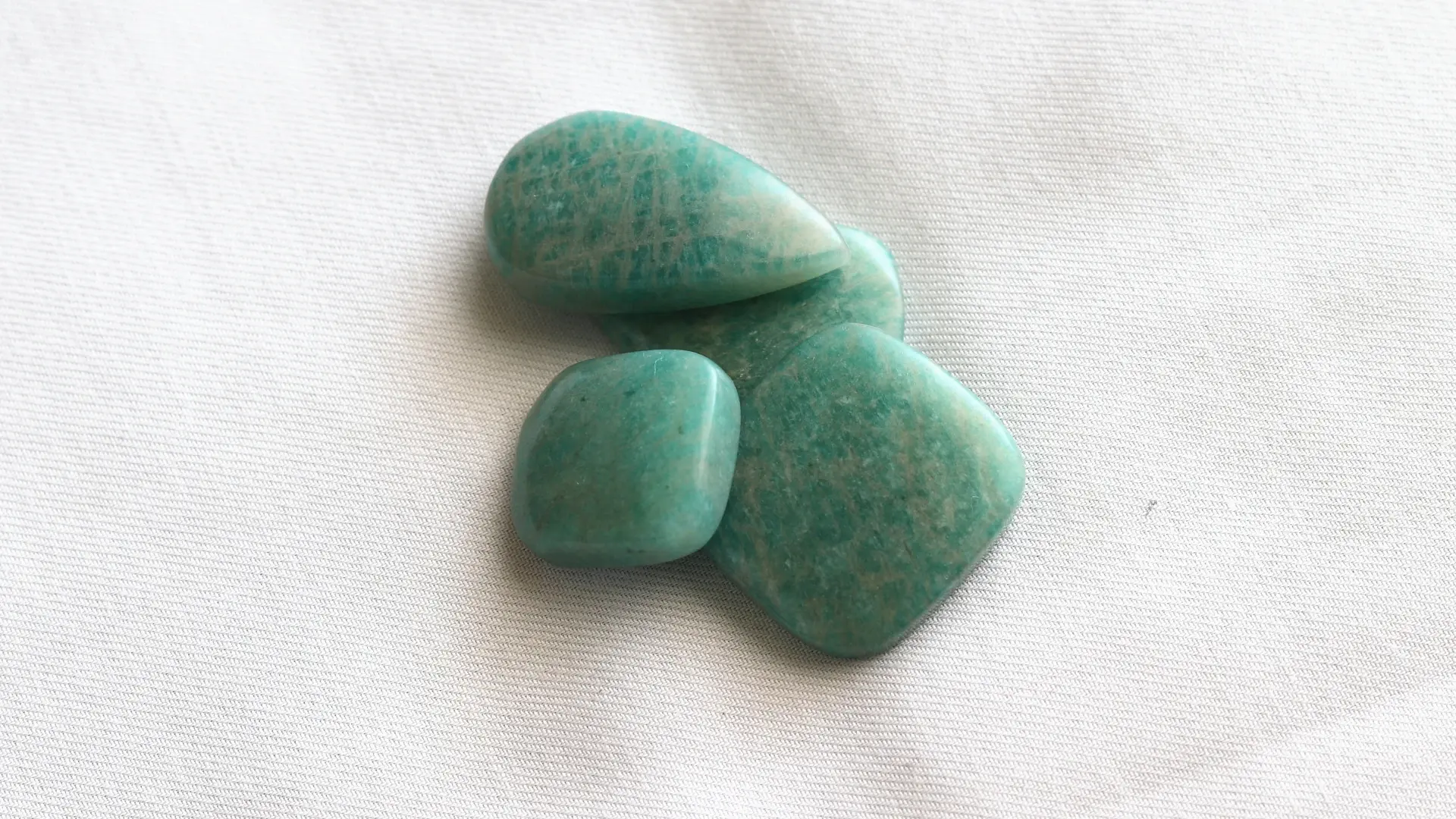
A turquoise-green variety of the feldspar microcline. Despite the name, it does not come from the Amazon.
Amethyst
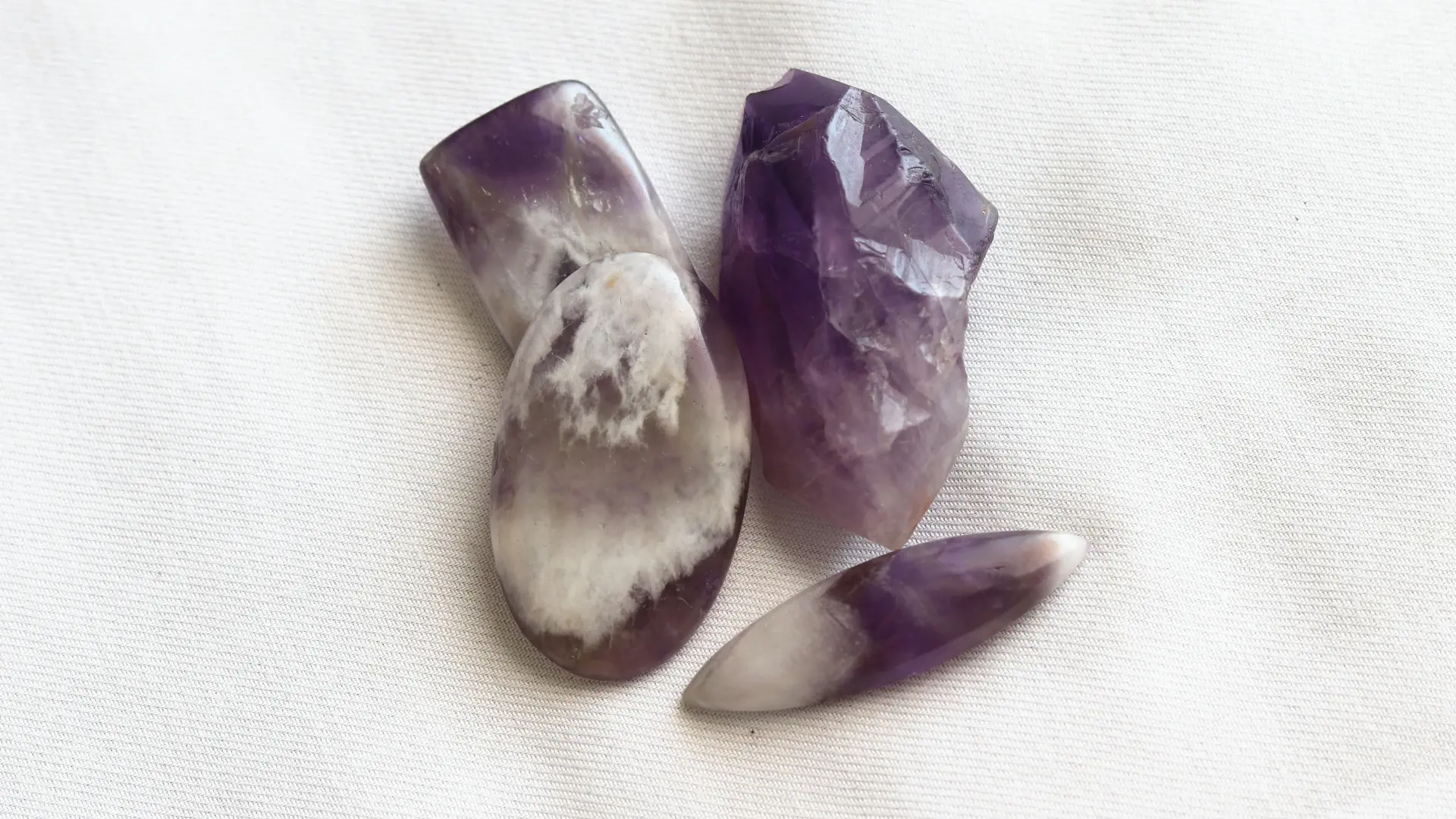
Purple quartz whose Greek name means "not drunk". By the common identification, one of the breastplate stones, and one of the best-loved stones in the world.
Aquamarine
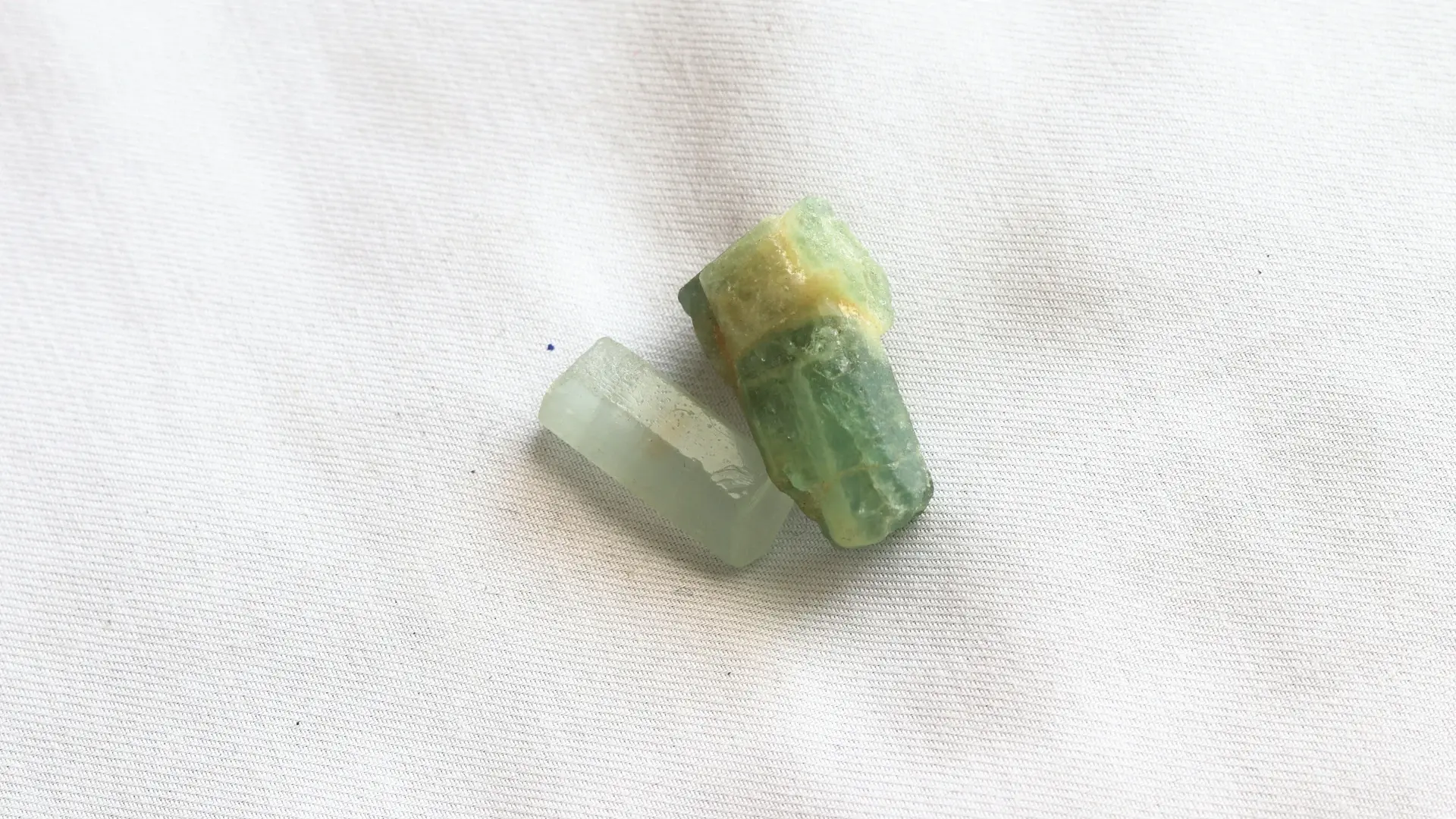
The blue-green variety of beryl, a close relative of emerald. Its name means "seawater".
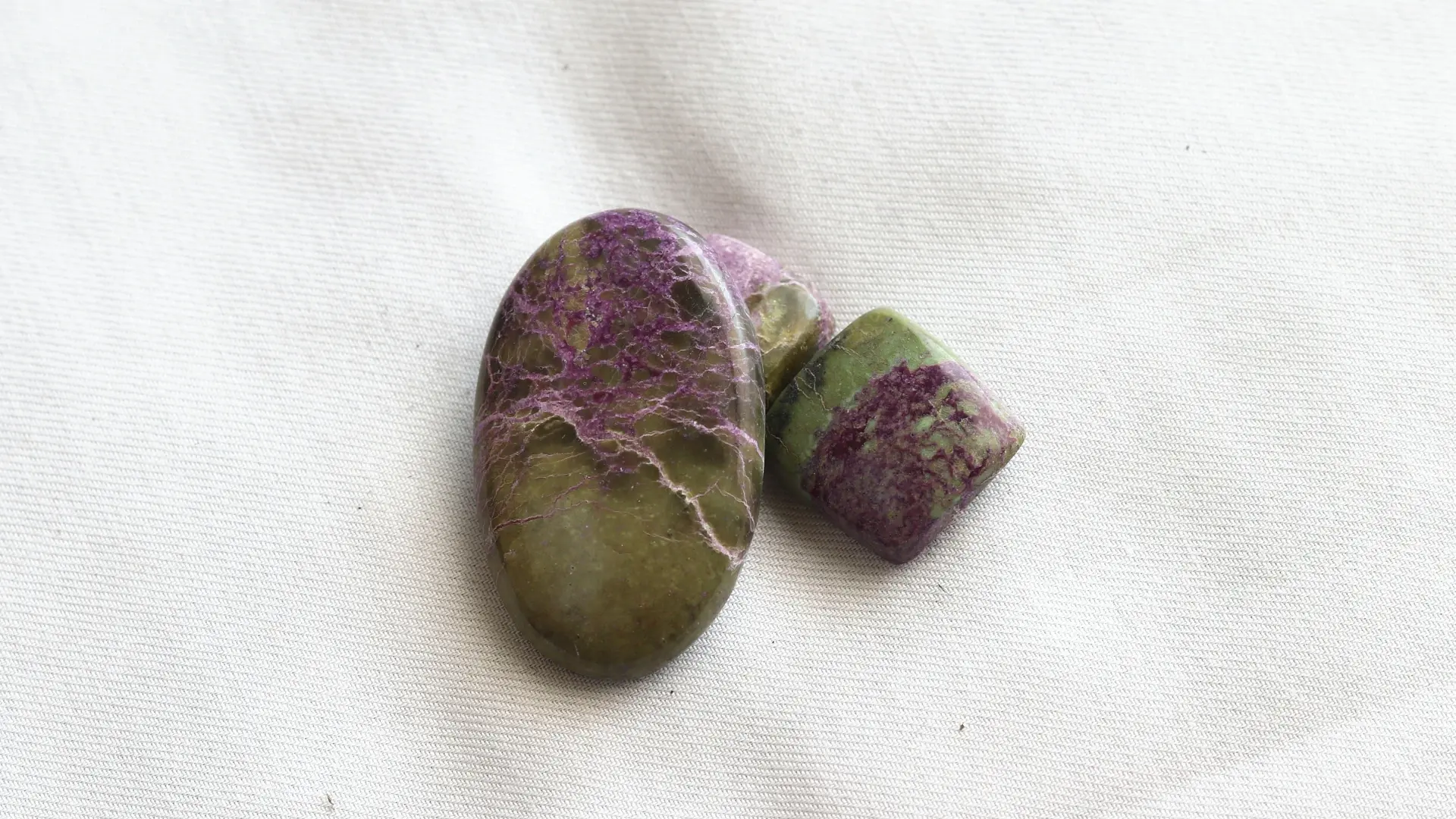
Atlantisite
A natural mix of green serpentine and purple stichtite, from a single hill in Tasmania.