Sunstone
An orange feldspar that glitters from within, thanks to tiny plates of copper or hematite. Legend says it fell from the sun.
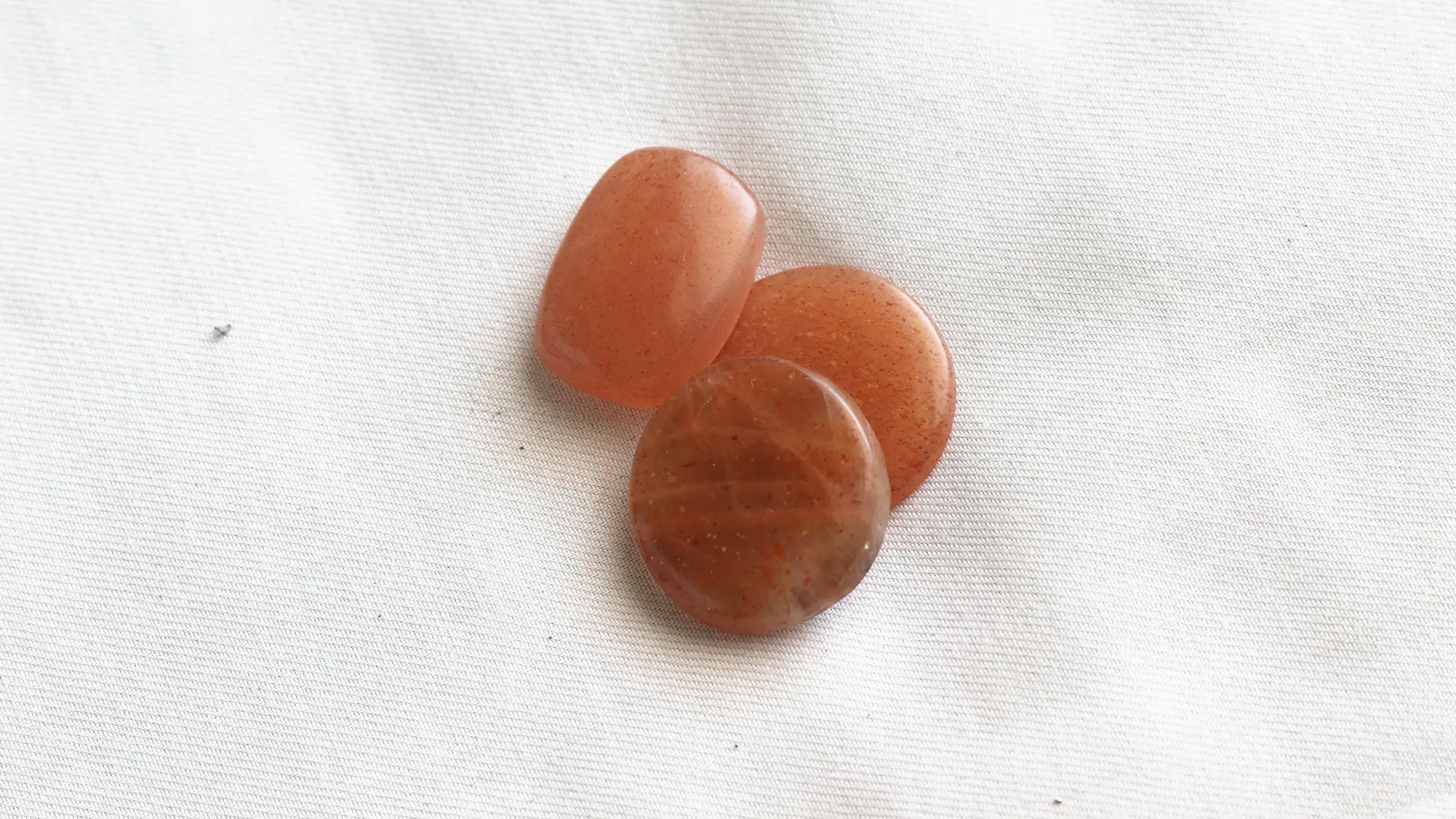
The photo shows three polished stones in orange peach, with tiny glittering specks and faint lines inside. Sunstone is a feldspar, from the same family as moonstone and labradorite. The glitter is called aventurescence, and according to Geology.com, it comes from tiny flat plates of minerals inside the stone, all lined up in the same direction. When light hits them at the right angle, they all reflect it at once.
Those plates, according to Geology.com and Wikipedia, are usually made of copper, hematite or goethite. And according to Geology.com, there are three ways to see the flash: move the stone, move the light, or move your head. Anyone holding a sunstone usually tries all three.
The most famous sunstone in the United States comes from Oregon. According to Wikipedia, in 1987 it was named the official state gemstone, and according to GIA, its colors are completely natural, with no treatment. According to Geology.com, it is found there in basalt flows, and the US Bureau of Land Management has set aside an area where anyone can come, look for sunstone, and keep what they find. Perhaps the cheapest way to get a gemstone: just gas and a shovel.
But not every sunstone comes from Oregon. According to Geology.com, sunstone from India is thought to have hematite inclusions rather than copper, and a loupe can show the difference. And according to Wikipedia, in the early 2000s a red or green stone called "andesine" appeared on the market, looking like sunstone. After much debate, it turned out that most of those stones had been artificially colored by a copper diffusion process.
Keep in mind that sunstone is a little delicate. According to Geology.com, its hardness is about 6, and it has perfect cleavage in two directions, so it suits earrings and pendants better. If you want it in a ring, choose a setting that protects it.
Crystal traditions
In crystal tradition
According to Crystal Vaults, sunstone carries the energy of Ra, the sun god, and is "a Stone of Leadership", of personal power, freedom and joy. According to the site, it cleanses all the chakras, and particularly energizes the base (root) and sacral chakras.
The site writes that the ancients believed sunstone was once part of the sun and fell to earth during a full solar eclipse, and that in ancient Greece it represented the sun god. According to the site, sunstone is not associated with any zodiac sign, but it is most often associated with the Sun.
Scientific information
Properties
Composition: feldspar. Oligoclase, labradorite or orthoclase showing aventurescence.
Mohs hardness: 6 to 7.2.
Specific gravity: 2.58 (orthoclase) to 2.70 (labradorite).
Cleavage: perfect in two directions.
Aventurescence: glitter from tiny aligned plates of copper, hematite or goethite.
Colors: colorless, yellow, orange, red, red-brown and green.
Sources: Norway, India, Tanzania, the United States (especially Oregon) and more.
Sources: Sunstone, GIA; Sunstone - The gemstone with the aventurescent surprise!, Geology.com; Sunstone, Wikipedia
Associations
Different traditions associate this stone with different things, and they sometimes conflict. Each association is shown with its tradition and sources.
Sources
- Sunstone, GIAAccessed September 24, 2026
- Sunstone - The gemstone with the aventurescent surprise!, Geology.comAccessed September 24, 2026
- Sunstone, WikipediaAccessed September 24, 2026
- Sunstone Meanings and Uses, Crystal VaultsAccessed September 24, 2026
More crystals
Amazonite
A turquoise-green variety of the feldspar microcline. Despite the name, it does not come from the Amazon.
Amethyst
Purple quartz whose Greek name means "not drunk". By the common identification, one of the breastplate stones, and one of the best-loved stones in the world.
Aquamarine
The blue-green variety of beryl, a close relative of emerald. Its name means "seawater".
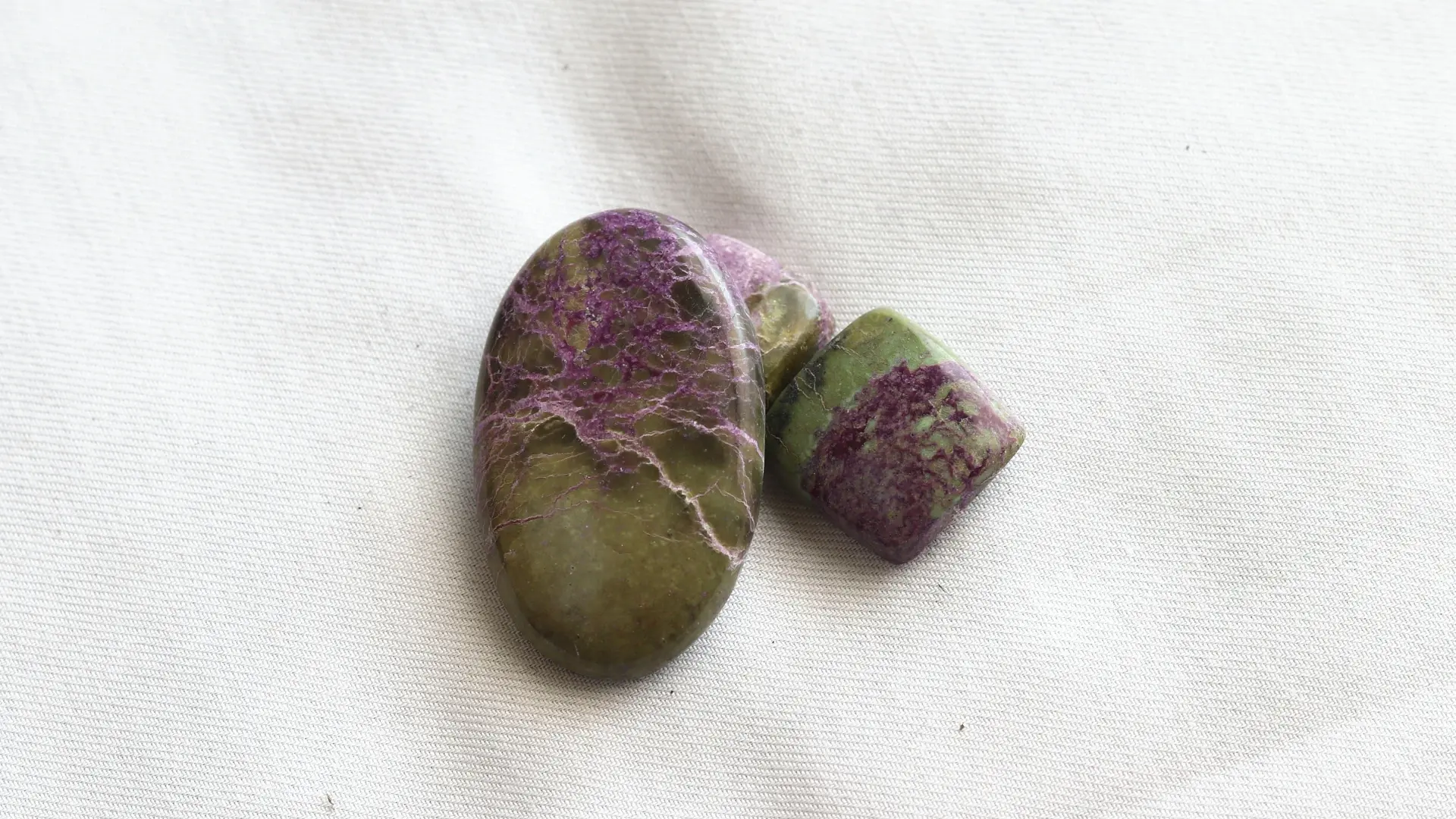
Atlantisite
A natural mix of green serpentine and purple stichtite, from a single hill in Tasmania.