Ruby in Zoisite
A green rock from Tanzania with real ruby crystals inside. Someone once even tried to value one at £11 million.
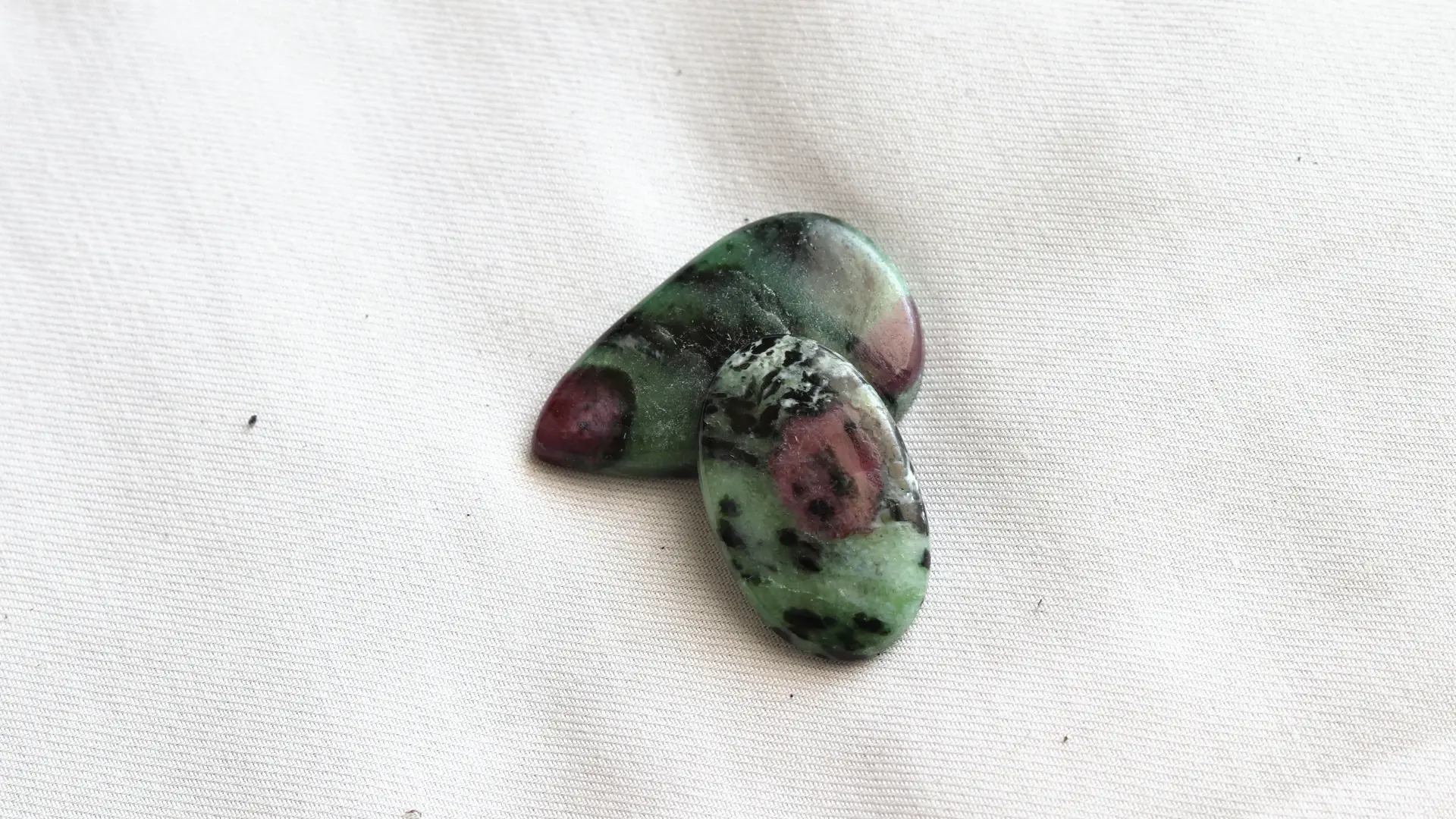
The photo shows two polished green stones with pinkish red patches and black specks. The green is zoisite, the red patches are ruby, and the black is a third mineral. According to Wikipedia, this is not one mineral but a metamorphic rock, made of green zoisite, ruby and a black or dark green mineral called pargasite. According to Geology.com, the black mineral is a hornblende called tschermakite. Either way, both belong to the same family, the amphiboles.
This rock is also called anyolite. According to Wikipedia, the name comes from the Maasai word "anyoli", meaning "green", and it was discovered in 1954 at the Mundarara Mine, near Longido in Tanzania. Zoisite itself is named after Sigmund Zois, a naturalist from Carniola (today in Slovenia), who sent the first specimens to the geologist Abraham Gottlob Werner, who described the mineral in 1805. And zoisite has a more famous relative: according to Geology.com, tanzanite is blue zoisite.
The ruby in the stone is real ruby: red corundum, which according to GIA gets its color from chromium. But according to Hebrew Wikipedia, the ruby set in zoisite is completely opaque and not suitable as a gem. What it does give is a strong contrast against the green, and so, according to Geology.com, it is popular for cabochons and small sculptures.
Which brings us to the stone's best story. According to Wikipedia, in 2010 it turned out that a 2 kilogram stone called the "Gem of Tanzania", fraudulently valued at £11 million, was probably a lump of anyolite worth about £100. In the end it sold for £8,000. Not bad for a hundred-pound rock.
If you are buying, watch out for a look-alike: according to Geology.com, "ruby in fuchsite" is often misidentified as ruby in zoisite. The difference is hardness: green fuchsite is very soft, 2 to 3 on the Mohs scale, while zoisite is at least 6. Also, ruby in fuchsite usually has blue kyanite rims around the ruby crystals, and ruby in zoisite does not.
Crystal traditions
In crystal tradition
According to Fire Mountain Gems, ruby in zoisite is assigned to the crown chakra, as it is believed to promote individuality while retaining connectedness. According to the site, zoisite in general is affiliated with Gemini, although it is not a formal birthstone.
According to The Crystal Council, when ruby and zoisite are naturally combined in one stone, the root, heart and third eye chakras are "aligned" and harmonize on the same vibrational level. The site also lists the crown chakra, and links the stone to Aries and Aquarius and to the planet Venus.
Sources: Zoisite Meaning and Properties, Fire Mountain Gems and Beads; Ruby Zoisite (Anyolite) Meanings and Crystal Properties, The Crystal Council
Scientific information
Properties
Type: a metamorphic rock, not a single mineral. "Anyolite" is not an officially accepted rock name.
Zoisite (green): Ca₂Al₃(SiO₄)(Si₂O₇)O(OH), orthorhombic, Mohs hardness 6 to 7, specific gravity 3.10 to 3.38.
Ruby (red): corundum, Al₂O₃, colored by chromium. Mohs hardness 9, specific gravity about 4.00. Opaque in this stone.
Black mineral: an amphibole. Pargasite according to Wikipedia, and the hornblende tschermakite according to Geology.com.
Source: the Arusha Region of Tanzania (the Mundarara Mine near Longido), and also Austria.
Common look-alike: ruby in fuchsite, whose green part is much softer (2 to 3 on the Mohs scale).
Sources: Anyolite, Wikipedia; Zoisite, Wikipedia; Zoisite Gems: Tanzanite, Anyolite, Ruby in Zoisite, Thulite, Geology.com; Ruby, GIA; זואיסיט, ויקיפדיה
Jewish sources
The odem in the breastplate
DisputedSources or traditions disagree on this.
The Hebrew name of this stone comes from the breastplate: odem is the first stone in the first row (Exodus 28:17). According to Targum Jonathan, Rabbeinu Bahya and Bamidbar Rabbah, it bore the name of Reuben, and according to Bamidbar Rabbah, Reuben's banner was dyed red too, with mandrakes depicted on it.
Rabbeinu Bahya identifies the odem with "rubin", which is "completely red", and explains that the stone was given to Reuben "because his face reddened" when he confessed his sin. He also notes that in the verse the word is spelled without a vav, like the word adam, "man".
But this identification is not agreed. Targum Onkelos only writes "samkan", meaning red. According to Wikipedia, Flinders Petrie suggested that the odem was actually a red jasper, and some modern English translations render odem as carnelian. And one more detail: the ruby in this stone is opaque, and it is only part of the rock.
Sources: Exodus 28:17; Targum Onkelos on Exodus 28:17; Targum Jonathan on Exodus 28:17; Rabbeinu Bahya on Exodus 28:15; Bamidbar Rabbah 2:7; Jasper, Wikipedia
Modern interpretations
Modern customs
According to GIA, ruby is the birthstone for July, and the gem for the 15th and 40th wedding anniversaries.
Sources: Ruby, GIA
Associations
Different traditions associate this stone with different things, and they sometimes conflict. Each association is shown with its tradition and sources.
Zodiac sign
GeminiCrystal tradition
The source refers to zoisite in general.
Sources: Zoisite Meaning and Properties, Fire Mountain Gems and Beads
Zodiac sign
AriesCrystal tradition
Sources: Ruby Zoisite (Anyolite) Meanings and Crystal Properties, The Crystal Council
Zodiac sign
AquariusCrystal tradition
Sources: Ruby Zoisite (Anyolite) Meanings and Crystal Properties, The Crystal Council
Tribe
ReubenRabbinic literature
DisputedSources or traditions disagree on this.
The sources refer to the odem of the breastplate. Its identification with ruby is uncertain, and the ruby here is only part of the rock.
Sources: Rabbeinu Bahya on Exodus 28:15; Bamidbar Rabbah 2:7; Targum Jonathan on Exodus 28:17
Chakra
CrownCrystal tradition
Sources: Zoisite Meaning and Properties, Fire Mountain Gems and Beads; Ruby Zoisite (Anyolite) Meanings and Crystal Properties, The Crystal Council
Chakra
HeartCrystal tradition
Sources: Ruby Zoisite (Anyolite) Meanings and Crystal Properties, The Crystal Council
Chakra
RootCrystal tradition
Sources: Ruby Zoisite (Anyolite) Meanings and Crystal Properties, The Crystal Council
Chakra
Third EyeCrystal tradition
Sources: Ruby Zoisite (Anyolite) Meanings and Crystal Properties, The Crystal Council
Sources
- Anyolite, WikipediaAccessed September 24, 2026
- Zoisite, WikipediaAccessed September 24, 2026
- זואיסיט, ויקיפדיהAccessed September 24, 2026
- Jasper, WikipediaAccessed September 24, 2026
- Zoisite Gems: Tanzanite, Anyolite, Ruby in Zoisite, Thulite, Geology.comAccessed September 24, 2026
- Ruby, GIAAccessed September 24, 2026
- Zoisite Meaning and Properties, Fire Mountain Gems and BeadsAccessed September 24, 2026
- Ruby Zoisite (Anyolite) Meanings and Crystal Properties, The Crystal CouncilAccessed September 24, 2026
- Exodus 28:17
- Targum Onkelos on Exodus 28:17
- Targum Jonathan on Exodus 28:17
- Rabbeinu Bahya on Exodus 28:15
- Bamidbar Rabbah 2:7
More crystals
Amazonite
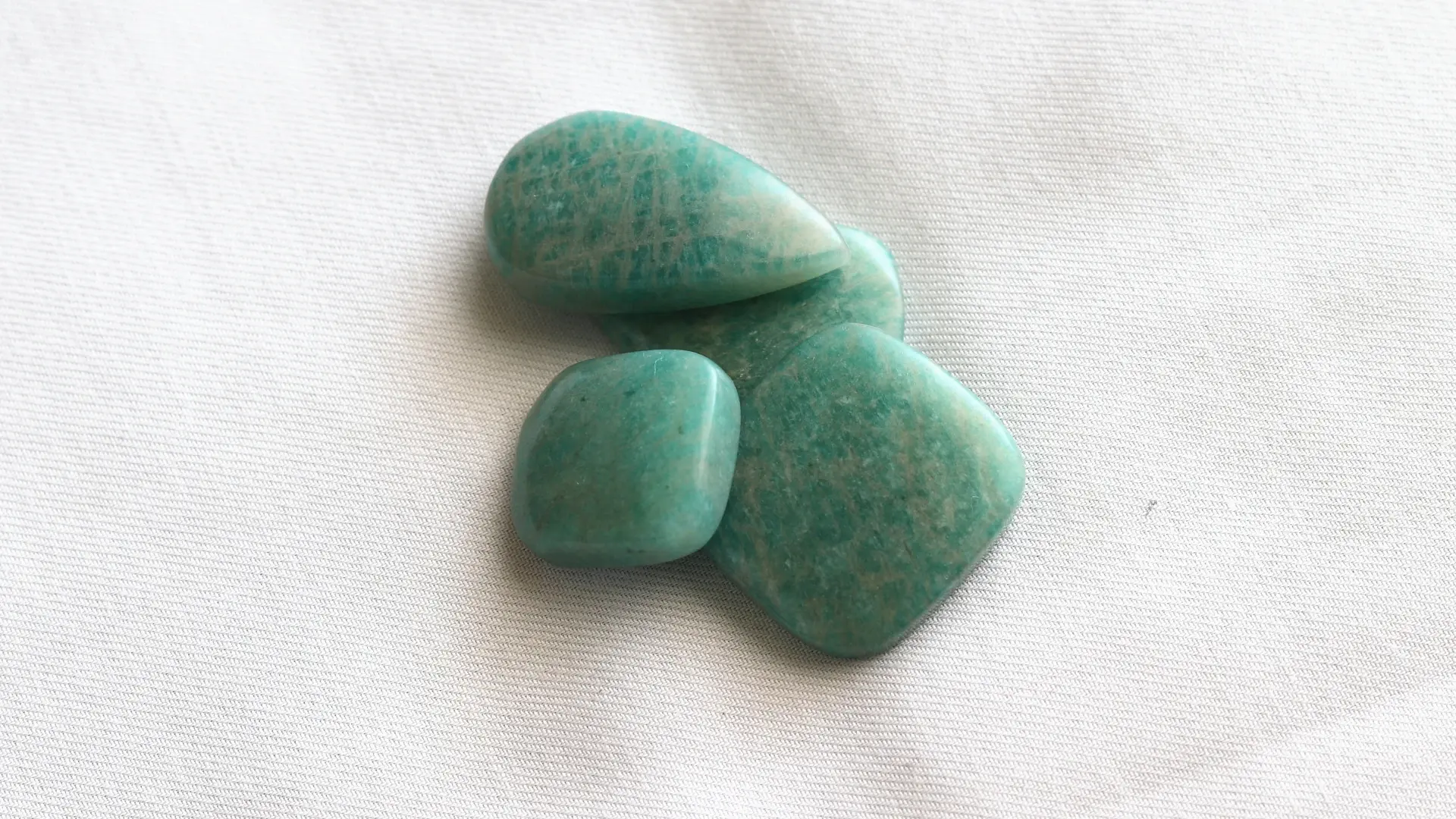
A turquoise-green variety of the feldspar microcline. Despite the name, it does not come from the Amazon.
Amethyst
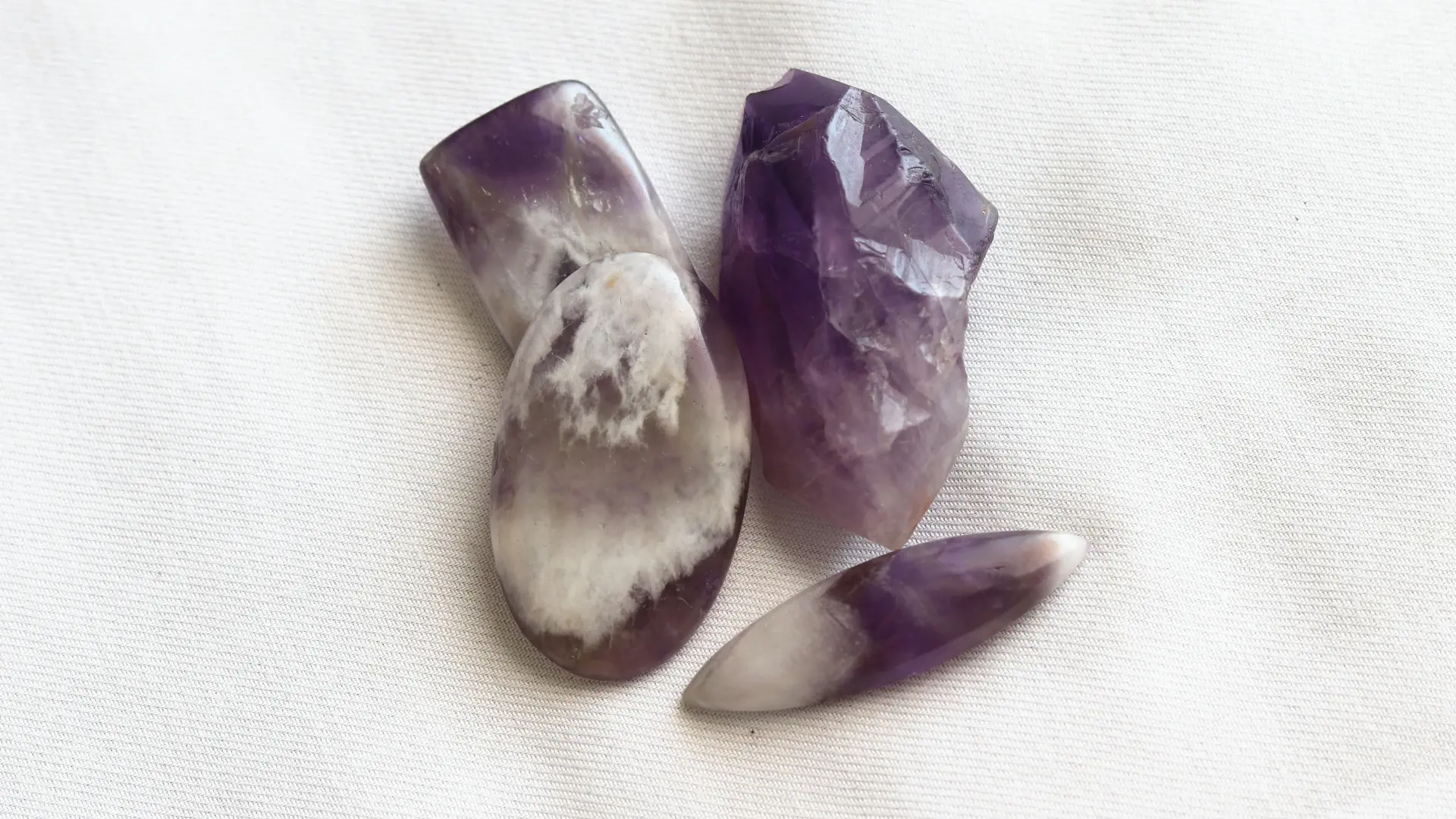
Purple quartz whose Greek name means "not drunk". By the common identification, one of the breastplate stones, and one of the best-loved stones in the world.
Aquamarine
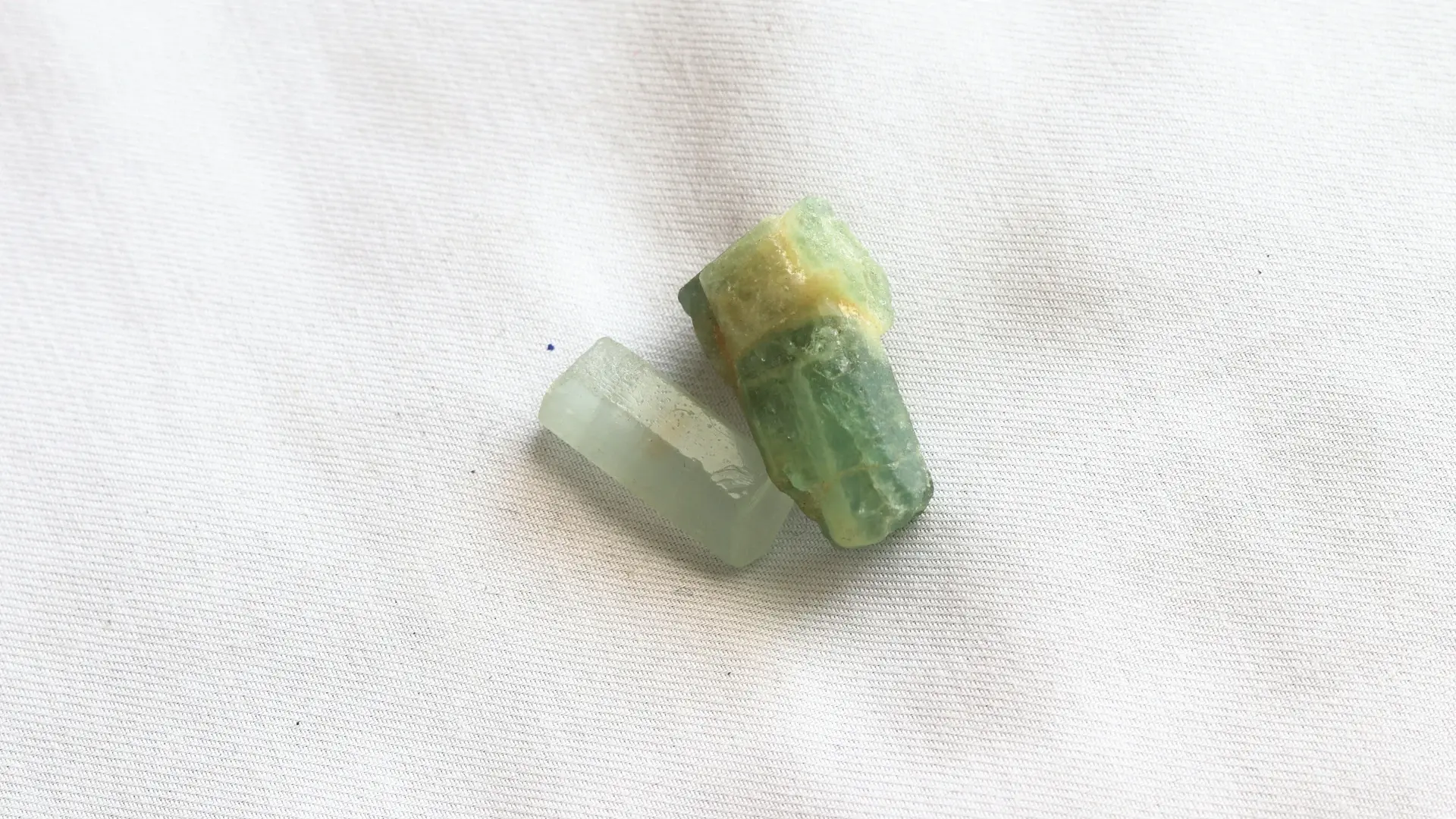
The blue-green variety of beryl, a close relative of emerald. Its name means "seawater".
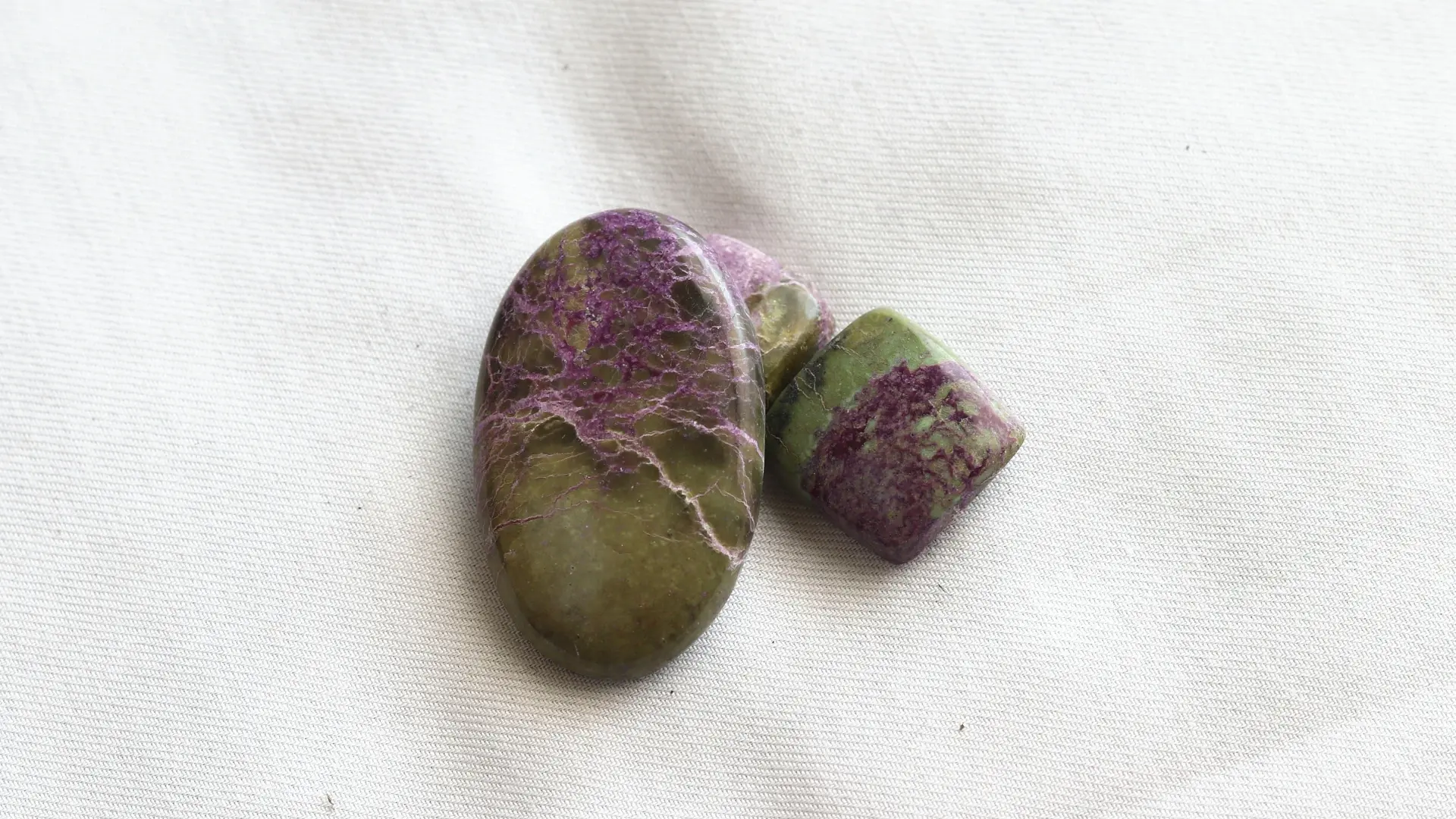
Atlantisite
A natural mix of green serpentine and purple stichtite, from a single hill in Tasmania.