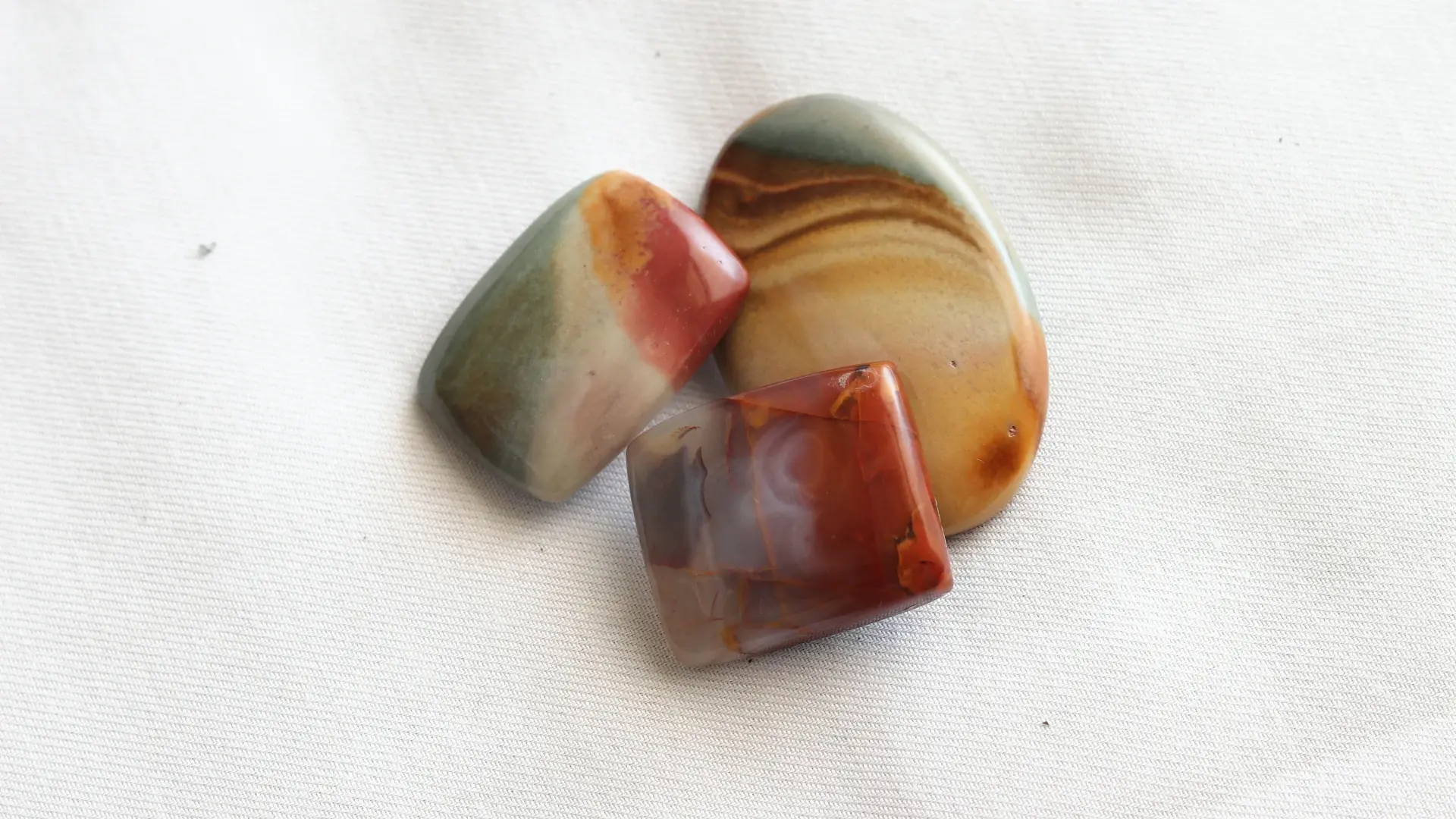
Polychrome Jasper
Jasper from Madagascar in bands of red, orange, yellow and greyish green, like a small desert landscape. Reportedly found in 2006, while people were looking for a different jasper.
Polychrome means "many-colored", and the name does not exaggerate. The stones in the photo have brick red, orange, mustard yellow, cream and greyish green, in bands and swirls that look like a desert landscape photographed from above. It is no accident that it is also called "desert jasper".
Jasper is an opaque kind of silica. According to Wikipedia, it is made mostly of very fine-grained quartz or chalcedony, and other minerals give it its colors. The red, for example, comes from iron. The patterns form when sediments or volcanic ash are cemented together with silica, and flow and settling leave bands and shapes in them. That is why some jaspers are called "picture jasper": when they are cut, you can see something like a landscape in them.
This jasper is found only on the northern coast of Madagascar. According to FossilEra, a fossil and mineral dealer, the deposit was reportedly discovered in 2006, while people were searching there for more deposits of a different jasper, ocean jasper. They went looking for one jasper and found another, which is not a bad trade. It is also sold as "desert jasper" and "royal savannah jasper".
The name jasper is very old. According to Wikipedia, it means "spotted or speckled stone", and it reached Greek and the European languages from a Semitic language. In Hebrew: yashpeh. As early as Minoan Crete, around 1800 BCE, seals were carved from jasper. But the "jasper" of the ancient world was not always what is called jasper today: according to Wikipedia, it was sometimes translucent, and often green. As for the yashpeh in the High Priest's breastplate, see below.
Crystal traditions
In crystal tradition
Crystal Vaults has no separate page for polychrome jasper, but of jasper in general the site says it is known as "the Supreme Nurturer", a stone of grounding and stability, comfort and security. According to the site, any jasper suits the base chakra, and it is not tied to a particular zodiac sign.
According to the site, jasper was worn throughout history as an amulet against witchcraft, and among other things it was believed to stop nosebleeds. Interestingly, Rabbeinu Bahya (see below) also credits the yashpeh with the power "to stop blood".
Sources: Jasper Healing Properties, Meanings, and Uses, Crystal Vaults; Rabbeinu Bahya on Exodus 28:15
Scientific information
Properties
Chemistry: silica, SiO₂, with other minerals mixed in. Very fine-grained quartz or chalcedony.
Mohs hardness: 6.5 to 7.
Specific gravity: 2.5 to 2.9.
Opaque, with no cleavage. Conchoidal fracture.
Color: the red usually comes from iron. The patterns form from sediments or volcanic ash cemented with silica.
Source: only the northern coast of Madagascar. Other trade names: desert jasper, royal savannah jasper.
Sources: Jasper, Wikipedia; Polychrome Jasper For Sale, FossilEra
Jewish sources
Yashpeh in the breastplate
DisputedSources or traditions disagree on this.
Yashpeh is the third stone in the fourth row of the High Priest's breastplate (Exodus 28:20; 39:13), the last of the twelve stones. The Hebrew name is very close to the stone's name in Greek and the European languages (iaspis, jasper), so the identification with jasper is widely accepted. But it is not the only one: Targum Onkelos calls it "panterei", and according to Hebrew Wikipedia, Targum Yerushalmi calls it "margalita", and the Temple Institute identifies it with opal. According to English Wikipedia, the Hebrew word may have meant a green jasper in particular.
Rabbeinu Bahya writes "Benjamin on the yashpeh", and describes it as a stone "made up of many colors, red, black, green". He says its virtue is "to stop blood", and that it was given to Benjamin "because his heart changed into many colors": Benjamin agonized over whether to tell his father what the brothers had done to Joseph, and in the end he held himself back and kept silent. That, he says, is also where the name comes from: yashpeh, "yesh peh", "there is a mouth". He had a mouth, and he knew how to keep it shut.
According to Bamidbar Rabbah (2:7) too, the yashpeh was Benjamin's stone, and "the color of his banner was like all the colors, the twelve colors", with a wolf depicted on it. A banner in every color for a stone called "many-colored": a nice coincidence. And according to Targum Jonathan (on Exodus 28:20), the fourth row bore the names of Zebulun, Joseph and Benjamin, so the yashpeh, the third stone in the row, matches Benjamin.
Unlike the achlamah, here all the sources we checked agree on the tribe. What remains open is exactly which stone the yashpeh was.
Sources: Exodus 28:20; Exodus 39:13; Targum Onkelos on Exodus 28:20; ישפה, ויקיפדיה; Jasper, Wikipedia; Rabbeinu Bahya on Exodus 28:15; Bamidbar Rabbah 2:7; Targum Jonathan on Exodus 28:20
Modern interpretations
Modern customs
According to Crystal Vaults, jasper is not a traditional birthstone, but it is a historical birthstone of March.
Sources: Jasper Healing Properties, Meanings, and Uses, Crystal Vaults
Associations
Different traditions associate this stone with different things, and they sometimes conflict. Each association is shown with its tradition and sources.
Tribe
BenjaminRabbinic literature
DisputedSources or traditions disagree on this.
All the sources we checked assign the yashpeh to Benjamin. Identifying the yashpeh with jasper is uncertain.
Sources: Rabbeinu Bahya on Exodus 28:15; Bamidbar Rabbah 2:7; Targum Jonathan on Exodus 28:20
Chakra
RootCrystal tradition
The source refers to all kinds of jasper.
Sources: Jasper Healing Properties, Meanings, and Uses, Crystal Vaults
Sources
- Jasper, WikipediaAccessed September 24, 2026
- ישפה, ויקיפדיהAccessed September 24, 2026
- Polychrome Jasper For Sale, FossilEraAccessed September 24, 2026
- Jasper Healing Properties, Meanings, and Uses, Crystal VaultsAccessed September 24, 2026
- Exodus 28:20
- Exodus 39:13
- Targum Onkelos on Exodus 28:20
- Rabbeinu Bahya on Exodus 28:15
- Bamidbar Rabbah 2:7
- Targum Jonathan on Exodus 28:20
More crystals
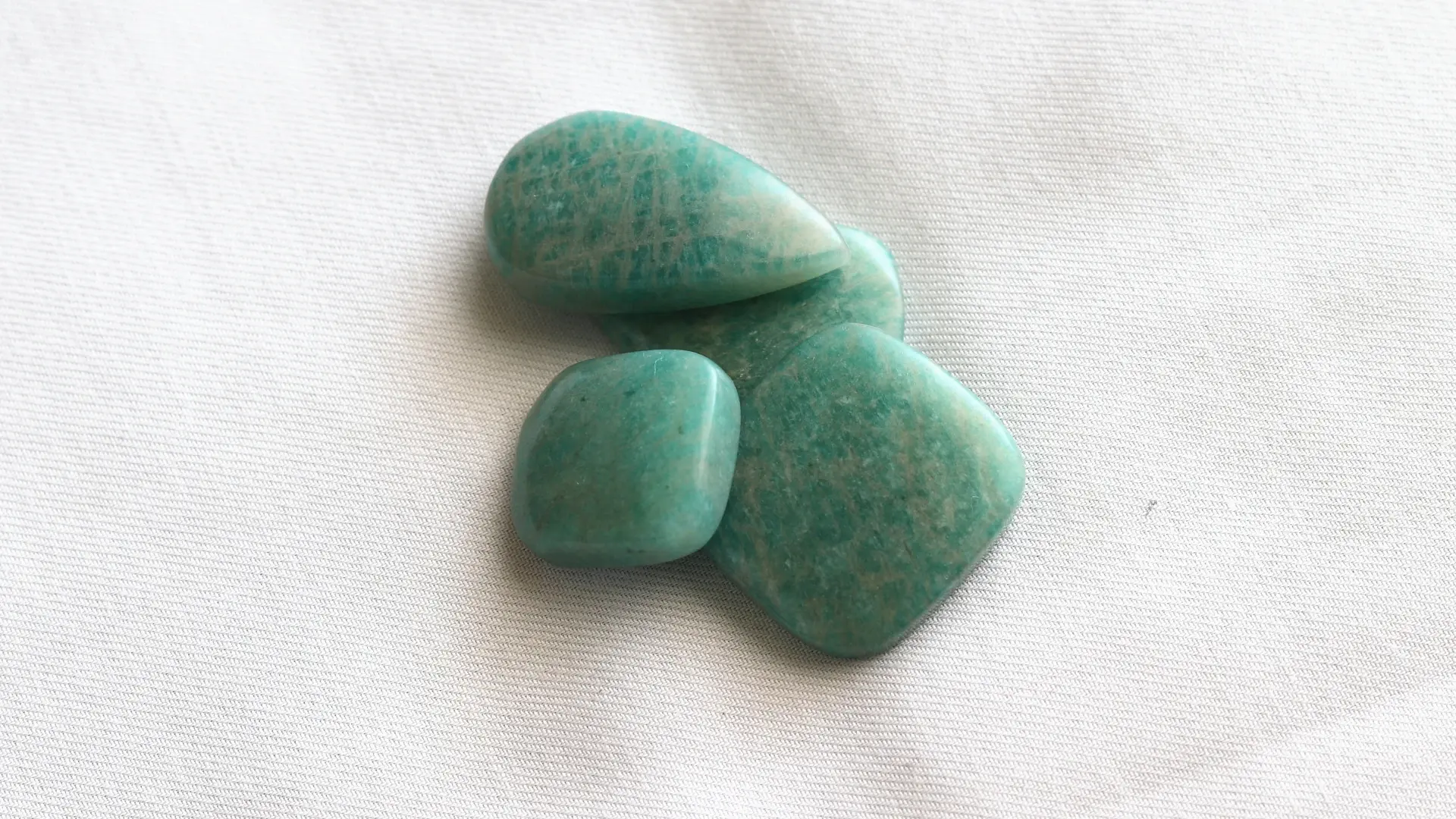
Amazonite
A turquoise-green variety of the feldspar microcline. Despite the name, it does not come from the Amazon.
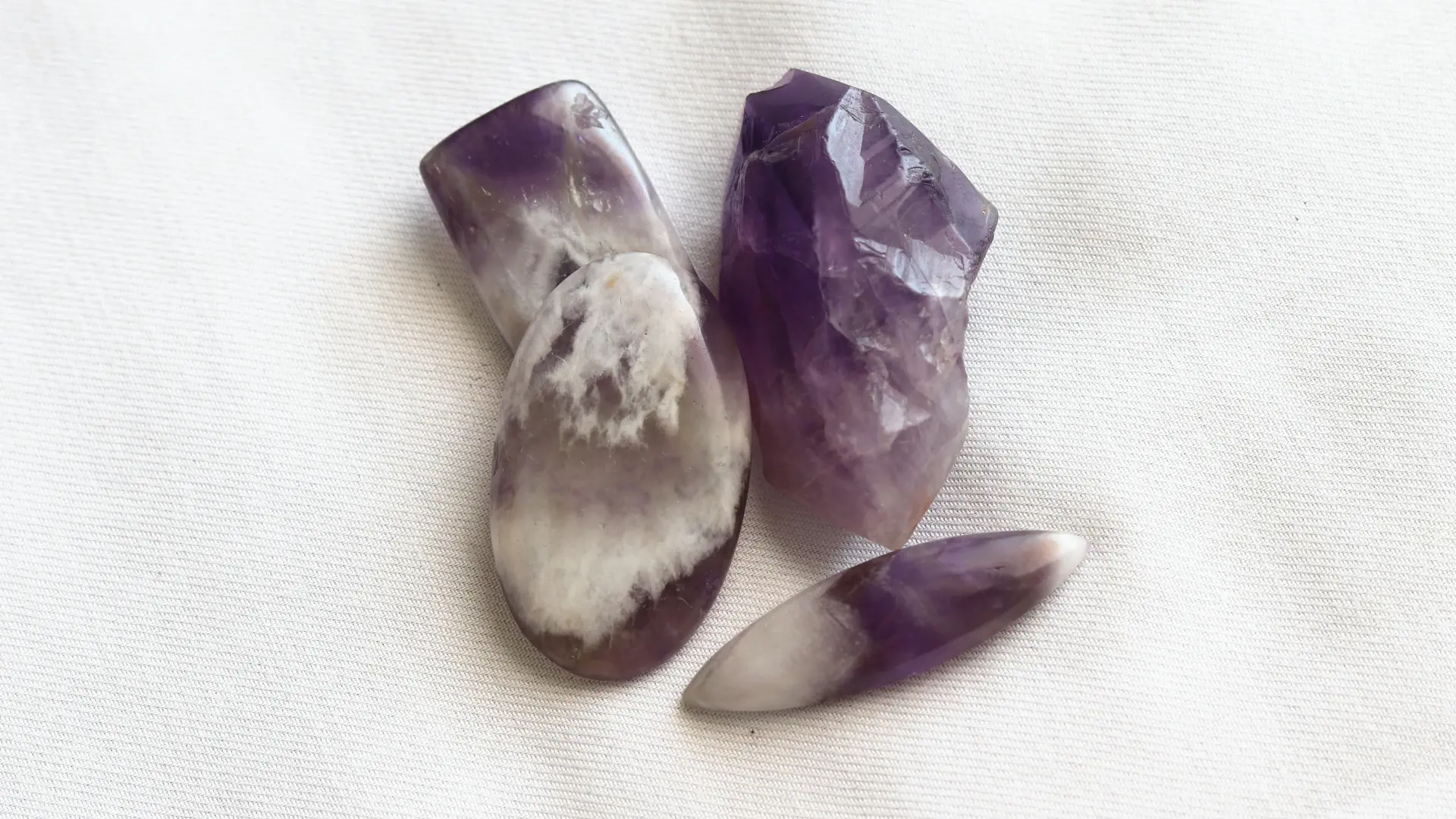
Amethyst
Purple quartz whose Greek name means "not drunk". By the common identification, one of the breastplate stones, and one of the best-loved stones in the world.
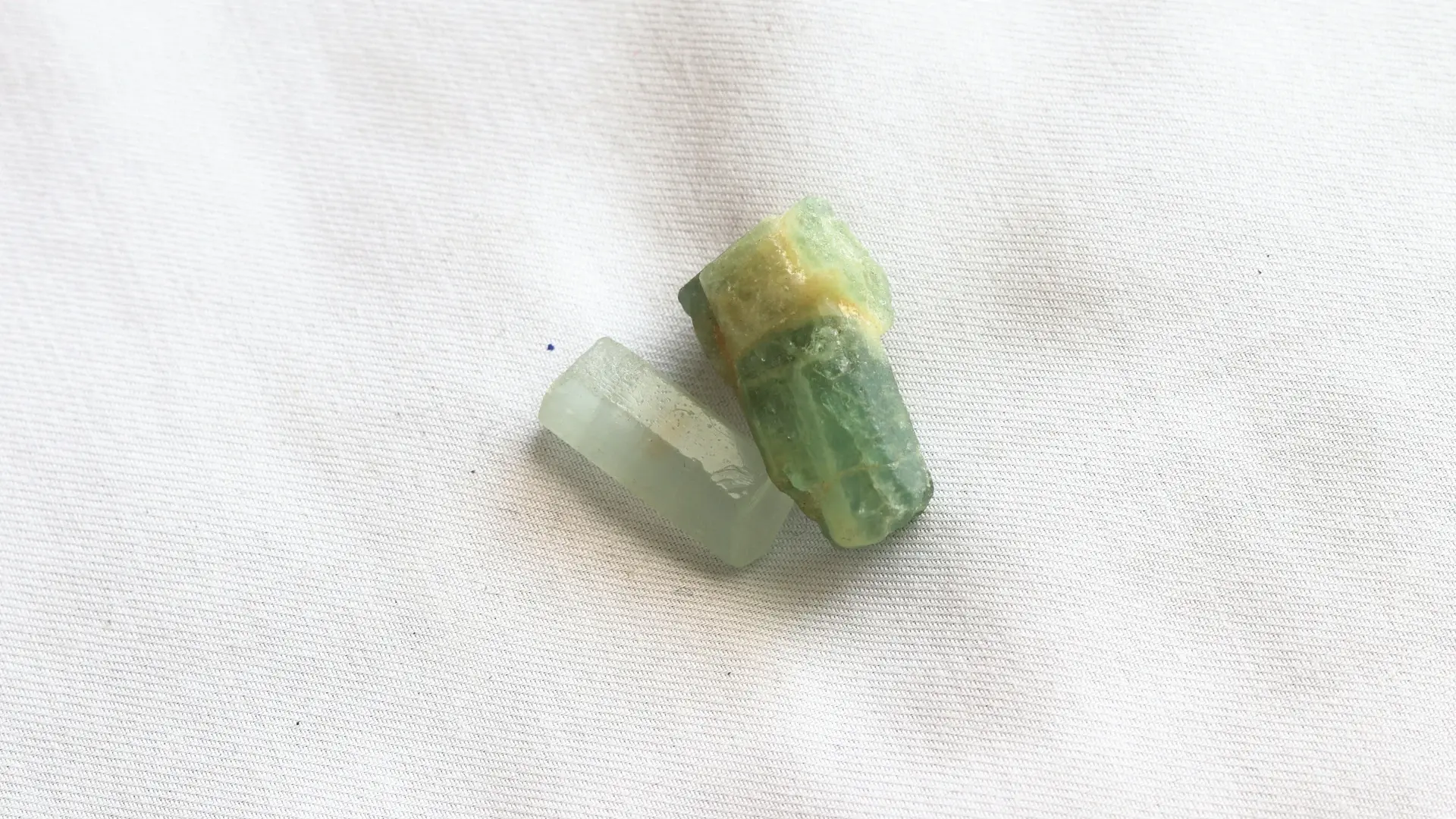
Aquamarine
The blue-green variety of beryl, a close relative of emerald. Its name means "seawater".
Atlantisite
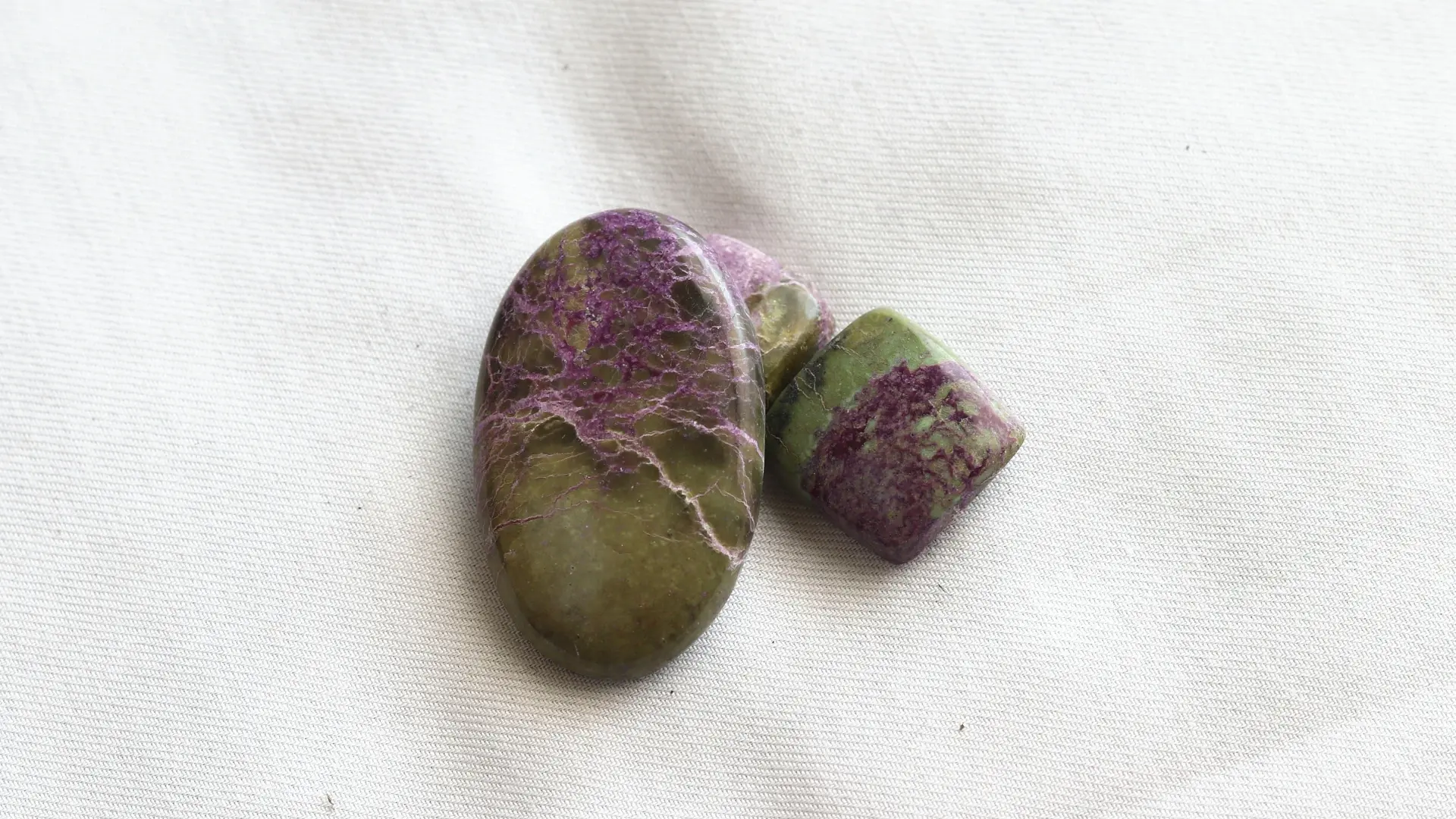
A natural mix of green serpentine and purple stichtite, from a single hill in Tasmania.