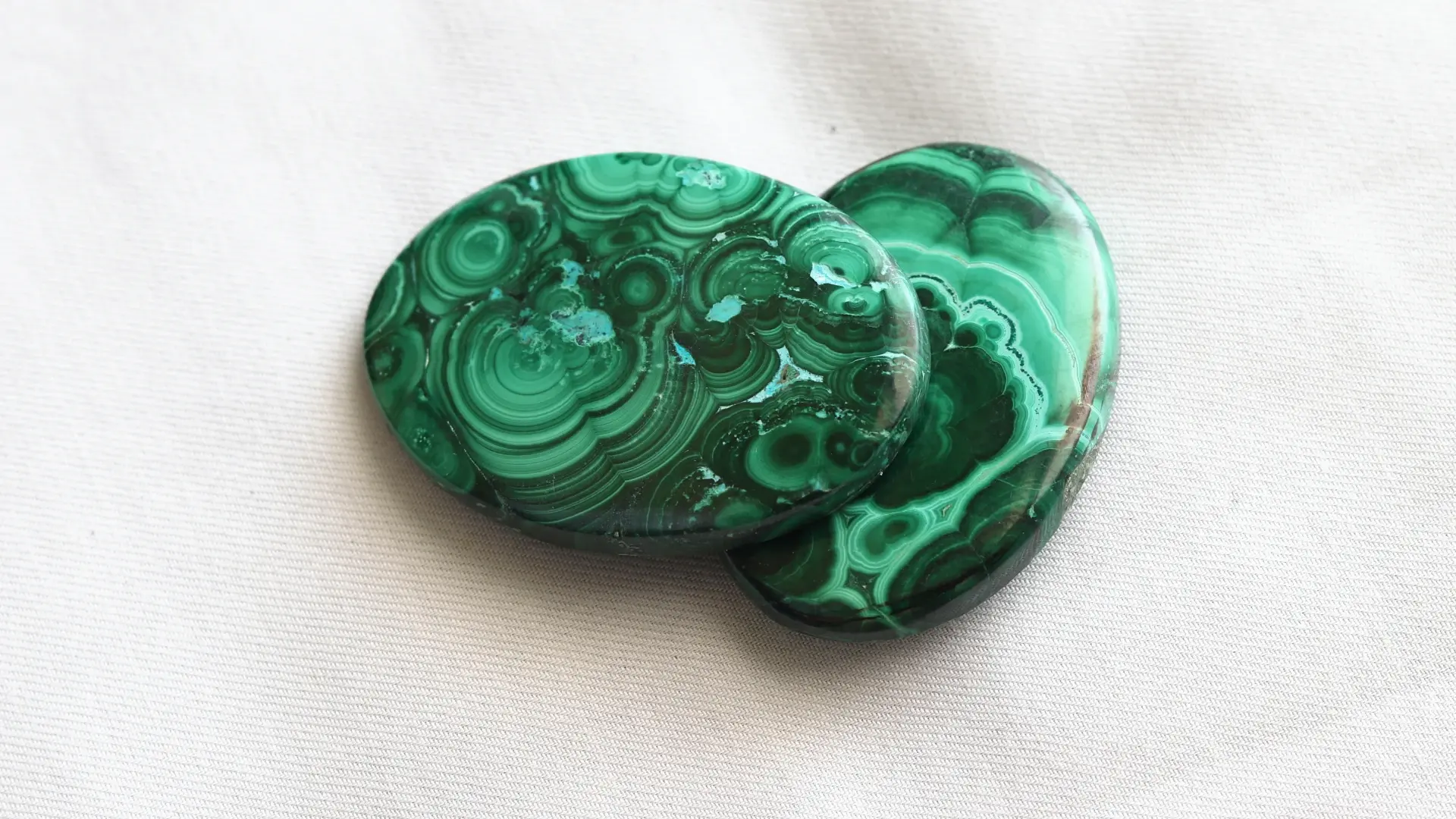
Malachite
A vivid green copper mineral, with rings that look like a map of hills. Soft, beautiful, and mined in the Timna Valley long ago.
Malachite is hard to mistake for anything else: vivid green, with rings and bands that look like a cross-section of a tree trunk, or a topographic map of hills. The color comes from copper, and the rings form as the mineral is deposited in layers, one on top of the other, in cracks and cavities in the rock.
The name comes from the Greek malache, mallow, because its color reminded people of the plant's leaves.
Malachite is also a copper ore, and people have been mining it for thousands of years. According to Wikipedia, it was mined and smelted for copper in the Timna Valley more than 3,000 years ago, and according to Hebrew Wikipedia it can still be found there today. The ancient Egyptians ground it into a green powder for makeup, and until about 1800 it was used as a green paint pigment.
The Russian tsars were especially fond of it. Large quantities were mined in the Ural Mountains, and it decorated their palaces. The Hermitage Museum has an entire hall called the Malachite Room. And for those who prefer sport to palaces: according to Wikipedia, the base of the FIFA World Cup trophy has two layers of malachite.
Now for the warning: malachite is soft, 3.5 to 4 on the Mohs scale, and has perfect cleavage. According to Geology.com, it is also sensitive to heat and reacts with weak acids. In other words, it does not like knocks, it does not like heat, and it does not like lemon juice either. That same softness makes it easy to grind into powder, which is what made it such a sought-after pigment.
Crystal traditions
In crystal tradition
Crystal Vaults calls malachite "a Stone of Transformation" that helps with changing situations and spiritual growth. The site links it to the heart chakra and names it one of the zodiac stones of Taurus. According to the site, in the Middle Ages it was believed to protect against the evil eye.
According to Wikipedia, a 17th-century Spanish superstition had children wear malachite to help them sleep and keep evil spirits away. In ancient Egypt green symbolized death and resurrection, and the afterlife was described as the "Field of Malachite".
Sources: Malachite Healing Properties, Meanings, and Uses, Crystal Vaults; Malachite, Wikipedia
Scientific information
Properties
Chemistry: copper carbonate hydroxide, Cu₂CO₃(OH)₂.
Mohs hardness: 3.5 to 4.
Specific gravity: 3.6 to 4.0.
Crystal system: monoclinic. Perfect cleavage in one direction.
Diagnostic: effervesces in dilute hydrochloric acid, producing a green liquid.
Formation: in the oxidation zone of copper deposits, often with azurite, and typically around limestone.
Sources: the Ural Mountains, the Democratic Republic of the Congo, Zambia, Namibia, Arizona and the Timna Valley.
Sources: Malachite: Uses and properties of the mineral and gemstone, Geology.com; Malachite, Wikipedia; מלכיט, ויקיפדיה
Jewish sources
Copper from the hills
Deuteronomy (8:9) describes the land as "a land whose rocks are iron and from whose hills you can mine copper". The verse does not name a specific mineral, but according to Wikipedia, malachite was one of the copper ores mined and smelted in the Timna Valley more than 3,000 years ago.
Sources: Deuteronomy 8:9; Malachite, Wikipedia
Associations
Different traditions associate this stone with different things, and they sometimes conflict. Each association is shown with its tradition and sources.
Zodiac sign
TaurusCrystal tradition
Sources: Malachite Healing Properties, Meanings, and Uses, Crystal Vaults
Chakra
HeartCrystal tradition
Sources: Malachite Healing Properties, Meanings, and Uses, Crystal Vaults
Sources
- Malachite: Uses and properties of the mineral and gemstone, Geology.comAccessed September 24, 2026
- Malachite, WikipediaAccessed September 24, 2026
- מלכיט, ויקיפדיהAccessed September 24, 2026
- Malachite Healing Properties, Meanings, and Uses, Crystal VaultsAccessed September 24, 2026
- Deuteronomy 8:9
More crystals
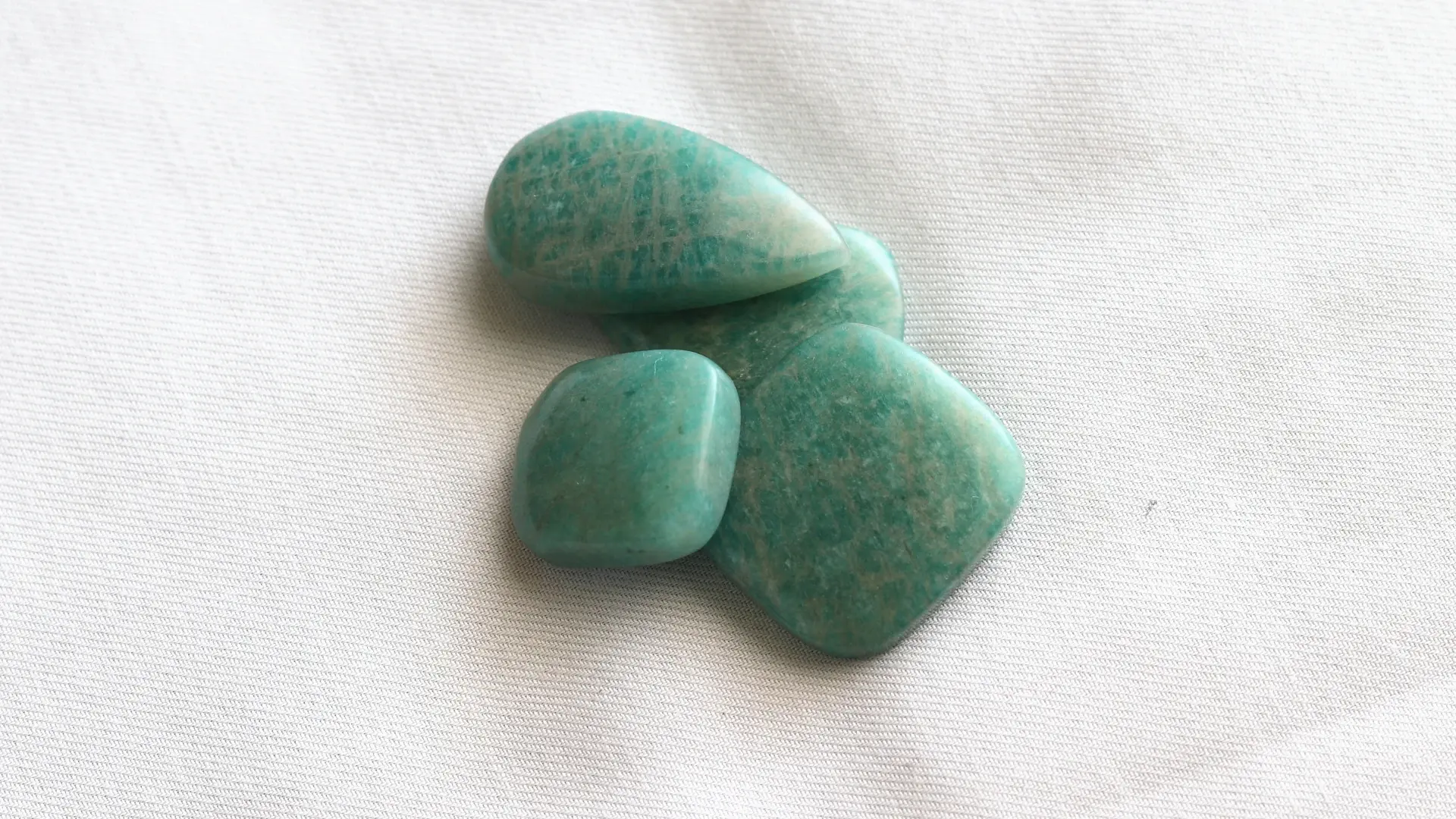
Amazonite
A turquoise-green variety of the feldspar microcline. Despite the name, it does not come from the Amazon.
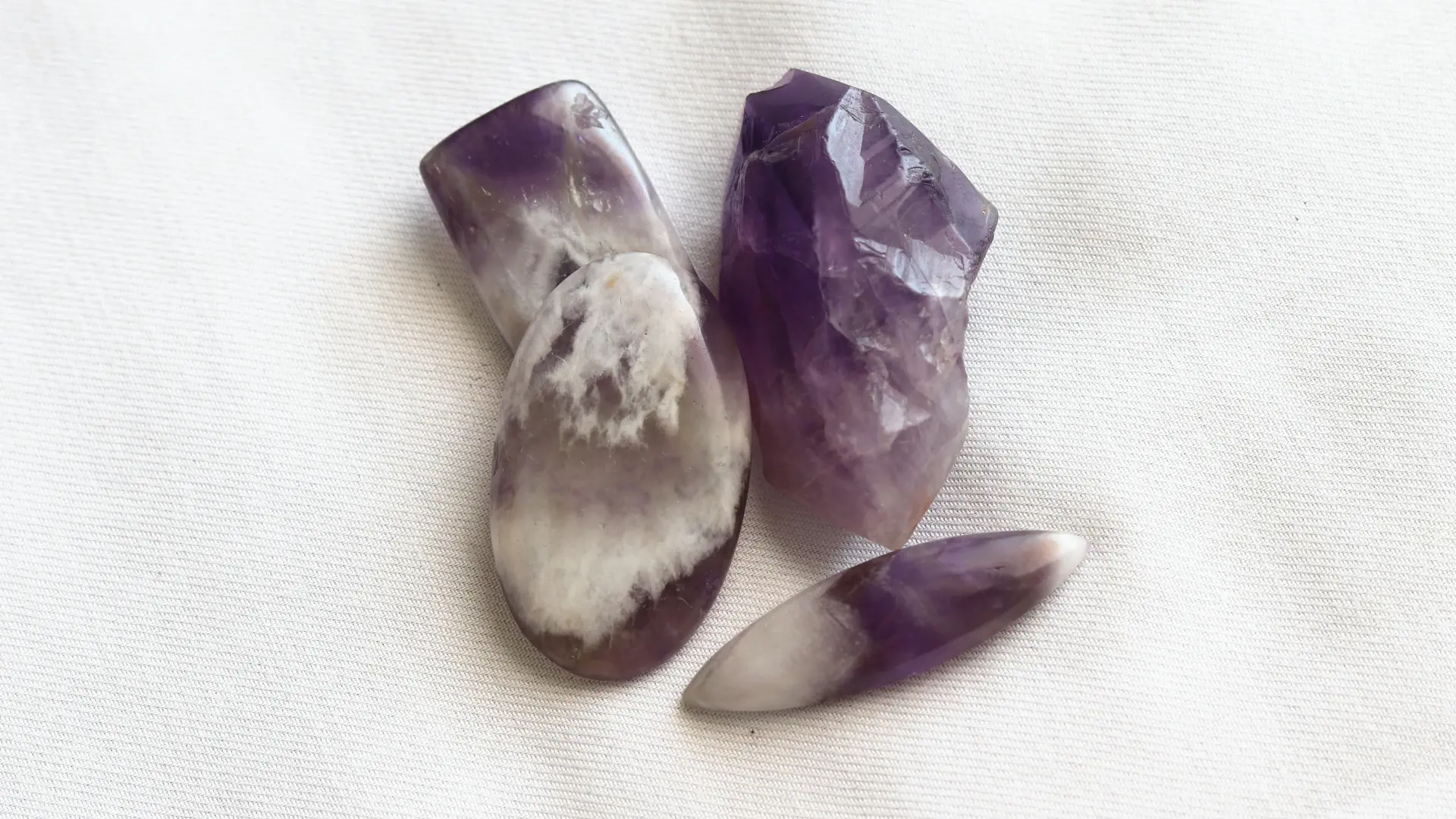
Amethyst
Purple quartz whose Greek name means "not drunk". By the common identification, one of the breastplate stones, and one of the best-loved stones in the world.
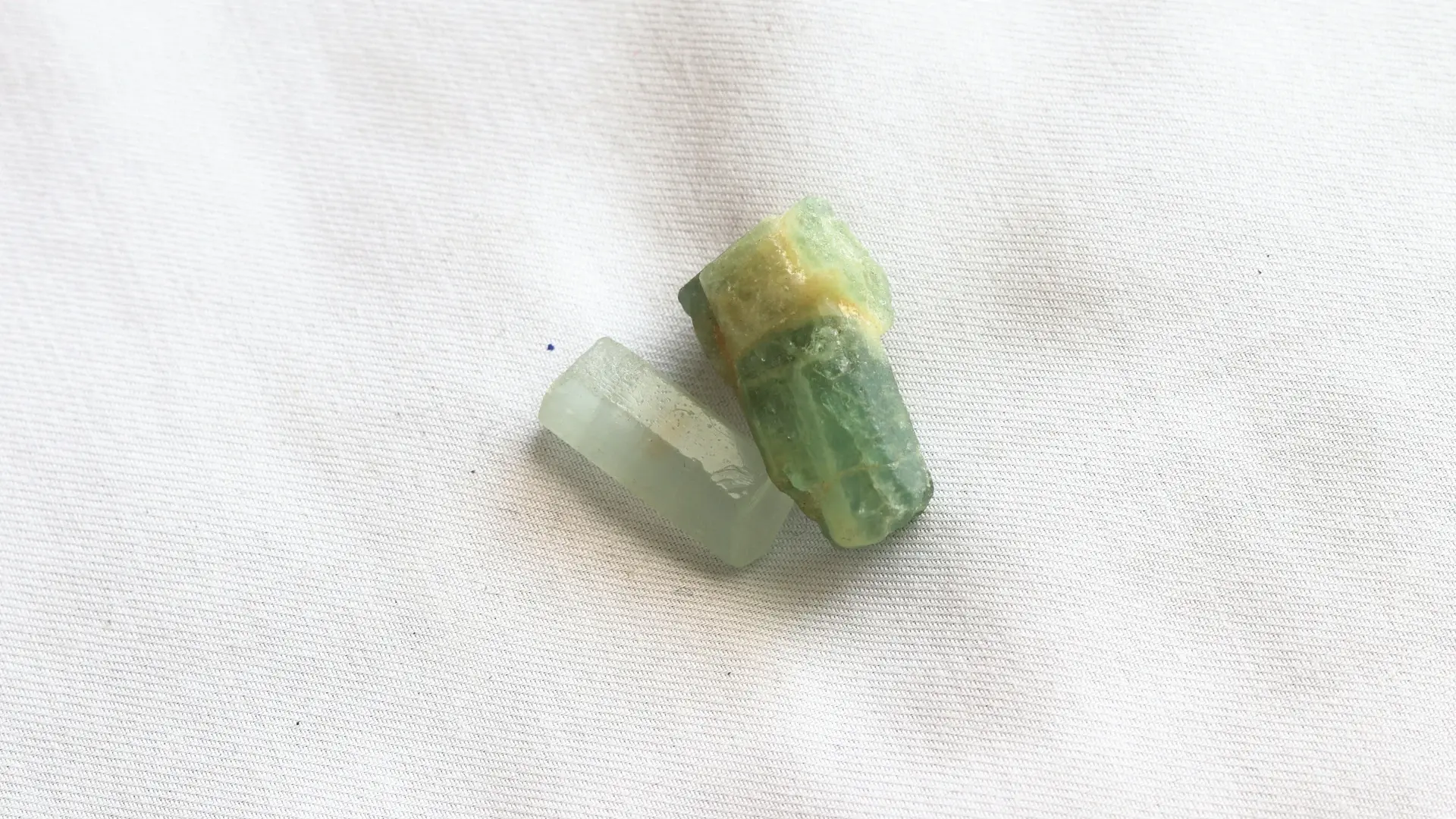
Aquamarine
The blue-green variety of beryl, a close relative of emerald. Its name means "seawater".
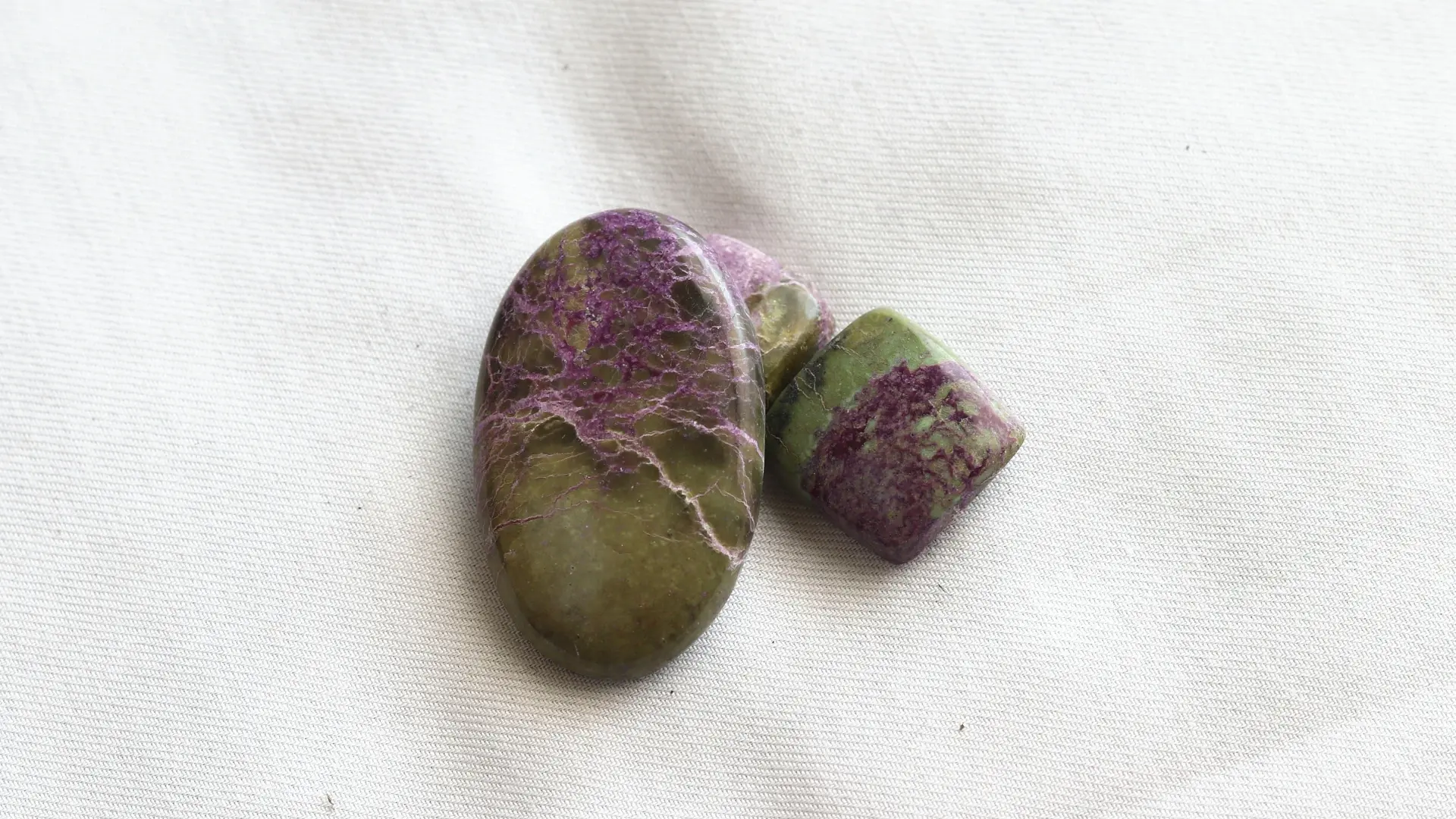
Atlantisite
A natural mix of green serpentine and purple stichtite, from a single hill in Tasmania.