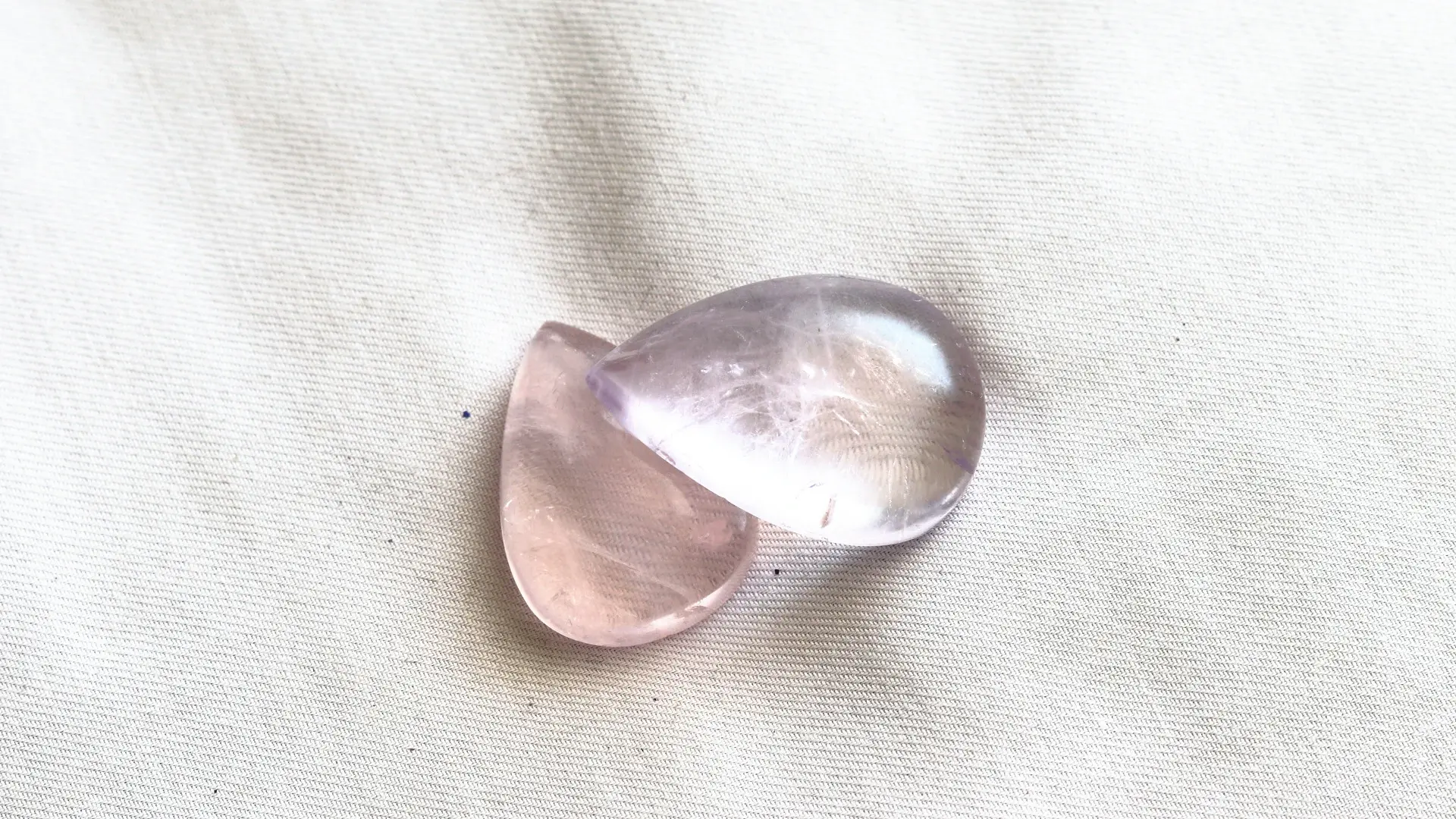
Lavender Amethyst
Amethyst in a pale lilac shade. It used to be the shade sold at a discount; now it has a French name.
Lavender amethyst is amethyst in a very pale shade, somewhere between lilac and lavender. Mineralogically it is exactly the same stone: quartz colored by iron and natural radiation, only less intensely.
In the trade this shade is sometimes called "Rose de France". According to Wikipedia, the pale shades of amethyst were once considered undesirable, and only recently became popular, mostly thanks to intensive marketing. So it used to be the shade sold at a discount; now it has a French name.
In professional grading, according to Wikipedia, the most sought-after amethyst is called "Deep Siberian": a deep purple with flashes of blue and red. Lavender sits at the other end of the scale. But beauty is a matter of taste, and this shade has something soft and quiet that deep purple does not.
Like all amethyst, lavender amethyst can fade with long exposure to strong light, and in a stone that is pale to begin with, that is worth watching even more. On the other hand, it has a hardness of 7 on the Mohs scale, so it is suitable for everyday wear.
For the rest of the story, from the Greeks who believed amethyst prevented drunkenness to the achlamah in the High Priest's breastplate, see the amethyst page.
Crystal traditions
In crystal tradition
We found no separate mention of the lavender shade on Crystal Vaults' amethyst page. The site links amethyst in general to the third eye and crown chakras, and describes it as a stone of spirituality, meditation and creativity. According to the site, it is the zodiac stone of Pisces.
Sources: Amethyst Healing Properties, Meanings, and Uses, Crystal Vaults
Scientific information
Properties
Chemistry: silica, SiO₂. A variety of quartz (amethyst in a pale shade).
Mohs hardness: 7.
Specific gravity: 2.66.
Color cause: iron in the crystal, turned purple by natural radiation. Amethyst ranges from light lavender to deep purple.
The color can fade with long exposure to strong light.
Sources: Amethyst, GIA; Amethyst, Wikipedia; אחלמה, ויקיפדיה
Associations
Different traditions associate this stone with different things, and they sometimes conflict. Each association is shown with its tradition and sources.
Zodiac sign
PiscesCrystal tradition
The source refers to amethyst in general.
Sources: Amethyst Healing Properties, Meanings, and Uses, Crystal Vaults
Chakra
Third EyeCrystal tradition
The source refers to amethyst in general.
Sources: Amethyst Healing Properties, Meanings, and Uses, Crystal Vaults
Chakra
CrownCrystal tradition
The source refers to amethyst in general.
Sources: Amethyst Healing Properties, Meanings, and Uses, Crystal Vaults
Sources
- Amethyst, GIAAccessed September 24, 2026
- Amethyst, WikipediaAccessed September 24, 2026
- אחלמה, ויקיפדיהAccessed September 24, 2026
- Amethyst Healing Properties, Meanings, and Uses, Crystal VaultsAccessed September 24, 2026
More crystals
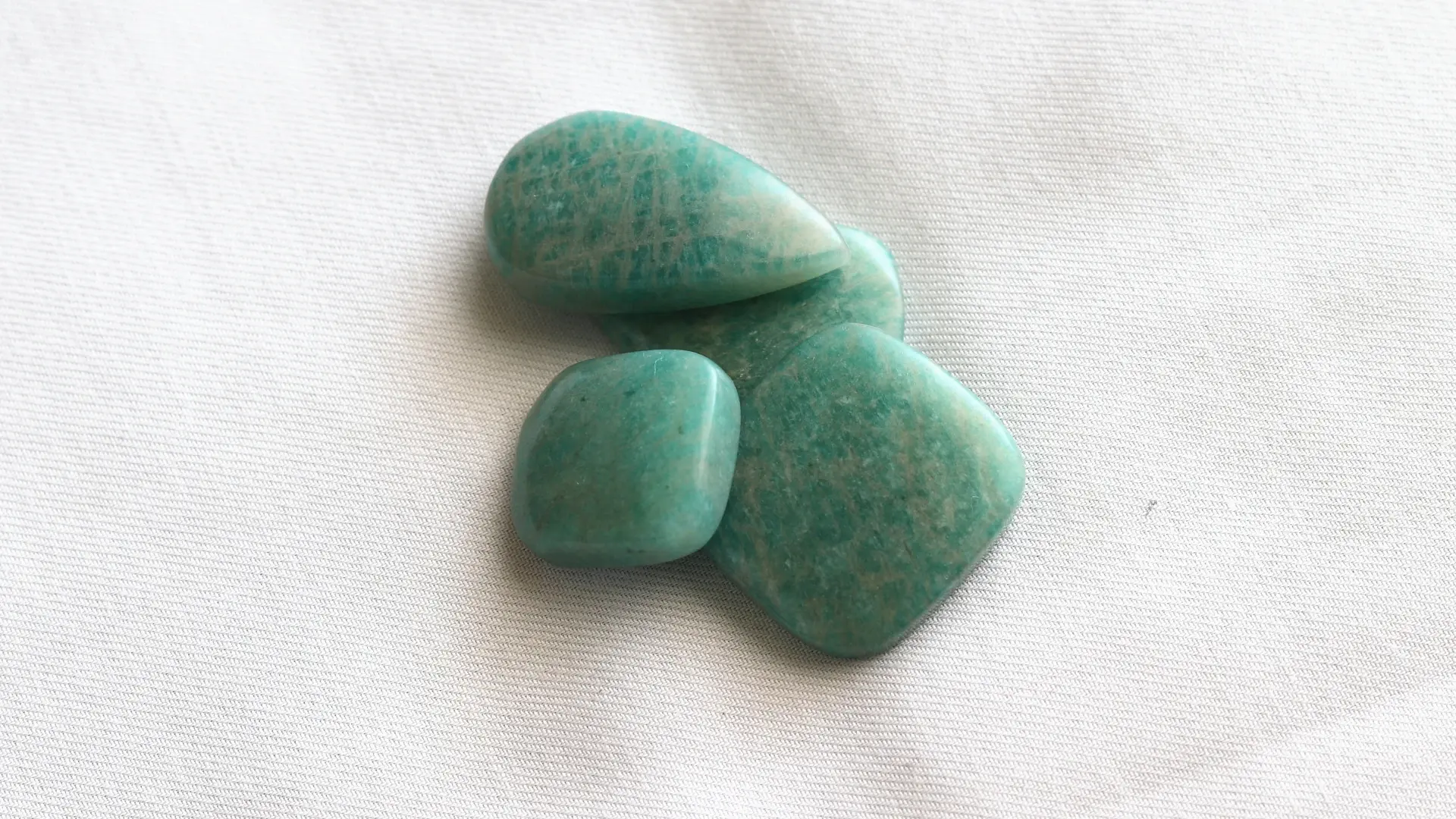
Amazonite
A turquoise-green variety of the feldspar microcline. Despite the name, it does not come from the Amazon.
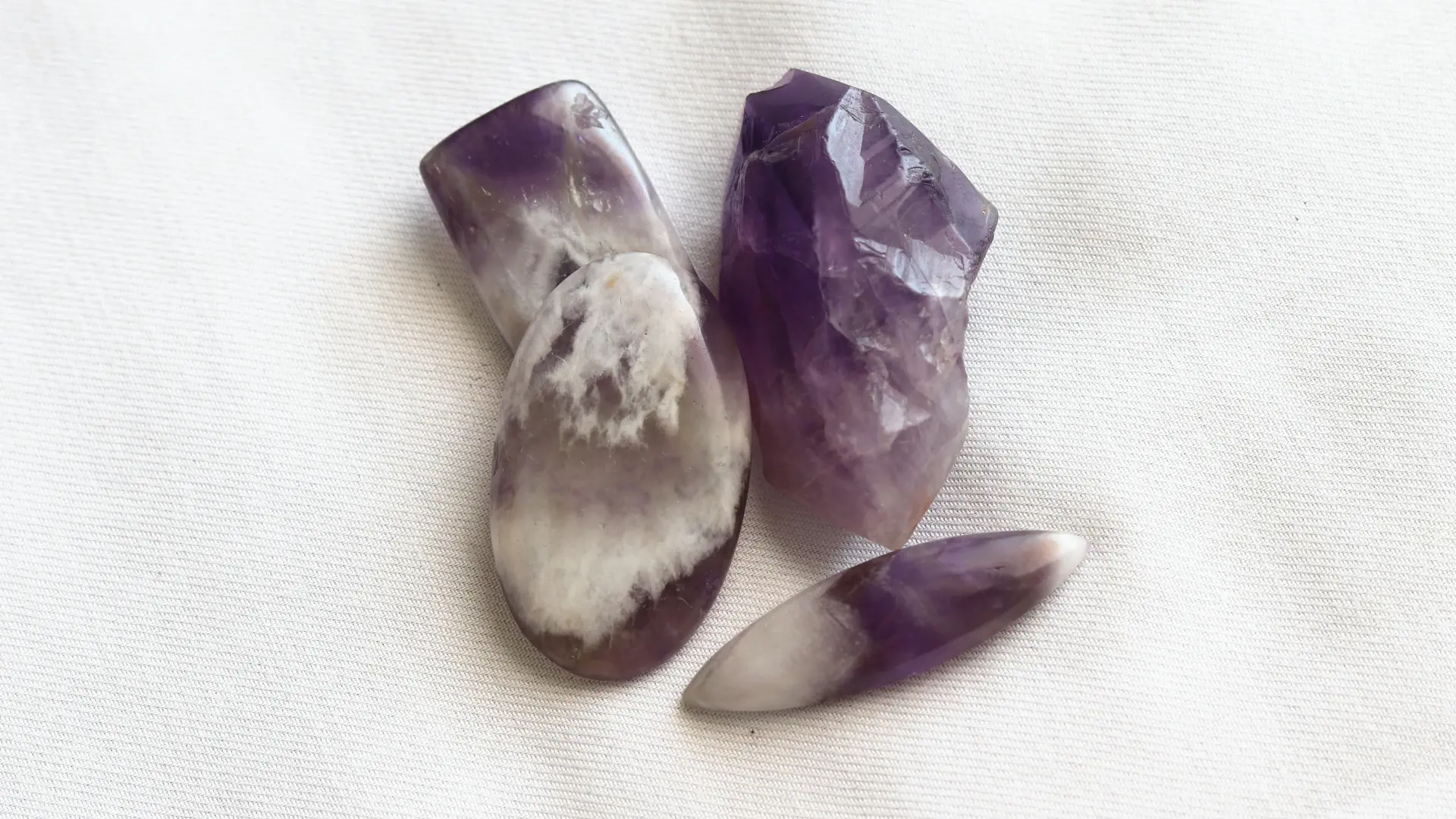
Amethyst
Purple quartz whose Greek name means "not drunk". By the common identification, one of the breastplate stones, and one of the best-loved stones in the world.
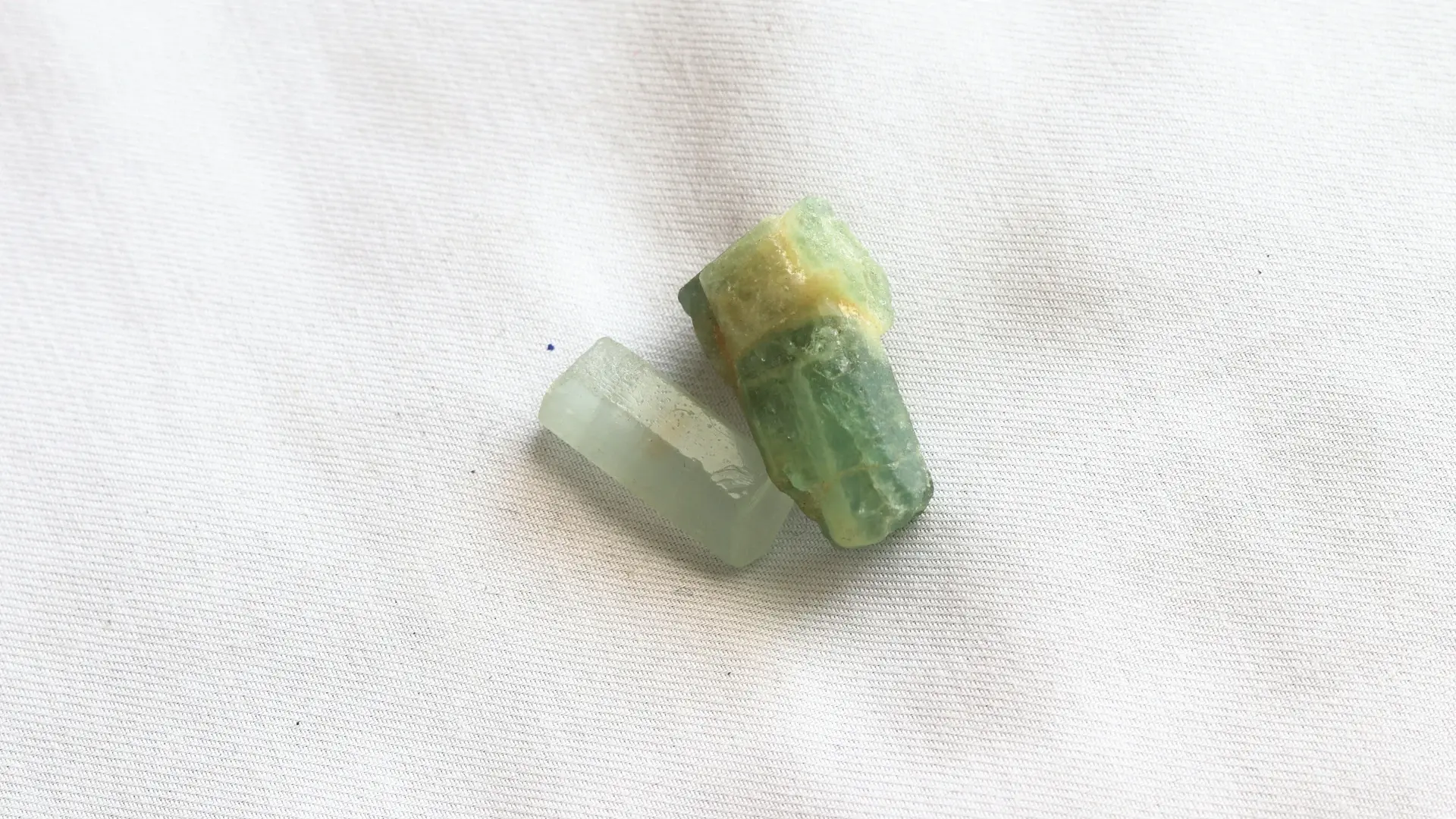
Aquamarine
The blue-green variety of beryl, a close relative of emerald. Its name means "seawater".
Atlantisite
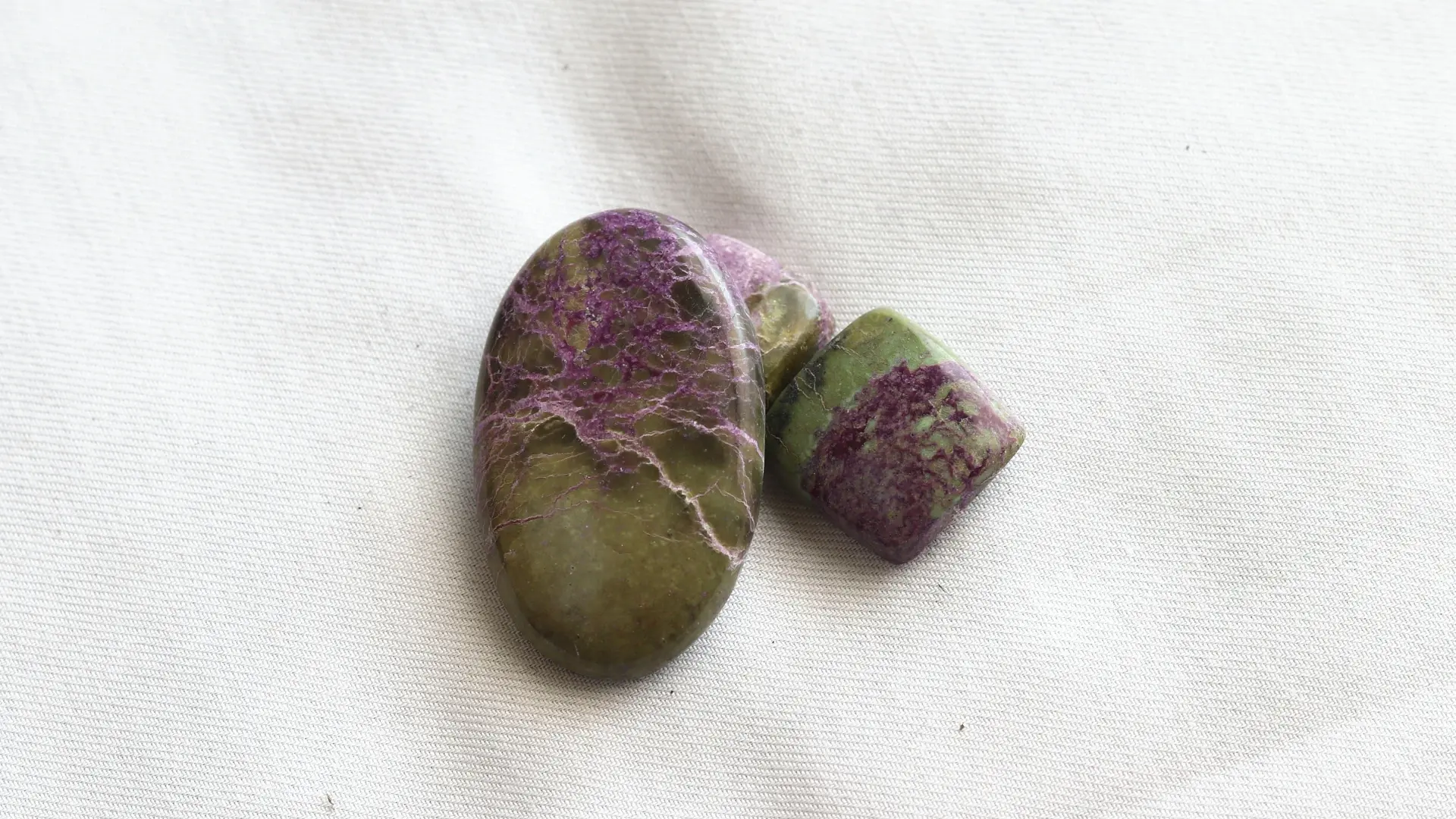
A natural mix of green serpentine and purple stichtite, from a single hill in Tasmania.