Labradorite
A modest grey stone, until you turn it in your hand and it lights up in blue, green and gold.
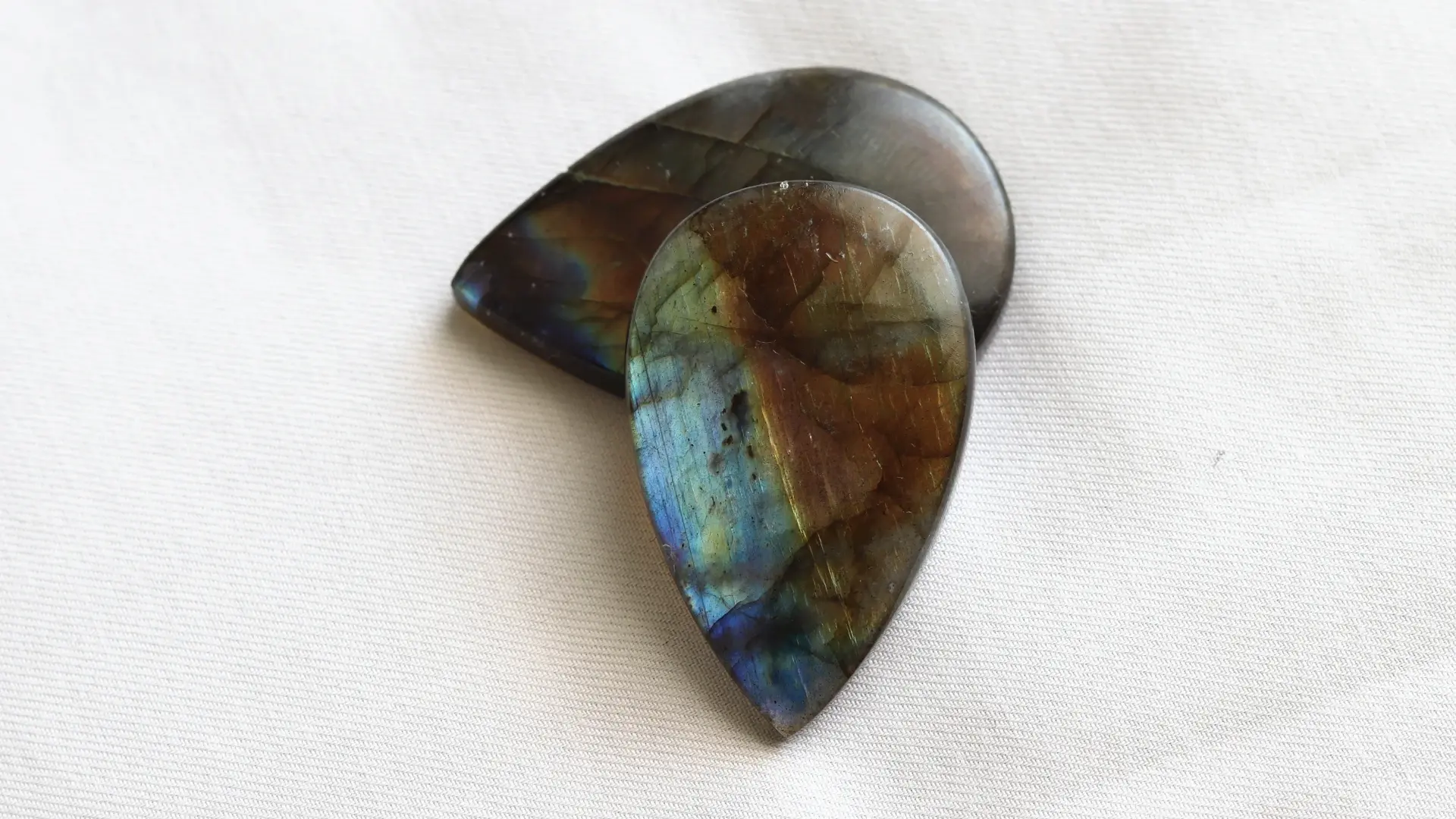
At first glance labradorite looks like a dark grey, fairly modest stone. Then you turn it, and it lights up in blue, green, gold and sometimes orange. That is exactly what happens in the stones in the photo: part of the surface flashes blue, and part gold.
This effect is called labradorescence. Labradorite is a feldspar of the plagioclase group, a relative of moonstone. When the rock it forms in cools very slowly, very thin layers of slightly different composition develop inside the crystal. According to Wikipedia, when the spacing between these layers is about 128 to 252 nanometers, the light reflected from them creates color. The color changes with the angle, and at some angles it disappears completely. So if your stone suddenly looks grey, it is not broken. Just turn it.
The name comes from the Labrador Peninsula in Canada. According to Geology.com, a Moravian missionary discovered it in 1770 on Paul's Island, near the village of Nain. According to Wikipedia, it is also found in Finland, Norway, Madagascar, China, Australia and the United States.
Finland has labradorite with an especially rich range of colors, called spectrolite. According to Wikipedia, the deposit was discovered in 1940, while a line of fortifications was being built there during World War II. Fortifications are not usually built to find gemstones, but this time it happened.
You may have seen labradorite without knowing it: according to Hebrew Wikipedia, near the city of Zhytomyr in Ukraine, a rock made mostly of labradorite is quarried and sawn into slabs for kitchen countertops. Not every kitchen counter can say it is related to a gemstone.
Crystal traditions
In crystal tradition
According to Crystal Vaults, Inuit lore says labradorite fell from the "frozen fire" of the Northern Lights. The site calls it "a Stone of Magic", a crystal of shamans, diviners and healers, and also describes it as a protective stone.
The site links it to the throat chakra. According to the site, labradorite is not associated with any particular zodiac sign.
Sources: Labradorite Healing Properties, Meanings, and Uses, Crystal Vaults
Scientific information
Properties
Chemistry: calcium sodium aluminium silicate, (Ca,Na)(Al,Si)₄O₈. A plagioclase feldspar.
Mohs hardness: 6 to 6.5.
Specific gravity: 2.68 to 2.72.
Crystal system: triclinic. Two directions of perfect cleavage, at about 86 degrees.
Labradorescence: light reflected from very thin layers that form during very slow cooling. Not every labradorite shows it.
Formation: in mafic igneous rocks such as basalt and gabbro, and in anorthosite, a rock that can be made almost entirely of labradorite.
Sources: Labradorite: The gem plagioclase feldspar with play-of-color, Geology.com; Labradorite, Wikipedia; לברדוריט, ויקיפדיה
Associations
Different traditions associate this stone with different things, and they sometimes conflict. Each association is shown with its tradition and sources.
Chakra
ThroatCrystal tradition
Sources: Labradorite Healing Properties, Meanings, and Uses, Crystal Vaults
Sources
- Labradorite: The gem plagioclase feldspar with play-of-color, Geology.comAccessed September 24, 2026
- Labradorite, WikipediaAccessed September 24, 2026
- לברדוריט, ויקיפדיהAccessed September 24, 2026
- Labradorite Healing Properties, Meanings, and Uses, Crystal VaultsAccessed September 24, 2026
More crystals
Amazonite
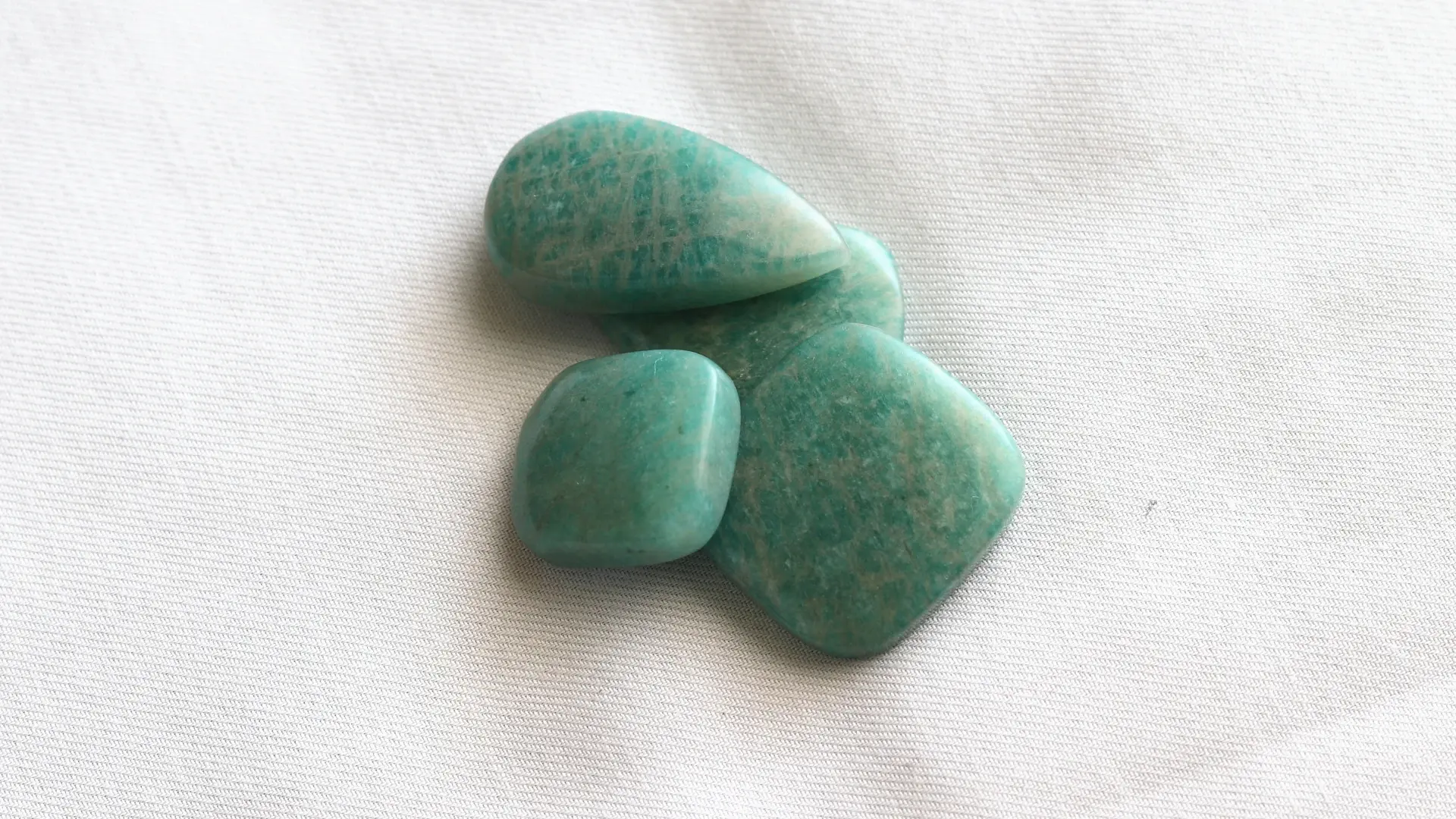
A turquoise-green variety of the feldspar microcline. Despite the name, it does not come from the Amazon.
Amethyst
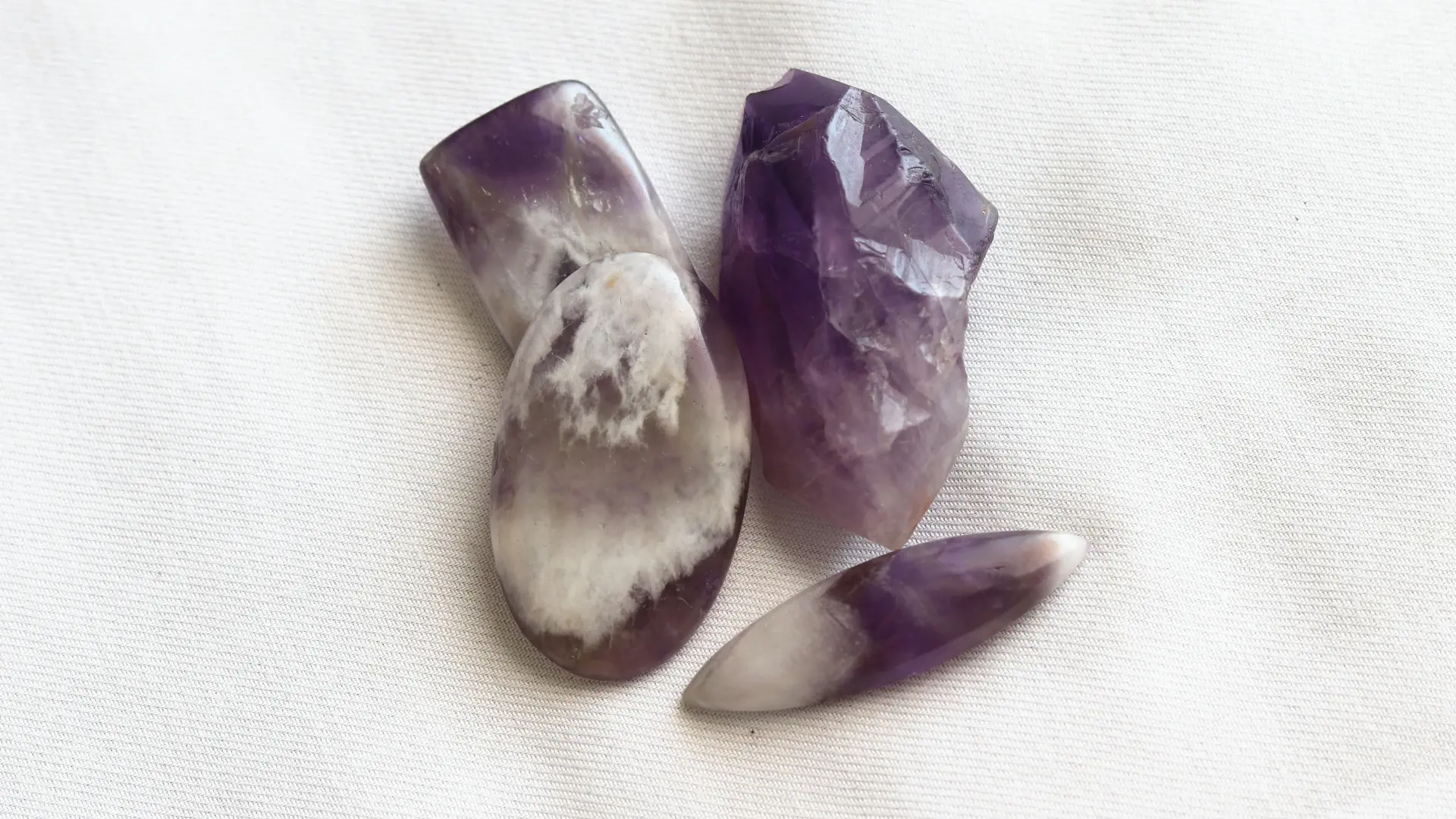
Purple quartz whose Greek name means "not drunk". By the common identification, one of the breastplate stones, and one of the best-loved stones in the world.
Aquamarine
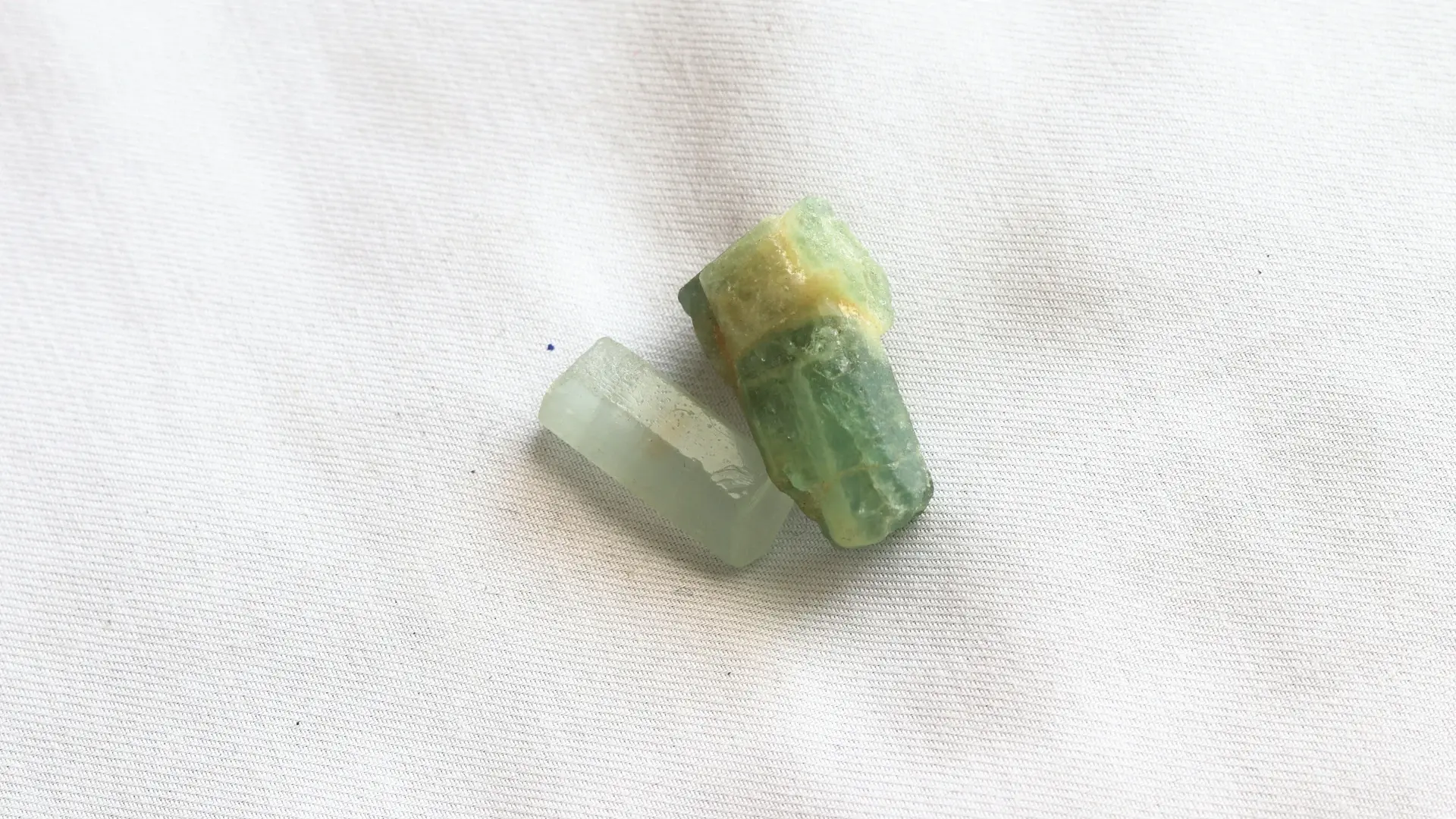
The blue-green variety of beryl, a close relative of emerald. Its name means "seawater".
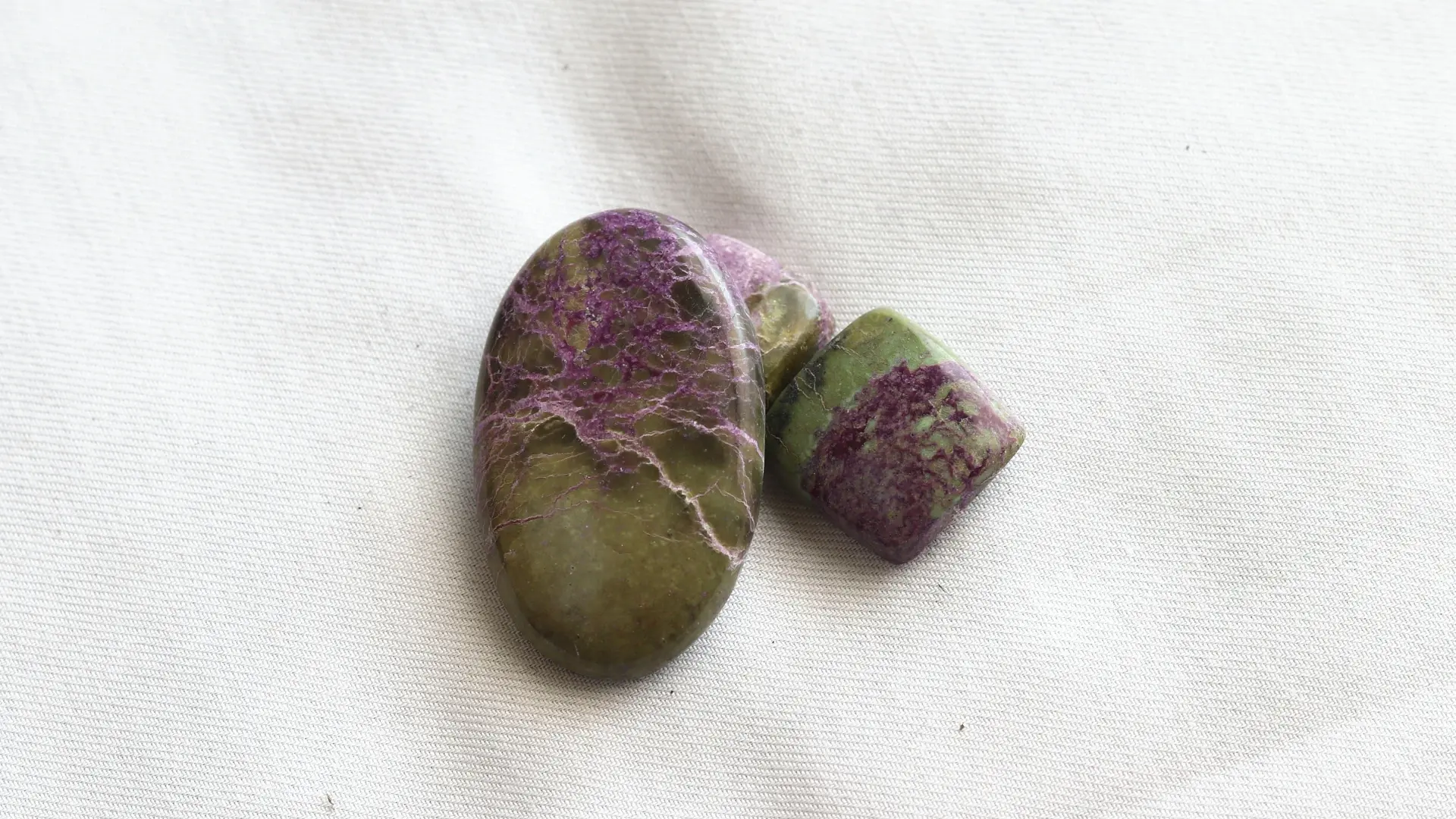
Atlantisite
A natural mix of green serpentine and purple stichtite, from a single hill in Tasmania.