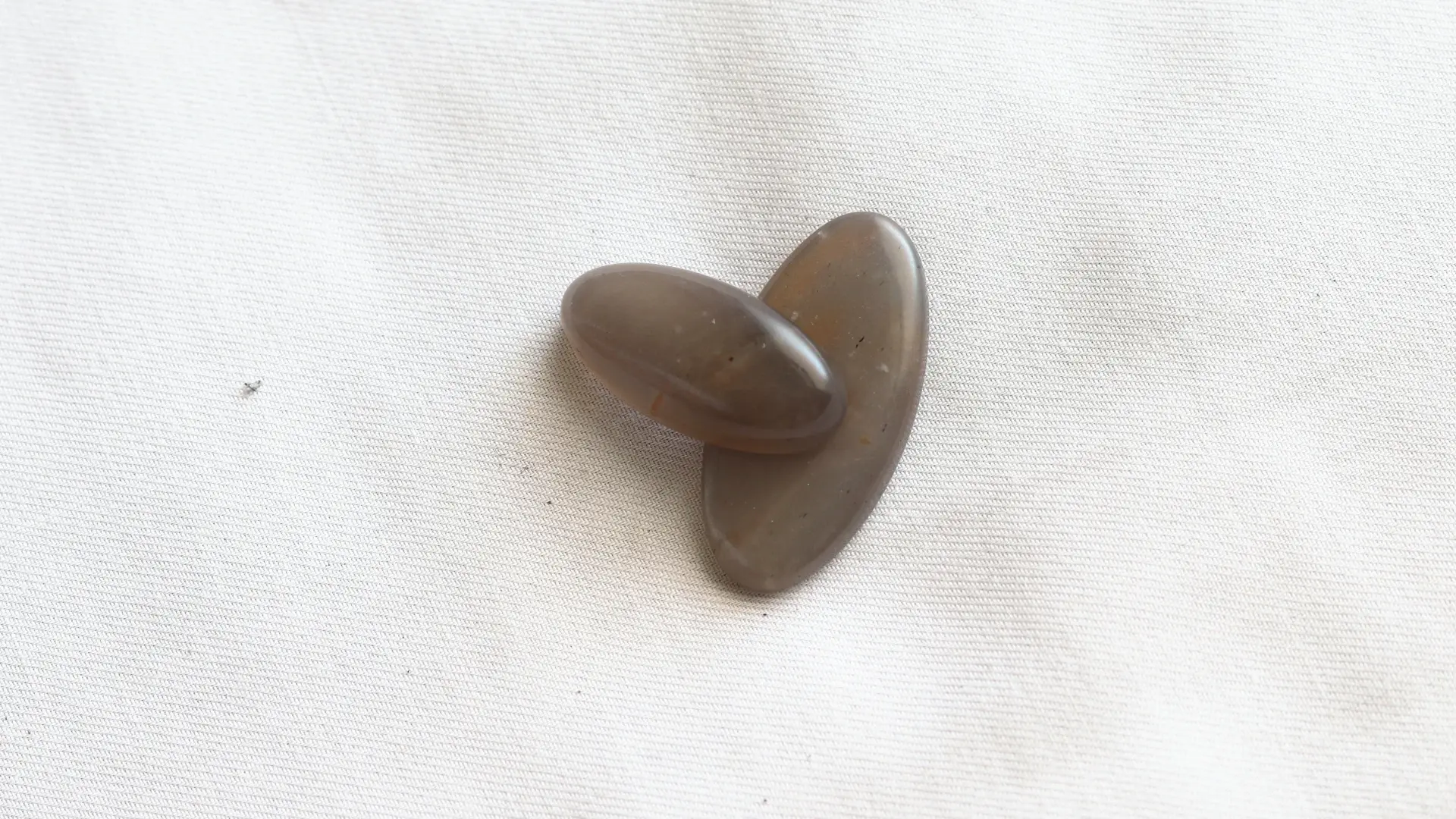
Grey Moonstone
Moonstone in a smoky grey shade, with a soft glow that moves across the stone as you turn it. Crystal websites call it the "New Moon Stone".
Moonstone is a variety of feldspar, the most common group of minerals in the Earth's crust. According to GIA, feldspars make up more than half of the crust's rock. So what is special about this stone? The light.
As the stone forms, two minerals, orthoclase and albite, separate into thin layers stacked on top of each other. These layers are about as thin as a wavelength of light, so they scatter it. The result is a soft glow that seems to float just under the surface and moves as you turn the stone. This effect is called adularescence. To see it you need good light and a little patience: turn the stone slowly.
Moonstones come in many colors: colorless, white, grey, green, peach and brown. In a grey stone the glow is less striking than in a clear one, but it has something understated and smoky about it, like the moon behind a cloud.
The Romans believed moonstone was made of solidified moonbeams, and both the Greeks and the Romans linked it to their moon goddesses. In the Art Nouveau period it came back into fashion thanks to designers such as René Lalique.
One more fun fact: in 1970 Florida chose moonstone as its official state gem, to commemorate the Moon landings launched from Kennedy Space Center. Moonstone does not occur naturally in Florida. Then again, neither does the Moon.
Crystal traditions
In crystal tradition
According to Crystal Vaults, grey moonstone is called the "New Moon Stone" and carries "the mysteries and powers of the new moon, where all things exist as potential". The site describes it as a stone for perceiving "beyond the veil".
More generally, the site links moonstone to the lunar cycles, to protection for travelers, especially at night, and to love. It assigns it to the crown chakra and to Cancer.
Sources: Moonstone Healing Properties, Meanings, and Uses, Crystal Vaults
Scientific information
Properties
Chemistry: sodium potassium aluminium silicate, (Na,K)AlSi₃O₈. A variety of feldspar.
Mohs hardness: 6 to 6.5.
Specific gravity: 2.54 to 2.66.
Adularescence: light scattered by alternating layers of orthoclase and albite.
Sources: Sri Lanka (where most commercial moonstone comes from today), India, Madagascar, Myanmar, Mexico, Norway, the United States and others.
Modern interpretations
Modern customs
Moonstone is one of the three birthstones for June, along with pearl and alexandrite.
Since 1970 it has been the official state gem of Florida.
Associations
Different traditions associate this stone with different things, and they sometimes conflict. Each association is shown with its tradition and sources.
Zodiac sign
CancerCrystal tradition
Sources: Moonstone Healing Properties, Meanings, and Uses, Crystal Vaults
Chakra
CrownCrystal tradition
Sources: Moonstone Healing Properties, Meanings, and Uses, Crystal Vaults
Sources
- Moonstone, GIAAccessed September 24, 2026
- Moonstone (gemstone), WikipediaAccessed September 24, 2026
- Moonstone Healing Properties, Meanings, and Uses, Crystal VaultsAccessed September 24, 2026
More crystals
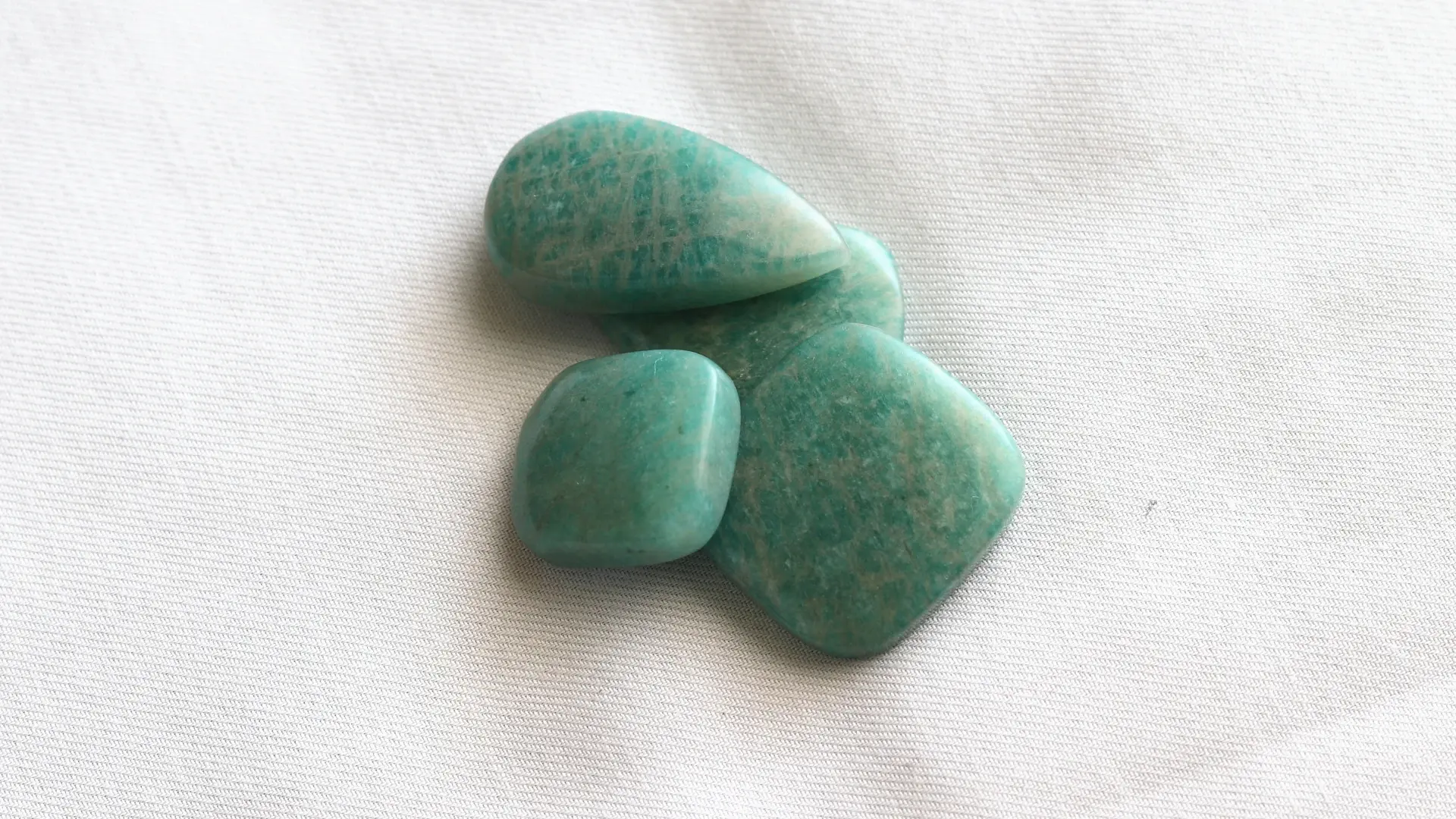
Amazonite
A turquoise-green variety of the feldspar microcline. Despite the name, it does not come from the Amazon.
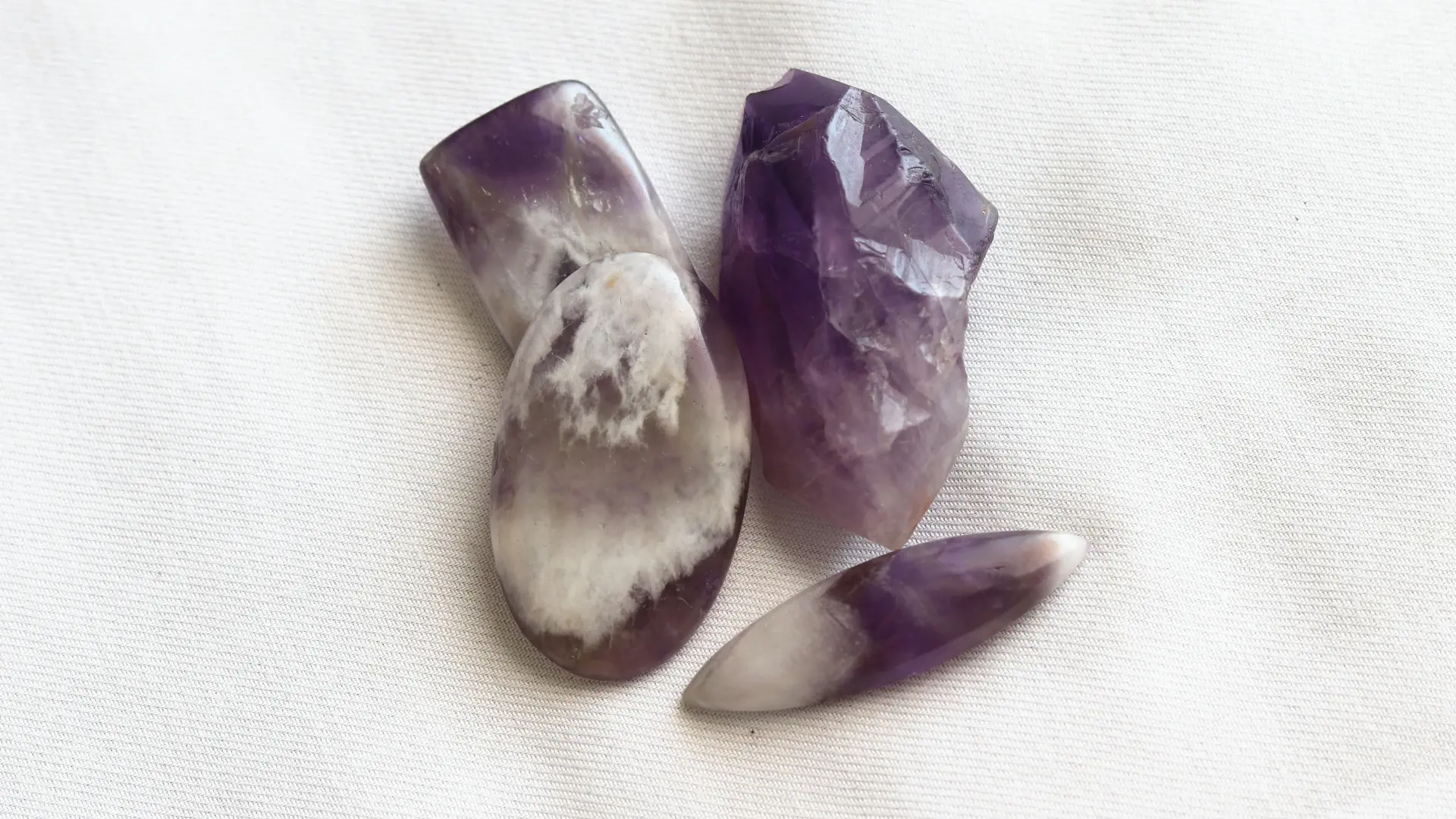
Amethyst
Purple quartz whose Greek name means "not drunk". By the common identification, one of the breastplate stones, and one of the best-loved stones in the world.
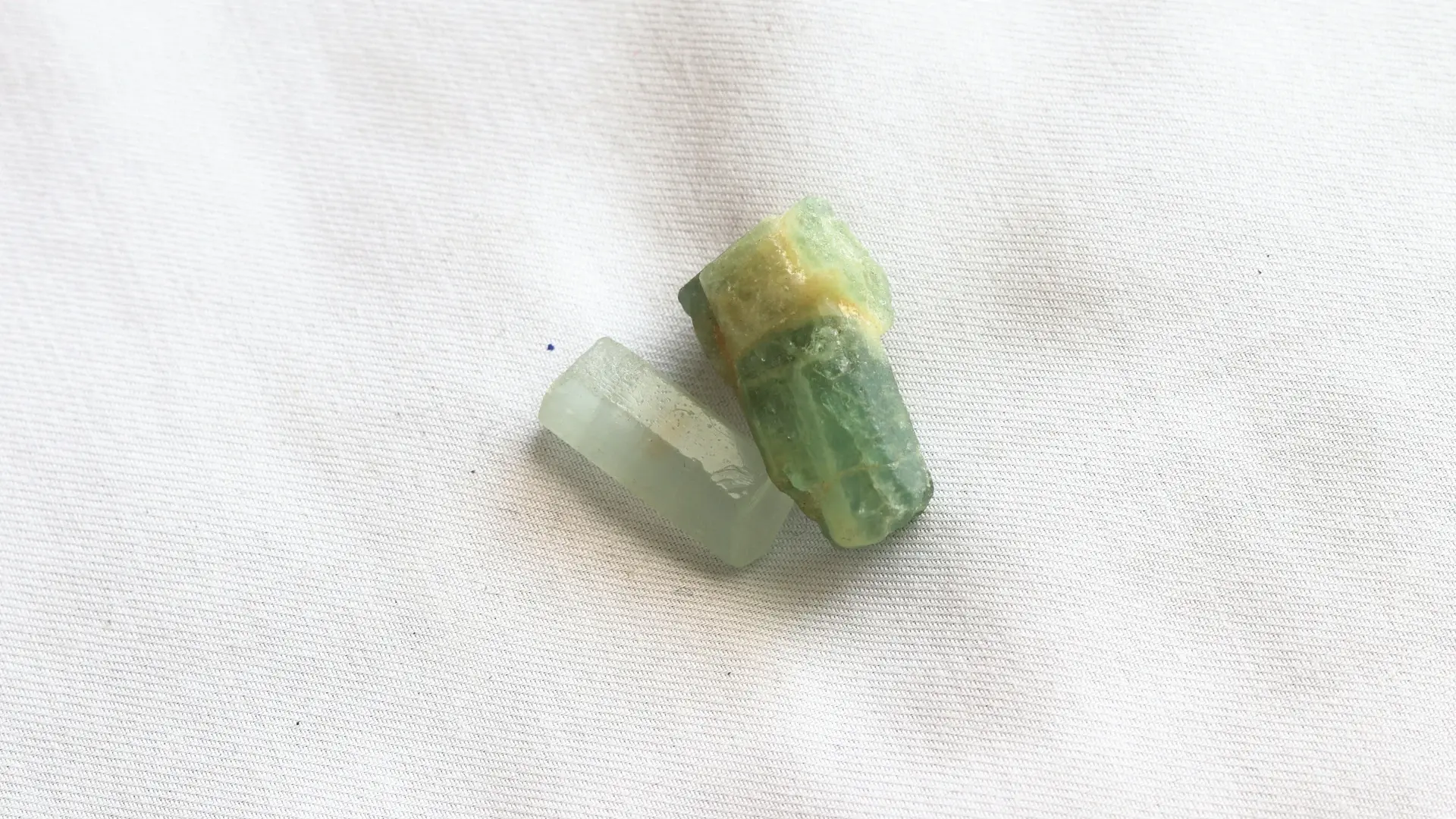
Aquamarine
The blue-green variety of beryl, a close relative of emerald. Its name means "seawater".
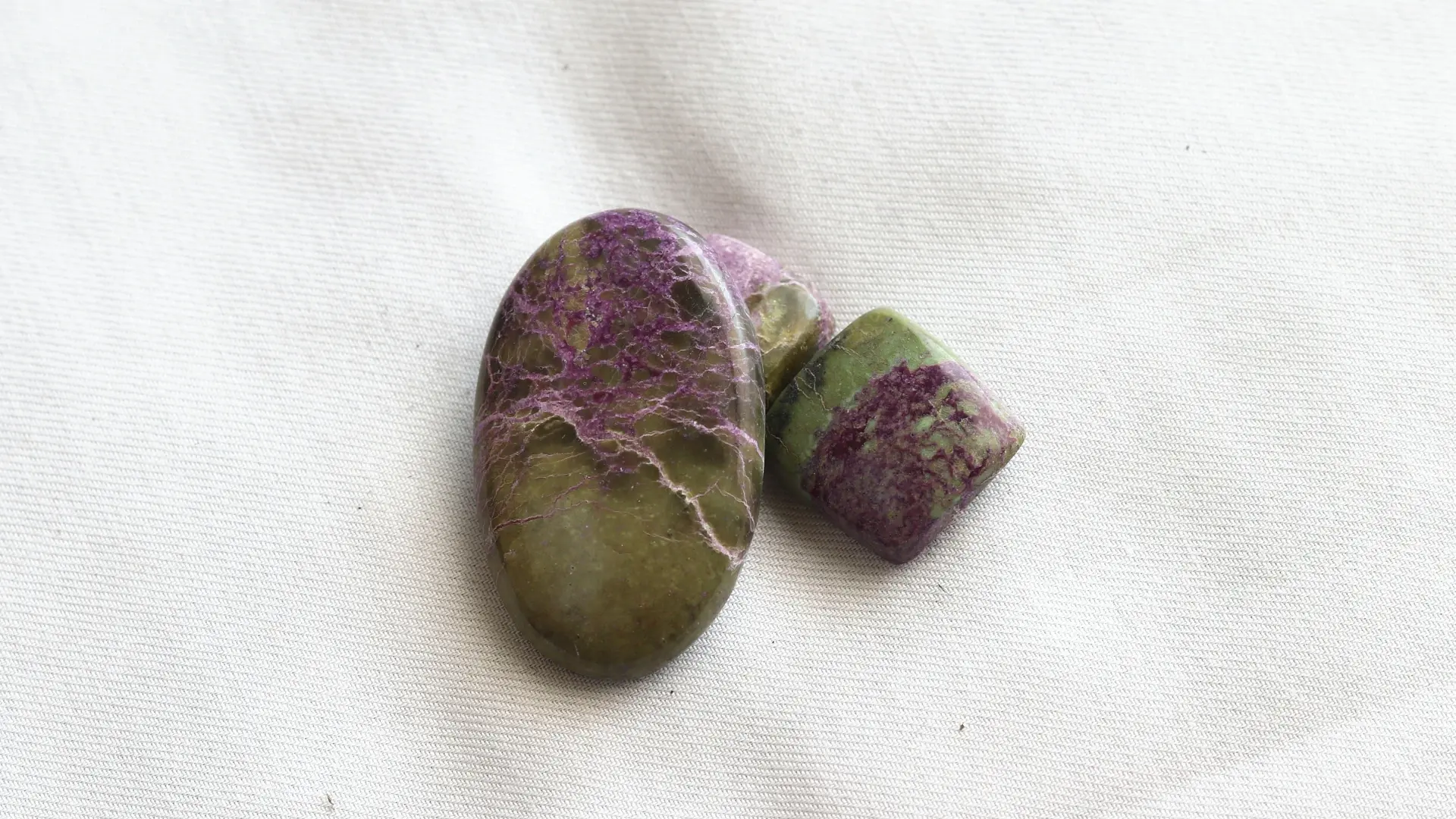
Atlantisite
A natural mix of green serpentine and purple stichtite, from a single hill in Tasmania.