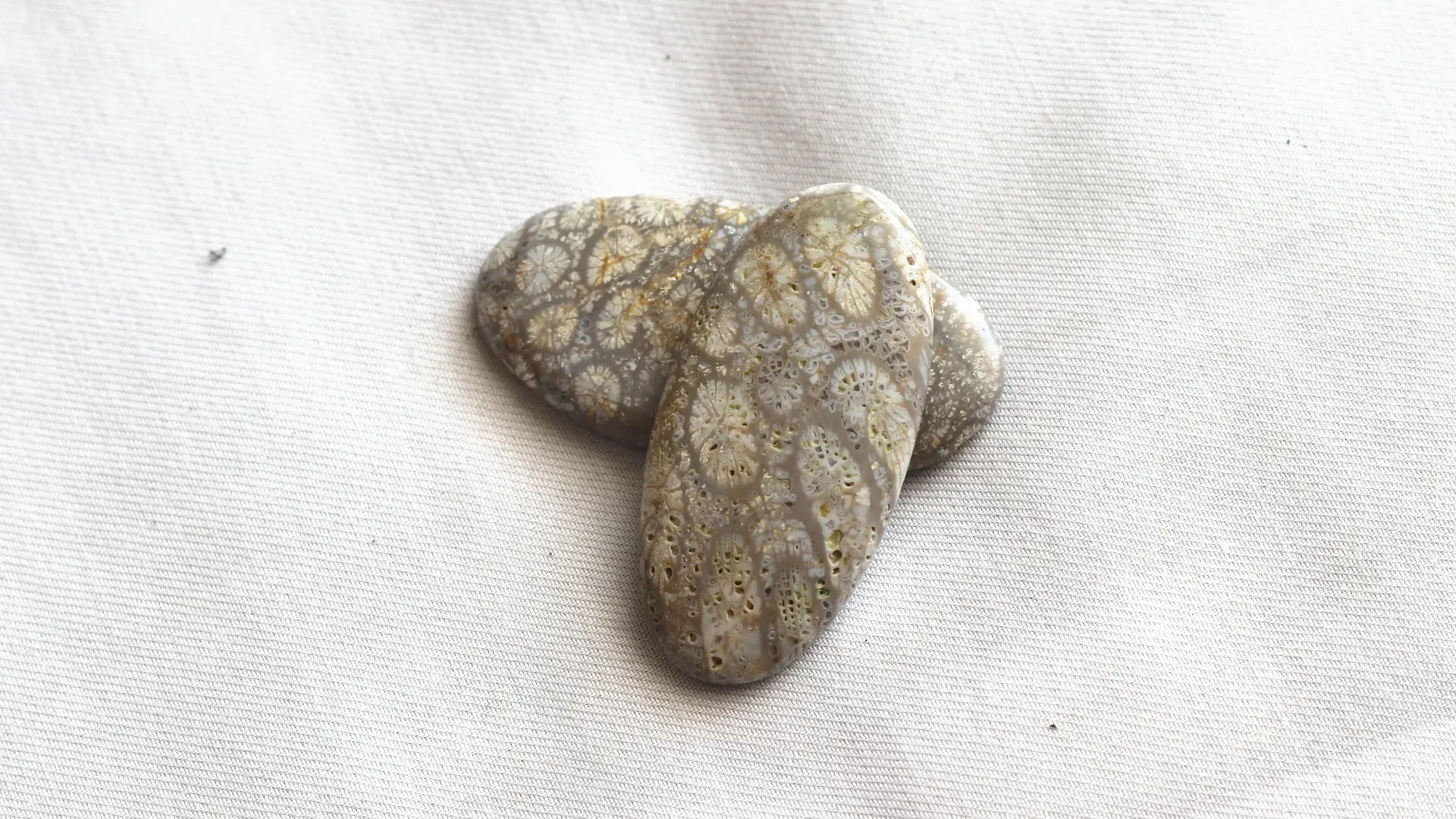
Fossil Coral
Coral that lived millions of years ago and turned to stone without losing its shape. The flowers on the stone are the corals' old homes.
The pattern that looks like little flowers on the stone is neither a painting nor a coincidence. Each "flower" is the skeleton of a single coral polyp, a tiny sea creature that lived in a colony with thousands of neighbors. Millions of years ago they built a reef. Today they are jewelry.
The original coral was made of calcium carbonate. Over a very long time, silica-rich groundwater seeped through it, dissolved the original material and deposited agate, a type of chalcedony, in its place. The result is a pseudomorph: one mineral that has taken the place of another while keeping its original shape, down to the small details. Its precise name is agatized coral.
According to the Florida Museum, the fossil corals in its collection lived about 34 to 28 million years ago. In 1979 the Florida Legislature made agatized coral the official state stone. Fossil coral is also found in Indonesia and elsewhere.
Because the coral has turned into agate, it is much harder than ordinary coral: 6.5 to 7 on the Mohs scale, about the same as quartz. So even though it looks delicate, you can wear it without worrying too much. Just don't try to return it to the sea. It is past that stage.
Crystal traditions
In crystal tradition
According to Fire Mountain Gems, fossil coral is considered a grounding stone linked to change and longevity. It is not a traditional birthstone, but the site assigns it to Taurus.
Sources: Fossil Coral Meaning and Properties, Fire Mountain Gems
Scientific information
Properties
Chemistry: silica (SiO₂) as chalcedony, which replaced the coral's original calcium carbonate skeleton.
Mohs hardness: 6.5 to 7.
Formation: silica-rich groundwater flowing through limestone replaces the coral with agate.
Color: the shades come from trace minerals such as iron and manganese deposited during the replacement.
Sources: Agatized fossil coral, Florida Museum of Natural History; Florida Rocks & Minerals, Florida Geological Survey; Fossil Coral Meaning and Properties, Fire Mountain Gems
Jewish sources
Ramot in the Bible
UncertainThere is not enough evidence to decide.
The word ramot appears in Job (28:18), "Coral and crystal cannot be mentioned with it", and in Ezekiel (27:16), in the list of goods Aram traded with Tyre.
Rashi on Job explains that ramot and gavish are "names of precious stones in the sea". The JPS translation renders ramot as coral. What exactly ramot were is uncertain, and in any case the verses refer to sea coral, not fossil coral.
Sources: Job 28:18; Ezekiel 27:16; Rashi on Job 28:18
Associations
Different traditions associate this stone with different things, and they sometimes conflict. Each association is shown with its tradition and sources.
Zodiac sign
TaurusCrystal tradition
Sources: Fossil Coral Meaning and Properties, Fire Mountain Gems
Sources
- Agatized fossil coral, Florida Museum of Natural HistoryAccessed September 24, 2026
- Florida Rocks & Minerals, Florida Geological SurveyAccessed September 24, 2026
- Fossil Coral Meaning and Properties, Fire Mountain GemsAccessed September 24, 2026
- Job 28:18
- Ezekiel 27:16
- Rashi on Job 28:18
More crystals
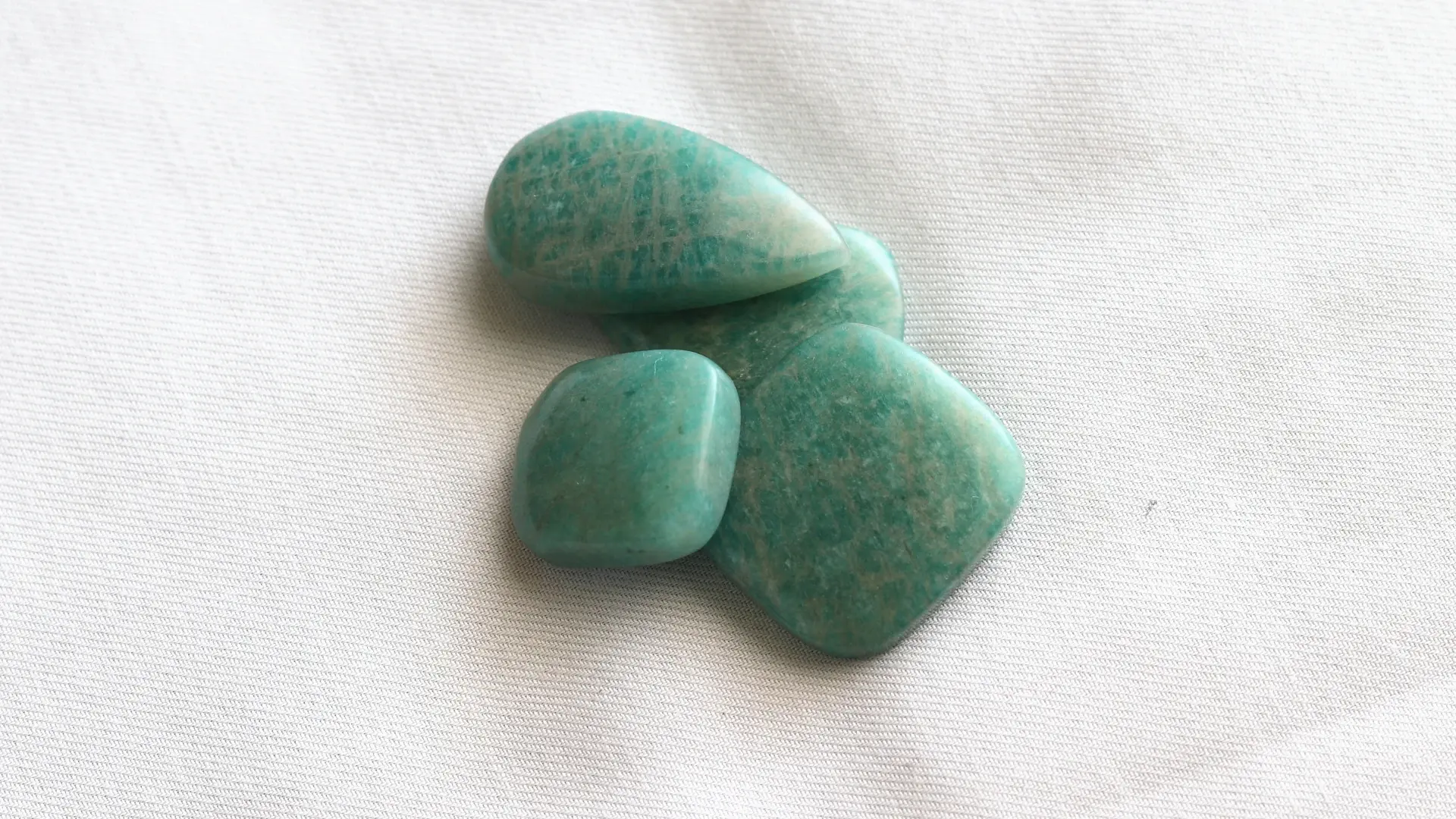
Amazonite
A turquoise-green variety of the feldspar microcline. Despite the name, it does not come from the Amazon.
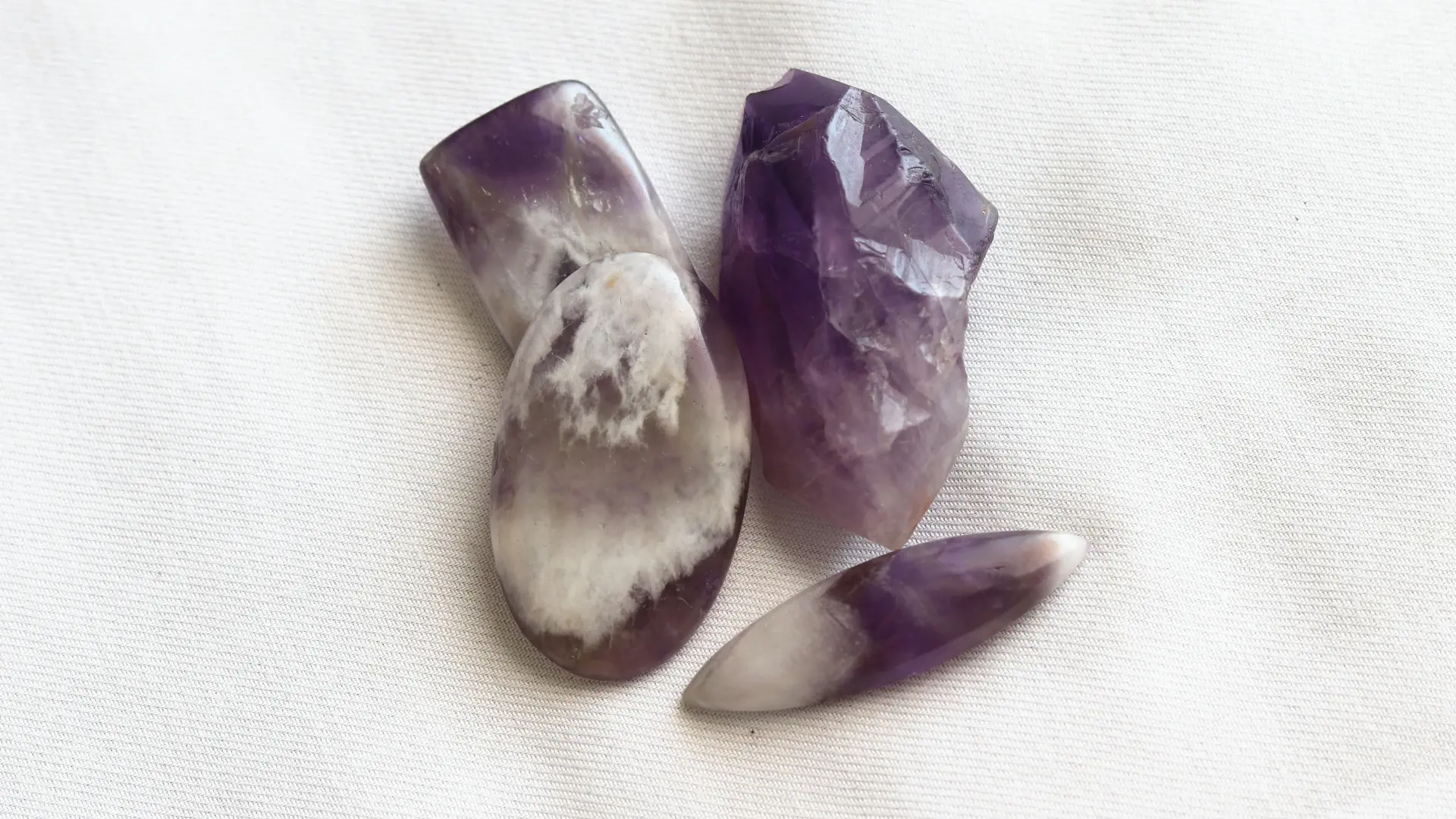
Amethyst
Purple quartz whose Greek name means "not drunk". By the common identification, one of the breastplate stones, and one of the best-loved stones in the world.
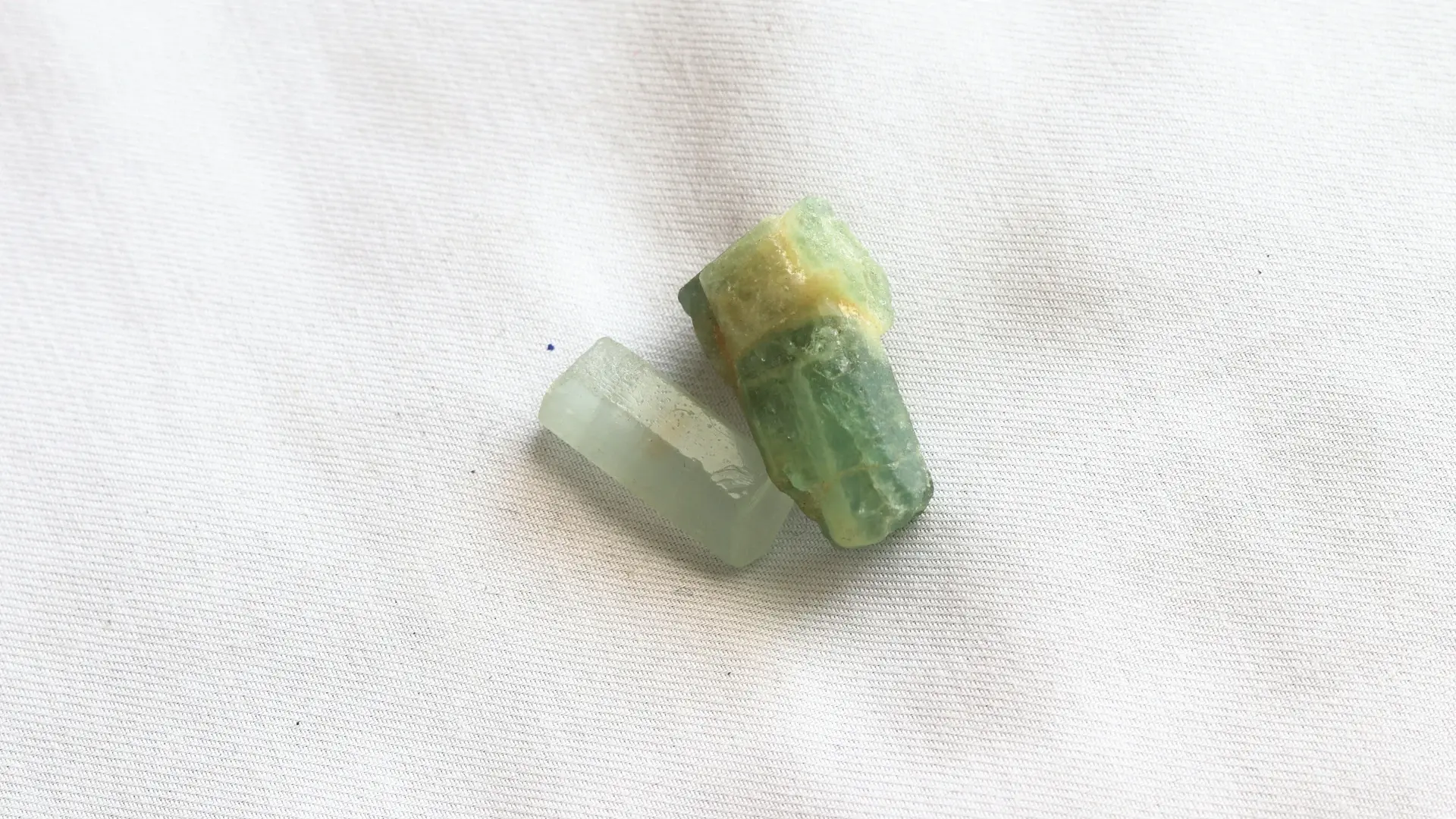
Aquamarine
The blue-green variety of beryl, a close relative of emerald. Its name means "seawater".
Atlantisite
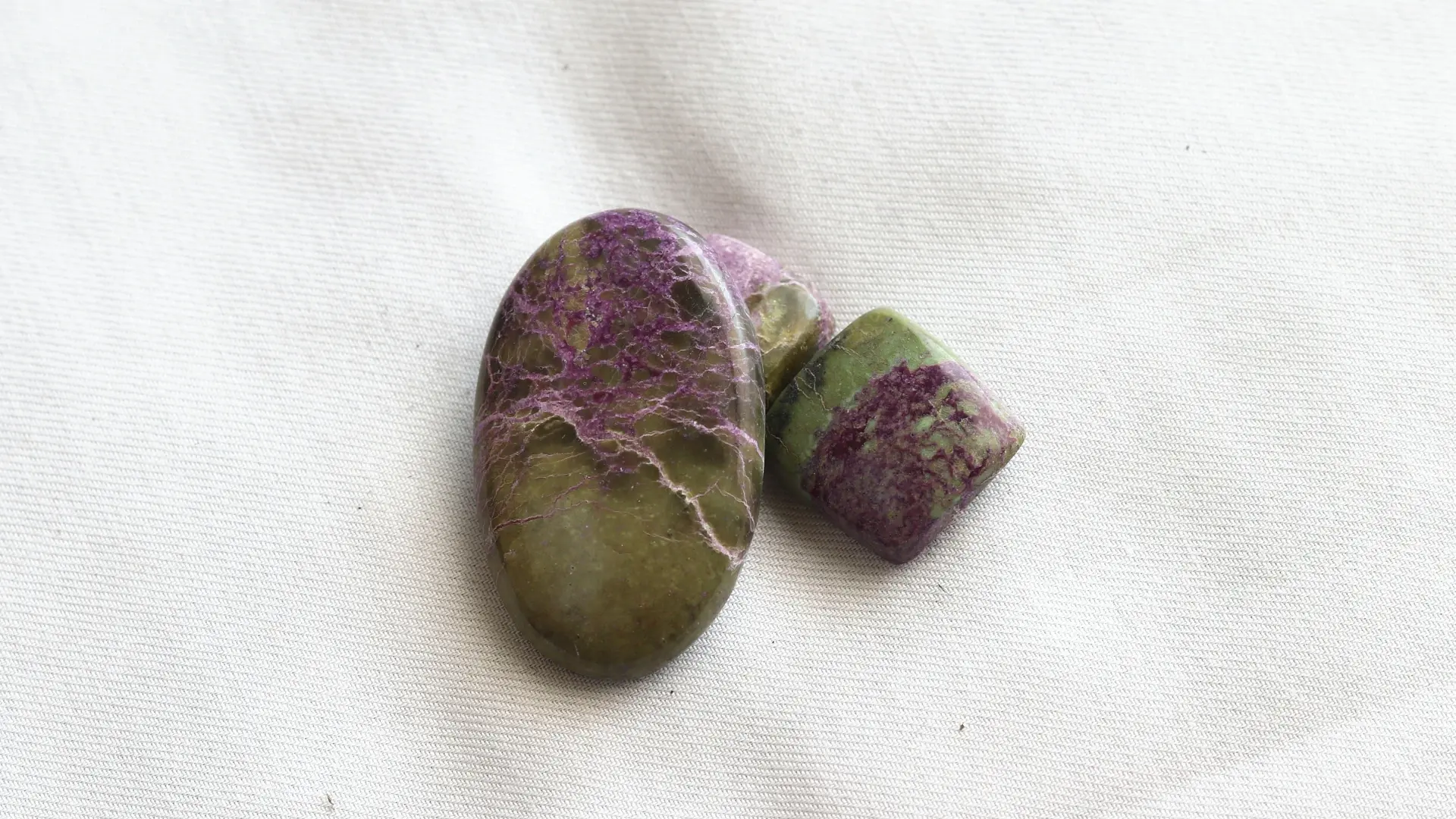
A natural mix of green serpentine and purple stichtite, from a single hill in Tasmania.